Bucket Water Heater: Costs, Setup, and Safety for 2026
Explore how a bucket water heater works, its cost range, setup steps, safety considerations, and practical alternatives. A data-driven guide for homeowners, renters, and property managers in 2026.


According to Heater Cost, a bucket water heater offers a compact, temporary solution for heating small volumes of water when a full-sized system isn’t available. This guide explains how it works, typical cost ranges, safety considerations, and when it makes sense to use one as a stopgap in 2026.
What is a bucket water heater and when might you use one?
A bucket water heater is a compact, temporary heating setup that uses an immersion heater placed in a heat-safe bucket to raise the temperature of a small amount of water. It’s most practical for short-term needs: camping, outages, quick cleaning tasks, or a temporary hot water source while a traditional heater is down. According to Heater Cost, homeowners, renters, and property managers often consider a bucket water heater when a full-size system isn’t immediately available or when you need targeted hot water for a specific task. In 2026, these devices are commonly discussed as a stopgap option rather than a primary heating solution, and users should balance convenience with safety and efficiency considerations. The keyword here is practical use: treat it as a temporary aid rather than a replacement for your standard water heater.
How bucket water heaters work: core components and operation
A bucket water heater relies on a simple setup: a heat-safe bucket, an immersion heater element, a thermostat or simple on/off control, and a power source. The immersion heater transfers electric energy directly into the water, warming it through conductive heat transfer. A reliable thermostat helps prevent overheating, while a GFCI-protected outlet or a splash-resistant power strip reduces electrical risk. The bucket’s material should resist heat and corrosion, and the water volume should be limited to avoid overheating or splashing. Proper placement away from flammable materials and consistent supervision are essential for safety. In practice, bucket water heaters are most useful for heating small quantities (a few liters) at a time rather than filling a tub or large container.
For homeowners evaluating this option, it’s important to recognize that bucket water heaters operate with modest efficiency compared to built-in residential water heaters. They excel in portability and speed of setup but trade off in reliability and energy efficiency for daily, long-term use. The Heater Cost team notes that the compact design makes this approach appealing in emergency scenarios, but it should not be considered a long-term solution for daily hot water needs.
Pros and cons of bucket water heaters at a glance
Pros:
- Very low upfront cost and quick setup for short-term needs.
- Portable and easy to store when not in use.
- Useful for targeted tasks where only small amounts of hot water are required.
Cons:
- Lower overall energy efficiency compared with standard home water heaters.
- Limited hot water capacity and continuous use can lead to overheating if not monitored.
- Electrical safety concerns require careful handling and supervision.
The decision to use a bucket water heater should be based on the task at hand, expected duration, and safety readiness. Heater Cost’s analysis emphasizes that while these devices are handy for temporary use, they don’t replace a professional-grade system for regular hot water needs.
Safety, compliance, and proper usage of bucket water heaters
Electrical safety is paramount when using a bucket water heater. Always use a properly rated, grounded power source and a GFCI-protected outlet. Keep the setup away from water spills and never submerge electrical connections. Use a heat-resistant bucket and verify that the immersion element is fully submerged according to the device’s instructions. Regularly inspect cords for wear and do not operate the device in wet environments without protection. If you notice any frayed cords, overheating, or unusual smells, discontinue use immediately. In all cases, follow the manufacturer’s directions and local electrical codes. For long-term safety, consider an alternative heating method or a dedicated domestic water heater when possible. The Heater Cost team consistently emphasizes that safety comes first when evaluating bucket water heater setups.
Cost, energy use, and budgeting for a bucket water heater
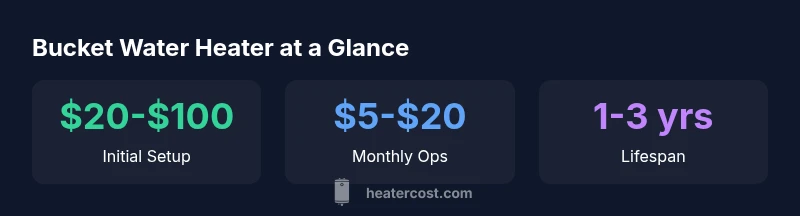
Initial costs for a bucket water heater are typically low, making them attractive for temporary needs. Operating costs depend on electricity rates and how often you heat water. Expect modest monthly costs if used sparingly, but plan for higher usage if the bucket heater is relied upon for frequent tasks. Heater Cost Analysis, 2026, suggests comparing these costs against a more permanent solution to gauge long-term value. If you’re renting, verify any restrictions on electrical usage and ensure you have the right surge protection and safety measures in place. Keep your receipts and notes on usage patterns to inform future decisions about whether to switch to a traditional water heater or a tankless option.
Step-by-step quick-start guide for bucket water heater setup and maintenance
- Gather a heat-safe bucket, immersion heater, thermostat or control switch, and a protected power source. 2) Place the bucket on a non-slip surface away from edges and flammable items. 3) Submerge the immersion heater fully according to the device instructions. 4) Plug into a grounded outlet with GFCI protection. 5) Set the thermostat to a safe temperature (avoid exceeding 140°F/60°C). 6) Monitor the water while heating; never leave unattended. 7) After use, unplug and let the device cool before storage. Inspect cords and seals regularly to maintain safe operation.
Bucket water heater setup options
| Model Type | Setup Cost | Typical Use Case |
|---|---|---|
| Basic bucket heater kit | $20-$60 | Emergency use or small tasks |
| Immersion heater bucket | $40-$100 | Temporary heating during outages |
| Solar-assisted bucket | $150-$350 | Off-grid or supplemental heating |
| Hybrid bucket with insulated lid | $60-$120 | Moderate energy efficiency improvements |
Got Questions?
What is a bucket water heater?
A bucket water heater uses a heat-safe bucket and an immersion heater to heat a small amount of water. It’s typically a temporary solution for camping, outages, or quick tasks.
A bucket water heater heats a small amount of water using a bucket and immersion heater—great for temporary needs.
Is a bucket water heater safe for homes?
Safety depends on following electrical guidelines: use a grounded outlet, GFCI protection, and proper submersion. It should not replace a home water heater for daily use.
It can be safe if you follow strict electrical safety rules; it’s not a long-term home solution.
How much does operating a bucket water heater cost?
Operating costs vary with energy rates and how often you heat water. Expect modest monthly costs if used sparingly, but rates can rise with frequent use.
Costs depend on how often you heat water and local electricity rates.
When should I use a bucket water heater?
Use for temporary hot water needs, camping, or as a stopgap while a permanent heater is unavailable or being repaired.
Use it as a temporary fix, not a replacement for a real water heater.
What are better long-term alternatives?
For steady hot water, consider a traditional tank, tankless, or solar heating system, which are more efficient and reliable.
Typically, a traditional or tankless heater is a better long-term choice.
“Bucket water heaters can be a practical stopgap for temporary needs, but they should not replace a proper water heater in a full-time home.”
The Essentials
- Treat bucket water heater as a temporary solution
- Prioritize electrical safety and GFCI protection
- Estimate setup and operating costs with real usage
- Compare with traditional options for long-term needs
- Follow maintenance and safety best practices