What Causes Your Car Heater to Go Out
Discover common car heater failure causes, quick DIY checks, and a step-by-step plan to restore heat. Learn safety tips, when to seek help, and what to expect in costs with Heater Cost.


Most car heater outages are tied to the cooling system or airflow controls, not a mysterious electrical problem. Start with easy checks: coolant level, hoses, and relevant fuses/relays, then test the thermostat. If these steps don’t restore heat, stop and call a technician. Document symptoms to speed diagnosis.
Common Causes of Car Heater Failure
According to Heater Cost analysis, the majority of car heater outages are linked to problems in the cooling system or the airflow path inside the dash. When heat disappears, the culprit is rarely a mysterious electrical fault; more often the engine cooling system, thermostat, or blend door is not delivering hot coolant or directing it into the passenger compartment. Here are the most frequent causes, listed from easiest to diagnose to more complex repairs:
-
Coolant level or leaks: If the coolant reservoir is low or there’s a leak, the heater won’t get enough hot fluid to transfer heat. Look for puddles under the car or white cloudy residue at hose connections. Refill only with the correct coolant when the engine is cold, and have leaks repaired by a pro if you’re unsure.
-
Thermostat problems: A thermostat stuck open allows the engine to run cooler than normal, preventing the heater from reaching its operating temperature. This often presents as a long time before heat is felt, or heat that fluctuates with engine temp.
-
Heater core issues: The heater core can become clogged or develop a leak. If you notice a sweet coolant smell, damp carpets, or reduced heat, suspect the heater core.
-
Blend door or actuator failure: The blend door directs hot or cold air into the cabin. If the door is stuck or the actuator is failing, you’ll feel weak heat or inconsistent warmth.
-
Electrical and fuse issues: A blown fuse, bad relay, or wiring fault in the HVAC control circuit can disable heat or the blower. Check fuses related to the HVAC system in the fuse box.
-
Air pockets in cooling system: Air trapped in the coolant lines can reduce heater flow. A proper bleed procedure may restore heat.
Quick DIY Checks You Can Perform Safely
You don’t need a lift to start diagnosing. The goal is to rule out the easiest failures first and preserve your engine’s longevity. Here are bite-sized checks you can perform with a basic toolkit and common sense:
-
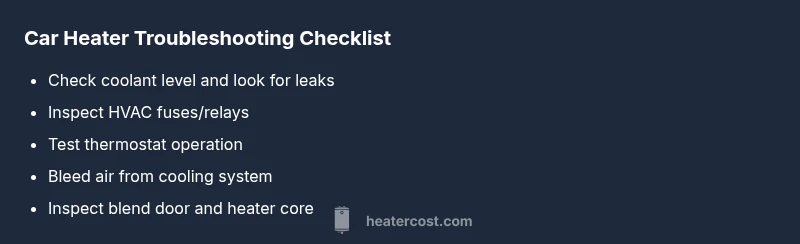
Check coolant level and look for obvious leaks under the vehicle or around the radiator, hoses, and water pump. If the level is low, top up with the correct coolant after the engine has cooled, and schedule a leak repair.
-
Inspect the vehicle fuses and relays related to the HVAC system. A blown fuse or faulty relay can cut power to the blower or control module, preventing heat from reaching the cabin.
-
Verify the thermostat behavior by watching the temperature gauge. If the engine takes unusually long to reach operating temperature or never reaches it, the thermostat may be stuck open or failing.
-
Test the blower motor operation: turn the fan on high and listen for the blower. If the fan is weak or silent, the issue could be a fuse, resistor, or faulty motor, not the heating system itself.
-
Look for obvious air pockets in the cooling system by checking the radiator cap area when safe to do so. Air in the lines can reduce heater performance and may require a bleeding procedure.
Diagnosing Coolant and the Cooling System
A healthy cooling system is the backbone of a reliable car heater. If heat disappears, coolant flow is the most common bottleneck. Start by ensuring the engine reaches and maintains proper operating temperature. An overcooling engine starves the heater of warm coolant, so the thermostat and water pump come into focus. Signs of trouble include a sweet smell inside the cabin, foggy windows, or steam: all indicating potential leaks or a blocked path. A cooling-system pressure test can reveal leaks that aren’t obvious from visuals alone. If you notice color changes in coolant, crusty deposits on hoses, or signs of contamination, address those issues before boosting heater performance.
Inspecting the Blend Door, Heater Core, and Related Components
Even if the engine and cooling system seem fine, airflow may be blocked or misdirected. The blend door mixes hot and cold air, delivering the final temperature. If the blend door or its actuator fails, you’ll experience heat that’s inconsistent or non-existent. The heater core, a small radiator inside the dash, can become clogged with mineral deposits or debris over time, reducing heat transfer. In some cases, a heater core leak leads to damp carpets and a sweet odor, which requires professional attention. Diagnosing these parts often involves interior access and, in more advanced cases, disassembly of dash panels.
- Symptoms to watch: uneven heat, cold spots, or heat only at certain fan speeds.
- Common fixes: replacing the blend door actuator, cleaning or flushing the heater core, and ensuring proper door calibration.
When to Seek Professional Help
If you’ve verified coolant levels, tested fuses/relays, and the thermostat appears functional but heat remains inconsistent or weak, it’s time to get a professional opinion. A trained technician can perform a coolant-system pressure test, check for heater-core leaks, and diagnose blend-door actuator faults with specialized tools. In some cases, the problem is hidden behind the dashboard or tied to the HVAC control module. Delaying professional help can allow leaks to worsen or electrical faults to escalate, potentially causing engine overheating or electrical fires.
- If you see coolant on the ground, steam from the engine bay, or a persistent sweet odor in the cabin, stop driving and seek service immediately.
- If you notice heat that randomly fades or swings with engine RPM, schedule a diagnostic appointment to avoid guessing games and to protect your comfort.
Maintenance to Prevent Future Heater Failures
Proactive maintenance keeps car heaters reliable. Regular inspection of the cooling system and HVAC components reduces the risk of sudden outages. Schedule coolant flushes per manufacturer recommendations, replace worn hoses, and verify the thermostat operates smoothly. Clean the blend door area to prevent deposits that impair airflow. Finally, replace blown fuses or failing relays promptly to keep the heating system powered when you need it most.
- Use the manufacturer-recommended coolant type and mix ratio.
- Check for leaks during every oil change window and after long trips.
- Inspect the HVAC air filter and blower motor regularly to maintain consistent airflow.
DIY vs Pro: What You Can Do and What Needs a Pro
Many car heater issues are approachable for DIY enthusiasts, especially those tied to coolant level, fuses, and basic thermostat checks. However, several tasks require professional gear and expertise. Heater core leaks, failing blend-door actuators, and dash disassembly are complex and carry safety risks. A professional can perform a pressure test, diagnose intermittent electrical faults, and handle refrigerant or coolant safely. When in doubt, prioritize safety and cost-effectiveness by consulting a pro before proceeding with risky disassembly.
- DIY scope: coolant level checks, fuse/relay replacement, and simple thermostat tests.
- Pro scope: heater core diagnosis, blend-door actuator replacement, full dash access, and cooling-system bleeding.
- Safety note: never open a hot cooling system or work on pressurized lines without the proper tools and training.
What to Expect in Costs and Timeline
Costs and timelines vary widely depending on vehicle make, the exact fault, and local labor rates. Simple fixes like fuse replacement or coolant top-ups are relatively inexpensive and quick. More involved repairs—such as heater-core work or dash-accessible components—can require a multi-hour job with significant parts costs. The most accurate estimate comes from a hands-on diagnostic, which helps determine whether the issue is a quick fix or a major repair. Always request a written estimate before approving work, and compare quotes from a few reputable shops to gauge a fair range.
Steps
Estimated time: 90-120 minutes
- 1
Park safely and disconnect power
Before touching any HVAC components, ensure the vehicle is off, the engine cool, and the battery disconnected if you’ll be accessing electrical parts. This reduces the risk of shorts or shocks while you inspect fuses and wiring.
Tip: Use insulated gloves and keep a notebook to log any signs you notice. - 2
Check coolant level and top up if needed
With the engine cool, inspect the coolant reservoir and radiator hoses for signs of low fluid or leaks. Add the correct coolant to the recommended level and tighten caps securely; monitor for leaks after a test drive.
Tip: Never open a hot cooling system; allow the engine to cool for at least an hour. - 3
Inspect HVAC fuses and relays
Locate the HVAC fuse box and verify the fuses related to the blower and heater control. Replace any blown fuses and test the blower function to see if heat returns.
Tip: Bring the vehicle’s owner manual or fuse diagram to identify the right circuit quickly. - 4
Test the thermostat operation
Observe the temperature gauge as the engine warms. If the gauge stays cool or rises slowly, the thermostat could be sticking open. Consider replacing the thermostat if symptoms persist.
Tip: Use a proper thermostat kit and follow the manufacturer’s torque specs. - 5
Bleed air from the cooling system
Air pockets can prevent heat transfer. Follow your vehicle’s bleed procedure, starting at the highest point in the cooling system and operating the engine at the proper temperature until bubbles stop.
Tip: Refer to the service manual for your exact bleed steps to avoid over-pressurizing the system. - 6
Check the blend door and heater core
If heat remains weak or inconsistent, a faulty blend door or restricted heater core could be the cause. Inspect for obvious movement of the door, or arrange a professional inspection if disassembly is needed.
Tip: Interior dash access can be delicate; proceed slowly to avoid rattles and wiring damage. - 7
Decide between DIY or professional help
If basic checks fix the issue, you’ve saved time and money. If not, schedule a diagnostic with a qualified technician to avoid further damage and ensure proper heater operation.
Tip: Get a written estimate before any non-emergency repair work.
Diagnosis: Car heater blows cold air or stops producing heat
Possible Causes
- highBlown fuse or faulty relay in HVAC circuit
- mediumThermostat stuck open or failing
- highLow coolant level or air in cooling system
- mediumMalfunctioning blend door or actuator
Fixes
- easyCheck and replace HVAC fuses/relays as needed
- easyTop up coolant and bleed air; repair leaks if detected
- mediumTest thermostat and replace if it fails to regulate
- mediumInspect blend door/actuator and service/replace if stuck
- hardInspect heater core for leaks or blockages; professional service advised
Got Questions?
Why is my car heater blowing cold air?
Cold air usually means the heater isn’t producing heat. Common causes include a low coolant level, a faulty thermostat, a blown fuse or relay, or a malfunctioning blend door. Start with simple coolant and fuse checks before moving to more complex components.
If your car heater is blowing cold air, start with coolant level checks and fuses. If heat still won’t come, you may need a thermostat or blend-door inspection.
Can a car heater be fixed at home, or does it require a pro?
Some fixes, like checking coolant, topping up, and replacing a blown fuse, can be done at home. More complex issues—heater core leaks, blend-door actuator failures, or dash disassembly—usually require a trained technician.
Parts of the heater can be DIY, but major repairs are best left to a professional.
Can low coolant cause the heater to stop working?
Yes. Low coolant prevents hot fluid from circulating to the heater core, reducing or eliminating heat. Refill the coolant and inspect for leaks; if the problem persists, have the cooling system inspected.
Low coolant can stop heat from reaching the heater core. Refill and check for leaks, then test heat again.
Why does the heater core smell sweet when there’s heat?
A sweet odor often signals a coolant leak near the heater core. This is serious and should be checked promptly to avoid engine overheating and potential air quality issues in the cabin.
Sweet smell usually means coolant is leaking; have the system inspected soon.
What maintenance helps prevent heater failures?
Regular coolant checks, system flushes per manufacturer guidelines, and timely replacement of worn hoses or thermostats reduce heater failures. Keeping the HVAC controls clean also helps maintain reliable airflow.
Routine coolant checks and system maintenance go a long way toward reliable heat.
Watch Video
The Essentials
- Rule out coolant issues first: level, leaks, and air in the system.
- Test fuses/relays and the thermostat before deeper diagnostics.
- Weak heat often points to blend door or heater core problems.
- Professional help is prudent for core or dash-access repairs.
- Keep records of symptoms for faster service.