Water Heater Thermostat Replacement Guide
Learn how to safely replace a water heater thermostat with a clear, step-by-step process, essential tools, safety tips, testing, and maintenance to keep your system efficient.


You will confidently replace a faulty water heater thermostat to restore accurate temperature control, improve efficiency, and reduce the risk of scalding. This step-by-step guide covers safety checks, proper part selection, and a controlled installation workflow. By following these methods you can complete the replacement in a single service session and return to safe, steady hot water.
What You'll Achieve with Water Heater Thermostat Replacement
Replacing a malfunctioning thermostat on a domestic water heater restores precise temperature control, helps you avoid the energy waste of overheating or underheating, and reduces the risk of accidental scalding. This guide is designed for homeowners, renters, and property managers who want a reliable, safe, and efficient hot water system without a full system replacement. According to Heater Cost, a correctly performed thermostat replacement can extend your water heater’s life and stabilize temperature consistency across daily use. After finishing, you should notice steadier hot water temperatures, fewer temperature swings, and a quieter system as the control circuitry settles. You’ll also gain a better sense of your unit’s health by validating thermostat settings against actual water temperature. The process outlined here emphasizes safety, compatibility, and clean reassembly to minimize leaks and future service calls. Expect a focused session with the right tools, careful testing, and a final check on insulation and wiring to ensure long-term reliability.
How a Water Heater Thermostat Works
Most electric water heaters use two thermostats (upper and lower) to regulate heating elements, plus a high-temperature cutoff switch as a safety backstop. The thermostat compares the sensed water temperature to the setpoint, then closes or opens the circuit to the heating element. When the water gets close to the target temperature, the thermostat reduces or stops heating; if it drops, it signals the element to heat again. Gas units work differently but can still use a thermostat or sensor to modulate burner operation. Understanding this helps you choose the right replacement: a dual upper/lower kit for electric systems or a single thermostat for specific models. A correctly chosen thermostat should provide stable output without frequent cycling, which improves efficiency and reduces wear on heating elements and valves.
Signs You May Need to Replace the Thermostat
Several indicators point to thermostat issues rather than a failing heating element: water temperature drifts beyond the setpoint, very inconsistent temperatures within a single shower, the unit frequently trips breakers or fuses, or the water never gets hot enough even at maximum settings. If you notice these symptoms, start by verifying there is adequate power to the unit and that the thermostat controls are properly set. If the thermostat appears non-responsive after wiring checks, replacement is likely the correct path. Keep in mind that other components, such as heating elements, pressure relief valves, or a failing sensor, can mimic thermostat problems. A careful diagnosis helps avoid unnecessary replacements and saves time and money.
Safety First: Preparation and Shutdown
Safety is the top priority when replacing a water heater thermostat. Before touching any wiring, shut off power at the circuit breaker and, if applicable, isolate the gas supply. Use a non-contact voltage tester to confirm no electrical energy is present on the wires. Wear protective gear—gloves and safety glasses—to guard against sharp edges, hot surfaces, and accidental contact with water. Work in a dry, well-lit area and keep any fuel sources away from the workspace. If your unit requires draining the tank to access the thermostats, plan for water containment and proper disposal. Always follow manufacturer instructions for your model and consult the service manual for wiring diagrams and torque specs.
Choosing the Right Replacement Thermostat
Electric water heaters typically use two thermostats (upper and lower). When replacing, buy a kit compatible with your model that supports both thermostats if applicable. Some systems require a specific temperature range and a compatible high-limit switch. Verify part numbers against your unit’s model label; if you’re unsure, bring photos of the control panel and wiring to a parts dealer or consult the manufacturer’s manual. In many cases, universal or model-specific kits exist, so compare compatibility, mounting style (snap-in vs. screw-in), and terminal configurations before purchasing. Remember that the thermostat is part of a broader control system; replacing it without checking associated components can lead to continued issues.
The Replacement Process: What to Expect (High-Level Overview)
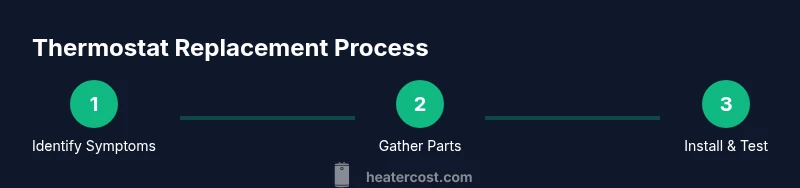
The replacement process involves safe power shutdown, panel removal to access thermostats, careful wiring identification and labeling, removal of the old thermostat, installation of the new device with correct terminal connections, reassembly of the cover and insulation, and a controlled power test. You’ll then verify temperature accuracy, adjust the setpoint, and inspect for leaks at the connection points. This sequence minimizes risk and helps guarantee you won’t have to revisit the same problem immediately. It’s normal to need about an hour, depending on your familiarity and the unit’s accessibility.
Testing, Calibration, and Post-Install Maintenance
After installation, power the unit back on and reach the target water temperature by gradually adjusting the thermostat. Run hot water for a few minutes to flush any air from the lines and verify stability. Check for visible leaks around the thermostat housing and panel seals, then re-seal any loose panels or exposed wiring with electrical tape as needed. Schedule a periodic check every 1–2 years, and consider replacing both thermostats at the same time on dual-unit systems to maintain synchronized control. Regular maintenance keeps efficiency high and reduces the likelihood of unpredictable temperatures.
Cost, Time, and Common Pitfalls
Costs for a thermostat replacement kit vary by model and region, with typical parts kits advertised in ranges rather than fixed prices. Expect to allocate roughly 60–90 minutes for a straightforward swap if you have easy access to the control panel, and longer if you must drain the tank or navigate cramped spaces. Common pitfalls include neglecting to disconnect power for the entire system, confusing the wiring order, using the wrong replacement part, and failing to reseal the access panel and insulation properly. Planning ahead for these issues reduces downtime and protects the warranty and safety of the unit.
Tools & Materials
- Safety gear (gloves and safety goggles)(Protect hands and eyes from hot surfaces and sharp edges)
- Breaker lockout device or power switch(Ensure the circuit remains de-energized during work)
- Screwdrivers (Phillips and flathead)(Access panel and thermostat screws)
- Nut drivers or adjustable wrench(Secure mounting screws and connections)
- Multimeter(Verify voltage is off and test wires)
- Replacement thermostat kit (upper and/or lower)(Model-compatible thermostat kit)
- Non-contact voltage tester(Quick voltage verification)
- Electrical tape(Seal exposed wiring and protect connections)
- Bucket, towels, or rags(Containany residual water during work)
- Manufacturer wiring diagram or model-specific guide(Reference for correct wiring and torque specs)
Steps
Estimated time: 60-90 minutes
- 1
Power down and verify zero voltage
Flip the circuit breaker to the off position and use a non-contact tester to confirm there is no live voltage at the water heater terminals. This protects you from shocks while handling live wiring. If you smell burning or see signs of damage, stop and reassess or call a licensed professional.
Tip: Double-check by testing both the access panel wires and the main supply line before removing any components. - 2
Access thermostat housing
Remove the external access panel and insulation to expose the thermostat and wiring. Be careful not to damage the thermostat sensor or nearby wiring while lifting the panel. Note the orientation and keep the panel and screws in a labeled container for reassembly.
Tip: Take a quick photo of the wiring layout from multiple angles before disconnecting anything. - 3
Label and disconnect wiring
Label each wire coming from the old thermostat and carefully disconnect the terminals. If terminals are corrosion-prone, clean them gently with a dry brush before removing wires. Do not force wires out of terminals; loosen screws gradually to avoid damaging the terminal block.
Tip: Label wires with color-coded tape (e.g., red for R, white for W) and verify against the new thermostat’s schematic. - 4
Remove old thermostat and prepare new
Unscrew and remove the old thermostat from its mounting, noting how it sits in relation to the housing. Install the new thermostat in the same orientation and position, tightening mounting screws to the manufacturer’s torque spec. If the thermostat kit includes a new gasket or seal, replace it to prevent leaks.
Tip: Inspect the mounting surface for corrosion or warping; replace the mounting plate if necessary. - 5
Reconnect wiring and secure connections
Reconnect the labeled wires to the corresponding terminals on the new thermostat according to the wiring diagram. Tighten screws firmly, avoiding over-tightening that could strip threads. Recheck all connections for snug fit and route wires away from sharp edges or hot surfaces.
Tip: Use a small amount of dielectric grease on metal-on-metal connections if recommended by the kit. - 6
Reassemble, restore power, and test
Reattach insulation and access panel, restore power at the breaker, and turn the thermostat to its mid-range. Run hot water to verify the setpoint, observe for leaks, and adjust the temperature gradually. If readings are off by more than a small margin, revisit wiring and sensor placement before finalizing.
Tip: Test with both hot and warm water to ensure stable performance across a range of flows.
Got Questions?
Can I replace a water heater thermostat myself?
Yes, with care and the right tools you can replace a water heater thermostat yourself. However, if you’re unsure about electrical connections, gas components, or you encounter corrosion, consider hiring a licensed technician.
Yes, you can replace it yourself if you’re comfortable with electrical work and safe handling, but consult a pro if you’re unsure about wiring or gas components.
Do I need to drain the tank to replace the thermostat?
Many installations allow thermostat replacement without draining the tank, especially on electric units with accessible panels. If your model requires tank drainage, plan for water disposal and avoid scalding risk from residual hot water.
Often you don’t need to drain the tank, but some setups require it. Always follow the model guide and take precautions.
How do I know which thermostat to replace?
Electric units typically have upper and lower thermostats; test or inspect the control board and wiring to determine which one is acting up. If both are old or show signs of wear, replacing both can restore balanced operation.
Check if you have two thermostats on the control panel; replace the one showing symptoms of failure or replace both if uncertain.
What tools are essential for this job?
You’ll need basic hand tools (screwdrivers, nut drivers), a multimeter, non-contact voltage tester, electrical tape, and the correct replacement thermostat kit compatible with your model.
Screwdrivers, a multimeter, and the right thermostat kit are the essentials.
How long does thermostat replacement take?
Most homeowners complete the swap in about 60 to 90 minutes, depending on access to the control panel and your familiarity with electrical work.
Most people finish in about an hour to an hour and a half.
Is thermostat replacement safe for gas water heaters?
Gas units require careful handling of the gas valve and burner control. If you’re unsure, treat it as a professional job. Do not attempt modifications to gas lines without proper training.
Gas heaters can be risky; seek professional help if you’re not confident with gas components.
What maintenance should follow a thermostat replacement?
Check connections, test the temperature at several fixtures, inspect for leaks, and consider scheduling a routine check every 1–2 years to maintain efficiency.
Inspect connections and test temperatures; plan regular maintenance every couple of years.
Can I replace the thermostat if I notice corrosion?
Corrosion on terminals or the housing may indicate deeper problems. If corrosion is present, replace the affected parts and inspect surrounding components; if in doubt, consult a professional.
Corrosion can signal broader issues— replace the parts and seek a pro if it’s extensive.
Watch Video
The Essentials
- Verify compatibility before purchasing parts.
- Always de-energize the unit and test wires.
- Calibrate the thermostat to around 120°F (49°C) for safe use.
- Test for leaks and ensure proper sealing after reassembly.