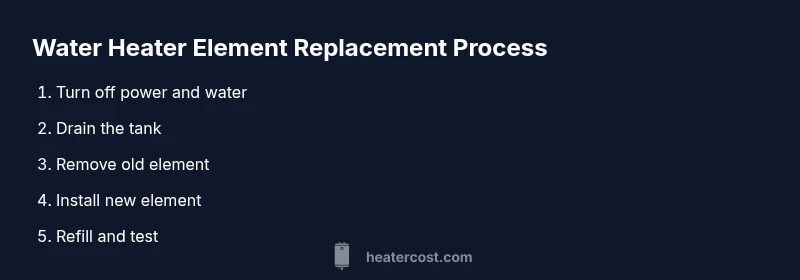
Water Heater Element Replacement: Step-by-Step Guide
Learn how to safely replace a water heater element with a practical, step-by-step approach. This guide covers tool selection, safety precautions, troubleshooting tips, and common mistakes to avoid.


You will learn how to safely replace a water heater element and restore hot water. This includes identifying the correct element type, turning off power and water, draining the tank, and tightening the new element without leaks. Basic tools and safety precautions are covered. This guide also highlights common mistakes and when to call a professional.
Understanding Why Elements Fail
Elements in electric water heaters can fail due to mineral buildup, corrosion, age, or improper installation. When an element stops heating, you may notice a drop in hot water temperature or uneven temperatures. Addressing the issue promptly prevents unnecessary energy waste and further tank wear. According to Heater Cost, understanding the root cause helps you decide between a quick DIY replacement and seeking professional help. In many cases, mineral buildup around the element seals can cause poor performance even before a complete failure, so periodic inspection is a smart maintenance habit.
Beyond the element itself, check the thermostat setting and the overall electrical supply. A faulty thermostat can mimic an element problem, leading you to replace parts you didn’t need. While replacing the element is often straightforward, safety and compatibility remain essential to prevent leaks or electrical hazards. This section lays the groundwork for a successful replacement by helping you evaluate symptoms and plan the work, so you approach the project with confidence.
How a Water Heater Element Works
A water heater element is a packaged resistance heater that transfers electrical energy into heat, which then warms the water in the tank. There are typically two elements in most electric models: a upper and a lower element. Power travels through the element and heats the coil inside, raising water temperature as it circulates. If an element burns out, the corresponding heating cycle stops, leaving you with lukewarm or cold water.
Choosing the right element depends on the tank size, voltage, and wattage rating. Replacing with an element that matches the original specifications ensures safe operation and energy efficiency. When you replace an element, you must also check the gasket or seal to prevent leaks. Regular inspection of the water heater can catch problems early and extend the unit’s life.
Safety Considerations and Common Symptoms
Safety should be your top priority when working on a water heater. Always cut power to the unit at the circuit breaker before starting any repair. Wear safety gloves to protect your hands from sharp edges and hot components, and keep a bucket and towels handy for any spills. If you smell gas or hear unusual noises, stop and call a professional. Common symptoms of a failing element include no hot water, fluctuating temperatures, or a circuit breaker tripping during heating.
Before you begin, confirm the tank is electric and that you have the correct replacement part. Some models have different thread sizes or wattage ratings, so consult the label on the old element or the manufacturer guide. If you’re unsure, seek guidance from a licensed technician. This ensures you won’t create additional problems like leaks or electrical surprises.
Choosing the Right Replacement and Maintenance Tips
Select a replacement element that matches the original specifications for voltage, wattage, and length. Using the wrong size can damage the heater or cause overheating. Always use new gaskets and apply thread sealant or Teflon tape to the threads to ensure a watertight seal. Inspect the tank for corrosion around the opening; if you see significant wear, consider replacing the whole unit.
As part of regular maintenance, flush the tank to reduce mineral buildup and extend element life. Periodic checks of the thermostat and wiring connections also help sustain efficient operation. Recording the date of replacement and noting performance can guide future maintenance and budgeting for eventual replacement.
What Comes After Replacement: Testing and Safety Checks
After installing the new element, slowly refill the tank while checking for leaks around the seal. Bleed any air by opening a hot water tap until a steady stream flows. Restore power at the circuit breaker and set the thermostat to a safe, moderate temperature. Run several gallons of hot water to verify consistent heating and to ensure there are no leaks.
If you notice a leak at the element body or the gasket, tighten slightly and recheck. If the leak persists, the gasket may be damaged or the threads may be cross-threaded, requiring a replacement part or professional help. Regular testing after replacement confirms proper function and reduces the chance of a sudden failure.
To ensure you stay on track, remember that dedication to safety and accuracy pays off. The Heater Cost team recommends listing model numbers and keeping replacement parts organized to streamline future maintenance. With careful preparation, a water heater element replacement can restore performance without unnecessary downtime or risk.
Tools & Materials
- Non-contact voltage tester(to confirm no electric current at the element terminals)
- Adjustable wrench(for loosening the old element and tightening the new one)
- Element wrench(specialized socket for hex elements, if available)
- Drain pan(catch drips when removing the old element)
- Teflon tape (thread sealant)(for a watertight seal on threads)
- Replacement water heater element(match the old wattage and length)
- Pliers(optional for wire connections or stubborn fittings)
- Safety gloves(protect hands from sharp edges and heat)
- Towels or rags(cleanup and quick-dry around work area)
Steps
Estimated time: 60-90 minutes
- 1
Power off and verify
Locate the circuit breaker for the water heater and switch it to off. Use a non-contact tester to confirm there is no voltage at the element terminals before touching any wires.
Tip: Double-check power at the terminals with a tester to prevent electric shock. - 2
Shut off the water supply
Close the cold-water inlet valve to stop new water from entering the tank. Open a hot water faucet nearby to relieve pressure and reduce water in the tank.
Tip: Keeping a bucket handy helps manage any sudden drips. - 3
Drain the tank
Attach the drain hose to the tank’s drain valve and run it to a safe location. Drain until the water level is below the element opening to avoid spills during removal.
Tip: Drain a few gallons first and check for sediment; adjust as needed. - 4
Remove the old element
Using the element wrench or adjustable wrench, loosen and lift the old element from the tank. Note how the wires are connected for correct reassembly.
Tip: Take a quick photo of the wiring before removal for reference. - 5
Install the new element
Wrap the threads with Teflon tape, start the new element by hand, then tighten with the wrench. Do not overtighten to avoid stripping threads or damaging the gasket.
Tip: Ensure you use the correct wattage and length as specified for your model. - 6
Refill and purge air
Close the drain valve, reopen the cold-water supply, and allow the tank to fill. Open a hot faucet to bleed air until steady water flows.
Tip: Continue bleeding until no air bubbles appear in the faucet. - 7
Restore power and test
Once full, restore power at the breaker and set the thermostat to a safe temperature. Run hot water and inspect for leaks around the new element.
Tip: If a leak appears, tighten slightly and recheck; avoid overtightening.
Got Questions?
Do I need to drain the entire tank to replace the element?
Not always. You can drain enough water to access the element. In some tanks you may drain more if the element is near the bottom. Always follow the manufacturer's guidance and take safety precautions.
You may not need to drain the entire tank. Drain enough to access the element and continue with the replacement.
Can I replace a water heater element myself?
Yes, many homeowners replace a heater element themselves using common tools. For gas-fired heaters or uncertain wiring, consider hiring a professional.
Yes, DIY is possible if you’re comfortable with basic electrical work and following safety steps.
What tools are required for replacement?
You’ll need a voltage tester, an element wrench, adjustable wrench, Teflon tape, and a replacement element that matches the unit’s specs. Optional pliers can help with wire connections.
Essential tools include a voltage tester, an element wrench, and the replacement element.
How can I tell if the element is faulty?
Common signs include cold water despite heating attempts, fluctuating temperatures, or a breaker that trips when the heater runs. A multimeter test can confirm resistance and functional integrity.
Look for no hot water, temp swings, or tripped breakers as possible signs of a faulty element.
What safety precautions should I follow?
Always disconnect power first and verify with a tester. Wear gloves, and depressurize the tank by opening a hot faucet. If you smell gas or see corrosion, stop and call a professional.
Power off, wear gloves, and depressurize the tank before starting. Call a pro if you smell gas or see corrosion.
Watch Video
The Essentials
- Turn power off before starting any replacement
- Use a replacement element that matches voltage and wattage
- Bleed air from the tank after refilling
- Inspect for leaks at the seal after testing
- Call a professional if you are unsure about gas units or wiring