Repair Heater Coil: A Practical DIY Guide
Learn how to diagnose, replace, and maintain a faulty heater coil safely. This step-by-step guide covers tools, safety, troubleshooting, and maintenance to help homeowners decide when to DIY or hire a pro.


This guide helps you diagnose and repair a heater coil in an electric water heater, covering safety prerequisites, necessary tools, a step-by-step replacement workflow, and maintenance tips. You’ll learn when a coil repair is appropriate, how to test for faults, and how to prevent future coil damage.
Understanding the role of a heater coil in residential systems
A heater coil is a critical component in many electric water heaters and boiler systems. It acts as the heat exchanger where electrical energy is converted into thermal energy that heats the water. When a coil fails, you may notice reduced hot water, leaks near fittings, ticking sounds, or visible corrosion. This guide focuses on coil-related issues you can diagnose and repair safely as a homeowner, while clearly delineating when professional service is required. According to Heater Cost, coil problems are among the most common reasons homeowners call for repairs, and timely attention can minimize water damage and energy waste. The goal is to restore efficient heating without compromising safety or warranties.
Signs your heater coil may need repair or replacement
Look for persistent leaks around coil fittings, dull or discolored water, unusually long heating times, or fluctuating water temperatures. Power surges or tripped breakers near the water heater can also point to coil or element faults. If the coil shows visible signs of corrosion or scaling, or if the thermostat struggles to regulate temperature, these are additional indicators that a coil issue exists. A coil that has hardened mineral buildup will often heat more slowly and may require chemical treatment or flushing in addition to mechanical repair. This section helps you distinguish minor issues from problems that will likely require a coil replacement.
Safety first: essential precautions before you begin a coil repair
Working with a heater coil involves electricity and water, which creates serious safety risks. Before any work, shut off power at the breaker panel and lockout the circuit if possible. Close the cold-water supply and drain the tank slowly to remove pressure. Wear insulated gloves and eye protection, and keep children and pets away from the workspace. If you smell gas or detect a high-pitched hiss near the unit, stop and call a licensed technician. Safety never takes a back seat in coil repairs, and your local codes may require permits for appliance work.
Diagnosis: how to confirm coil failure without tearing apart the system
Begin with a visual inspection of the tank fittings and coil connections for signs of corrosion, oxidation, or leaks. Use a multimeter to verify continuity in the coil circuit and test the resistance against manufacturer specs. If measurements fall outside the expected range or if wiring insulation is damaged, you likely have a failed coil. In some cases, the issue is a faulty thermostat or wiring fault rather than the coil itself, so a complete electrical test is essential before replacing components.
Replacing a coil in an electric water heater: a high-level workflow
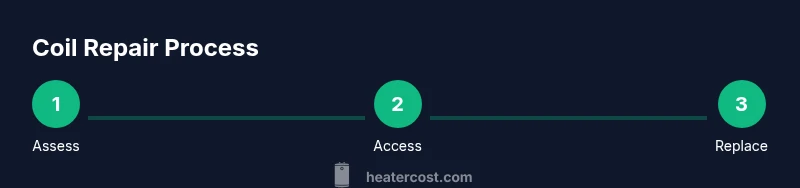
Replacing a heating coil requires draining the tank, removing the old coil, inspecting gaskets and seals, installing a compatible replacement, and reassembling the electrical connections. The coil must be seated correctly to prevent leaks and ensure efficient heat transfer. Always consult your unit’s manual to match the coil model and seal type. After installation, refill, repressurize, and verify there are no leaks while the unit heats water.
Post-installation testing: confirming success and safety
After reassembly, slowly refill the tank while watching for leaks at all joints. Restore power and allow the unit to reach its normal operating temperature. Listen for unusual buzzing or popping sounds, which can indicate electrical issues or air pockets. Use a thermometer to check water temperature at several outlets. If temperatures stabilize and no leaks are present, you’ve likely completed a successful coil repair.
Maintenance tips to extend coil life and prevent future failures
Regular flushing of the tank to remove mineral buildup helps protect coils from scale that reduces heat transfer efficiency. Consider installing a water-softening system if your water is hard. Inspect insulation around the heater to minimize heat loss, and schedule an annual check of electrical connections and safety controls. Small proactive maintenance steps can significantly extend coil life and reduce the likelihood of unexpected failures.
DIY vs. professional repair: choosing the right path for your coil issue
Many homeowners with basic electrical skills can perform a coil replacement, but there are scenarios where hiring a licensed plumber or electrician is prudent: if you encounter gas-powered appliances, complex wiring, hard-to-access coils, or warranty constraints. A professional can ensure code compliance, proper torque on fittings, and leak-free seals. Weigh the complexity against your comfort level and the unit’s warranty terms before proceeding.
Cost considerations and warranty guidance (non-quoted guidance)
Repairing or replacing a heater coil involves costs that vary by unit type, coil availability, and the need for ancillary parts like gaskets or thermostats. Consider whether replacement parts are readily available and whether the repair affects the warranty coverage. In many cases, a coil replacement is more cost-effective than replacing the entire unit, especially for older systems with otherwise solid components. Always verify warranty terms before purchasing parts.
Real-world examples and decision points you might face
A homeowner with a high-efficiency electric water heater discovered mineral buildup that reduced coil heat transfer. After flushing and replacing the coil, performance improved noticeably, with no leaks. In another case, corrosion around the coil indicated a failing gasket; replacing the gasket plus coil solved persistent leaks. These examples illustrate how accurate diagnosis guides whether to repair or replace components.
Final thoughts: planning next steps after a coil repair attempt
Document the work you performed, including part numbers and torque specs if available. Keep a log of any water testing results and temperature checks. If you encounter persistent leaks, power issues, or poor performance, revisit your plan and consider professional service to avoid further damage. This approach aligns with best practices recommended by Heater Cost for sustainable heating system maintenance.
Tools & Materials
- Replacement heater coil for electric water heater(Match model/coil type to your unit; ensure compatibility)
- Multimeter(Test coil continuity and circuit resistance)
- Screwdrivers (flathead and Phillips)(Access panel and electrical connections)
- Wrench set(Hold fittings steady during removal/installation)
- Teflon tape (PTFE) and thread sealant(Seal threaded joints to prevent leaks)
- Gasket/O-ring kit for coil(New seals to ensure leak-free operation)
- Insulated gloves and safety goggles(Personal protective equipment)
- Bucket and towels(Contain water during draining)
- Voltage tester / non-contact tester(Verify power is off before touching wiring)
- Shop towels or rags(Clean the area and wipe spills)
- Silicone sealant (high-temp)(Optional extra sealant for exterior connections)
Steps
Estimated time: 2-4 hours
- 1
Power off and verify
Locate the main breaker for the water heater, switch it OFF, and use a voltage tester to confirm there is no electrical energy reaching the unit. This prevents shocks during coil work.
Tip: Double-check with a tester at the terminal block before touching wires. - 2
Shut off water supply
Close the cold-water inlet valve to prevent new water from entering during the repair. This reduces the risk of leaks when you drain the tank.
Tip: Have towels ready for any splashes and place a bucket under the drain valve. - 3
Drain and isolate the tank
Attach the drain hose to the tank’s drain valve and drain a portion of the water to below the coil area. Isolate the area to keep the work zone dry.
Tip: If your tank is not fully drained, be prepared for residual hot water. - 4
Access the coil and thermostat
Remove the outer access panel and insulation to expose the coil and thermostat connections. Carefully detach any securing screws or brackets.
Tip: Keep track of screws and note wire routing for reassembly. - 5
Disconnect electrical connections
Label and disconnect the wires from the coil terminals. Use the multimeter to confirm circuits are de-energized before touching conductors.
Tip: Take a photo of wire layout for reference. - 6
Remove the old coil
Loosen mounting nuts and carefully extract the coil from the tank. Inspect the coil mounting hardware for wear or damage.
Tip: Do not force the coil; if it is stuck, re-check seals and attachments. - 7
Inspect seals and gasket surfaces
Check the gasket seating surfaces on the tank and the coil ends for wear. Replace worn gaskets to prevent leaks.
Tip: Clean any corrosion with a non-abrasive pad before placing new gaskets. - 8
Install the new coil
Insert the replacement coil with correct orientation. Refit seals tightly with new gaskets and apply appropriate thread sealant where needed.
Tip: Tighten evenly to avoid cross-threading and leaks. - 9
Reconnect wiring and controls
Reconnect the wiring according to your reference photos or notes. Verify tight connections and correct polarity where applicable.
Tip: Use lineman pliers if needed to ensure secure wires. - 10
Refill and repressurize the tank
Open the cold-water valve slowly and allow the tank to refill. Watch for leaks at all joints as the tank fills.
Tip: Do not rush the refill; a slow fill reduces air pockets. - 11
Restore power and test heat
Turn the breaker back ON and set the thermostat. Allow time for the heater to reach setpoint while monitoring for any signs of overheating or leaks.
Tip: Listen for odd noises that could signal air pockets or wiring issues. - 12
Final checks and performance test
Measure output water temperature at multiple taps and verify stability. Check for leaks over the next 24 hours and re-tighten fittings if needed.
Tip: Document the results for warranty or future maintenance.
Got Questions?
Can I repair a heater coil myself, or should I hire a professional?
DIY coil repair is possible for those with basic electrical skills and the right safety precautions. If you encounter gas connections, high voltage, or warranty concerns, hiring a licensed professional is advisable.
DIY repair is possible for simple coil problems, but call a pro for gas or high-voltage situations.
What are common signs that a heater coil is failing?
Common signs include decreased hot water, unusual noises, visible corrosion, leaks, and inconsistent water temperatures. If the coil shows discoloration or scale buildup, replacement is often required.
Look for leaks, corrosion, and inconsistent heating as red flags for coil failure.
Do I need to drain the entire tank to replace a coil?
Typically you drain a portion of the tank to access the coil, but the exact procedure depends on the model. Always follow the manufacturer’s guidance and ensure the tank is depressurized before starting.
Usually you drain enough water to access the coil, following the model’s instructions.
How long does a coil replacement take for an average home?
For a typical home, coil replacement can take a couple of hours if parts are readily available and no complications arise during disassembly.
Most replacements take a few hours, assuming a straightforward coil and access.
Will replacing a coil affect my warranty?
Replacing internal components can affect warranty coverage. Check your unit’s warranty terms and whether DIY work is allowed without voiding protections.
Warranty terms matter—check before you replace components yourself.
What safety precautions are non-negotiable for coil repair?
Always shut off power and water supply, verify no voltage with a tester, wear PPE, and avoid contact with live components. If you’re unsure, stop and call a pro.
Power off, test energy, wear PPE, and don’t proceed if unsure.
Watch Video
The Essentials
- Identify coil issues early to avoid bigger leaks.
- Follow safety steps to prevent electrical hazards.
- Use correct parts to ensure a reliable repair.
- Test thoroughly after reassembly before normal use.
- Maintain annual checks to extend coil life.