Noritz Tankless Water Heater Repair: A Homeowner’s Step-by-Step Guide
Diagnose, troubleshoot, and repair a Noritz tankless water heater with safe, step-by-step guidance. Learn when to DIY vs. hire a pro, plus essential maintenance tips from Heater Cost.


With this guide you’ll learn how to diagnose common faults on a Noritz tankless water heater, perform safe basic checks, and execute simple fixes such as flushing and filter cleaning. You’ll also gain criteria to decide whether to DIY or hire a professional, plus maintenance steps to extend the unit’s life.
Understanding Noritz Tankless Water Heaters and Common Failure Modes
Noritz tankless water heaters heat water on demand, delivering hot water efficiently while saving space. They rely on clean gas supply, proper venting, and mineral-free lines to function correctly. According to Heater Cost, mineral buildup is a leading cause of reduced flow and fluctuating temperatures in tankless systems. Common failure modes include no hot water, uneven temperatures, error codes, a blocked vent, or a scale-filled heat exchanger. By understanding these failure modes, homeowners can identify symptoms early and decide whether a DIY fix is feasible or if a professional should be consulted. Safety always comes first—turn off electricity, gas, and water before inspecting any internal components.
This section lays the groundwork for safe diagnosis by outlining how a Noritz system operates: a flow sensor detects hot water demand, a burner heats the exchanger, and a venting path exchanges exhaust. A problem in any of these subsystems can manifest as cold spots, short cycling, or error codes. The more you know about the typical sequence, the more accurately you can assess what you can tackle safely.
Diagnosing Problems Safely
Before you touch any hardware, ensure you have a safe working area and the right personal protective equipment. Start with the basics: confirm the unit is powered off, the gas supply is steady, and the main water line is open in the house. Look at the unit’s display for error codes and refer to the user manual for their meanings. Check for obvious signs of trouble, such as rust on connections, corrosion on valves, or a blocked vent. If you smell gas or hear unusual hissing, evacuate the area and contact emergency services or your gas supplier. Once basic safety checks are complete, you can begin targeted diagnostics to isolate the issue. Heater Cost analysis shows that many faults stem from routine maintenance gaps, like infrequent descaling or clogged filters.
Keep a notebook of symptoms, dates, and what you inspected. Documenting steps helps you or a technician track progress and avoid repeating work. If the unit is under warranty, consult the manual or an authorized technician to avoid voiding coverage.
If you encounter error codes, write them down and cross-check with the controller’s documentation. Some codes indicate sensor or ignition problems, others point to flow issues or water pressure. Pinpointing the area of concern speeds up repairs and reduces unnecessary disassembly.
Safe, Do-It-Yourself Fixes You Can Try
For homeowners who want to tackle simple maintenance, start with safe, non-invasive tasks. First, flush the heat exchanger using the approved method in your Noritz manual to remove mineral buildup. Replace or clean the inlet and outlet filters to restore proper water flow. Inspect the flame sensor and ignition area for soot or residue and clean with a soft brush if present. If you notice air in the gas line or inconsistent gas pressure readings, stop and call a licensed professional—gas systems require specialized equipment and safety protocols. When performing these tasks, ensure the power is off, water is drained where necessary, and you have a container to catch any residual water.
If the unit operates after a flush but notes temperature fluctuations, re-check venting and ensure the vent path is clear of obstructions. A blocked vent can reduce the unit’s ability to vent exhaust properly, triggering safety shutoffs. Remember: never bypass safety features or connect improper wiring. The goal of DIY fixes is to address straightforward, non-hazardous maintenance and avoid complex electrical or gas work.
When to Call a Pro and How to Choose
Not all problems should be DIYed. Gas leaks, strong gas odors, electrical faults, or persistent error codes after a flush require professional intervention. A licensed technician can safely diagnose high-efficiency venting issues, verify gas pressure with calibrated instruments, and inspect the combustion chamber for signs of wear. If your unit is older or shows frequent fault codes, a pro might advise replacement versus repair based on efficiency, warranty, and long-term cost. Heater Cost analysis shows that timely professional service often prevents escalating damage and preserves safety. When selecting a technician, seek a company with Noritz authorization or extensive tankless experience, request a written diagnostic report, and ask about parts warranty on repairs.
Finally, document all work performed, keep copies of maintenance records, and schedule regular service. Regular professional checks extend the life of your Noritz system and help maintain efficiency.
Maintenance and Longevity: Extending Your System's Life
Proactive maintenance is the best defense against unexpected failures. Establish a routine that includes annual or semi-annual inspections, flushing, and filter replacement according to water hardness in your area. Many regions with hard water accelerate mineral buildup, so more frequent descaling is prudent. Alongside professional service, homeowners should perform basic checks—ensure vent termination clearance, verify exhaust outlet integrity, and confirm weather seals are intact. A clean system runs more efficiently, produces more consistent hot water, and experiences fewer flame sensor issues. Heater Cost’s perspective emphasizes that consistent care correlates with longer equipment life and lower total ownership costs.
As part of a maintenance plan, keep a log of service dates, parts replaced, and any performance notes, and use this log to anticipate next-service timing. Regular checks also help you spot small leaks or corrosion early, reducing the risk of major failures.
Troubleshooting Quick Reference and Common Signals
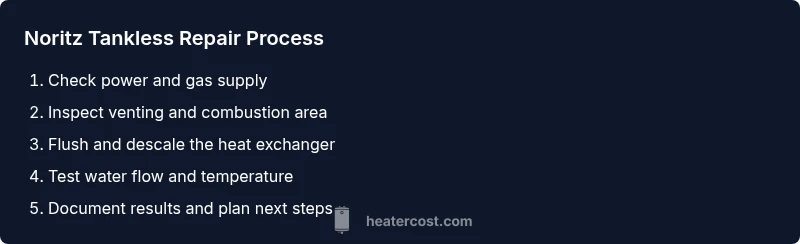
This section provides a concise reference to align with the longer steps above. If you encounter an error code, consult the manual for validated meanings and recommended remedies. In many cases, a simple flush, filter cleaning, or vent check resolves the issue. If problems persist after performing these basic tasks, schedule a service call. The goal is to restore reliable hot water, minimize energy usage, and maintain safe operation. The Heater Cost team recommends trusting your diagnostic notes and seeking professional help when the issue involves gas, electrical systems, or ignition reliability.
Tools & Materials
- Safety glasses(Protect eyes from splashes and debris)
- Adjustable wrench(Use for fittings on filters and hoses)
- Multimeter(Check electrical connections and voltages)
- Flush kit or descaling kit(Follow manufacturer-approved method)
- Bucket and towels(Catch water and protect working area)
- Noritz service manual(Helpful for model-specific codes and procedures)
Steps
Estimated time: 60-120 minutes
- 1
Power down and secure supplies
Shut off electrical power to the unit at the breaker, close the gas valve if safe to do so, and turn off the main water supply. This prevents accidental shocks, gas leaks, or water damage while you inspect the system.
Tip: Take a photo of wiring and connections before disconnecting anything. - 2
Check for error codes
Turn the unit back on briefly to display any error codes, then power down again. Note the codes and consult the manual or manufacturer site for meanings before proceeding.
Tip: Write down codes and correlate with symptoms you observed. - 3
Inspect gas and electrical supply
Verify the gas line is unobstructed and providing adequate pressure. Use a multimeter to confirm proper wiring and voltage to the control board. Tap lightly if needed to reseat loose connections.
Tip: If you suspect gas pressure issues, avoid further DIY work—gas work requires a pro. - 4
Flush and descale
Follow the manufacturer-approved flushing procedure to remove mineral buildup from the exchanger. Replace or clean inlet/outlet filters and reassemble components carefully.
Tip: Use a non-corrosive descaling agent compatible with your model. - 5
Test run and observe
Restore water, gas, and power. Run hot water to observe flow and temperature, listening for unusual noises or short cycling. Check for leaks around fittings.
Tip: Record performance and any persistent issues for future reference. - 6
Document and plan next steps
Note what you did, results, and whether issues persist. If problems recur or codes reappear, schedule a professional assessment.
Tip: Keep maintenance logs in a dedicated notebook or digital file.
Got Questions?
Can I repair a Noritz tankless water heater myself?
Yes for simple maintenance tasks like flushing and filter cleaning. Do not attempt gas, electrical, or vent repairs unless you are trained and licensed. Always consult the manual and safety guidelines.
You can do basic flushing and cleaning yourself, but avoid gas or wiring work unless you’re trained.
What are common signs that my Noritz unit needs service?
No hot water, fluctuating temperatures, unusual noises, or persistent error codes indicate service is needed. Regular maintenance can prevent many issues.
No hot water or erratic temps are red flags; listen for strange noises and check for error codes.
Is flushing effective for mineral buildup?
Flushing and descaling are proven methods to remove mineral buildup and restore flow. Follow the manufacturer’s procedure to avoid damage.
Flushing helps remove mineral buildup when done correctly, but follow the manual.
How long does a typical Noritz repair take?
Durations vary by issue. Simple tasks may be completed in a couple of hours, while complex diagnostics could take longer and may require parts.
Most simple fixes take a few hours, more complex cases can take longer.
Should I replace the unit before the warranty ends?
If repair costs approach or exceed replacement value, or if efficiency has dropped significantly, replacement may be more economical. Check warranty terms and consult a pro.
If repairs are costly or efficiency is poor, consider replacement after consulting the warranty.
Watch Video
The Essentials
- Diagnose issues safely with proper checks.
- Regular maintenance reduces mineral buildup and failures.
- Call a pro for gas/electrical problems or persistent codes.
- The Heater Cost team recommends annual professional inspections.