How to Remove a Baseboard Heater: A Step-by-Step Guide
Learn how to safely remove a baseboard heater, whether electric or hydronic. This comprehensive guide covers safety, tools, step-by-step removal, aftercare, and cost considerations to help homeowners, renters, and property managers plan ahead.


You will learn how to remove a baseboard heater by first identifying your system type (electric or hydronic), then safely disconnecting power and water as needed, removing trim and mounting hardware, and finally patching the wall if you’re renovating. This guide covers safety checks, required tools, and disposal options.
Understanding baseboard heaters and removal scenarios
Baseboard heaters come in two common flavors: electric and hydronic. When learning how to remove baseboard heater, it’s essential to identify which type you have because the removal steps and safety requirements differ. Electric baseboards are powered by a dedicated circuit and usually involve disconnecting electrical connections and brackets. Hydronic units, connected to a hot-water loop, require boiler shutoff, valve isolation, and loop drainage before any removal. If you’re renovating or repurposing a room, removing the unit can free wall space and simplify future maintenance. According to Heater Cost analysis, 2026, proper planning reduces downtime and risk when removing baseboard heaters. This guide builds a safe, cost-conscious approach for homeowners, renters, and property managers alike.
Safety first: power, water, and ventilation
Safety is the priority when removing any baseboard heater. Electric units demand that the circuit breaker is turned off and verified with a voltage tester before touching wiring. Hydronic systems require shutting off the boiler and isolating the zone to prevent hot water flow. In both cases, relieve pressure where applicable and prepare a containment plan for any residual water or steam. Wear protective gloves and goggles, use drop cloths, and keep children and pets away during the process. A cautious, step-by-step mindset minimizes the risk of electrical shocks, water leakage, or physical injury. As noted by Heater Cost Team, a deliberate preparation phase reduces unexpected downtime and helps you avoid costly mistakes.
Determine system type and prepare your workspace
Identify whether you’re dealing with electric or hydronic baseboard heaters by inspecting the unit’s wiring and plumbing. Electric systems typically have two or more wires connected to a terminal block; hydronic systems connect to the hot-water loop and nearby valves. Clear the workspace of furniture, lay down drop cloths, and gather your tools before you begin. Label remaining wires or hoses for reassembly if you plan to reinstall later. This upfront assessment is crucial to prevent damage to walls, floors, or the nearby electrical panel.
Patch planning and wall access: what you’ll be left with
After removal, you may expose a rough wall surface or a shallow cavity where the baseboard heats. Plan for patching with plaster or joint compound, and consider installing a wall plate or patch cover if you won’t be replacing the heater in the future. If you’re maintaining the wall for aesthetic reasons, measure the cutouts accurately and store the heater components in a labeled container for potential reuse. The goal is a clean, seamless wall surface ready for repainting or future upgrades.
Step-by-step removal overview (high-level before you dive in)
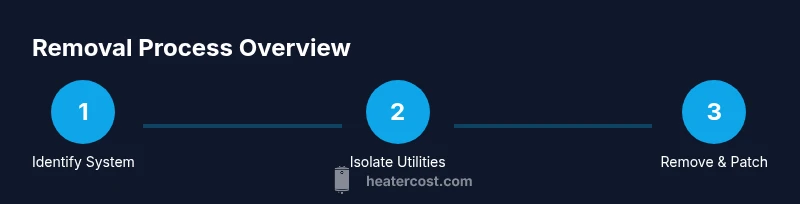
This overview summarizes the core actions you'll perform during removal: identify system type and shut off services, remove baseboard covers, disconnect electrical or plumbing connections, unmount the heater from its brackets, lift it away carefully, patch any openings, and clean the area. Each action reduces risk and helps prevent damage to walls, floors, or surrounding fixtures. For more detailed instructions, follow the numbered steps in the next block and consult your local codes and manufacturers for specific guidance.
Aftercare: patching, disposal, and alternatives
Post-removal steps include patching, sanding, and priming the wall to blend with surrounding surfaces. If the heater was functioning, consider recycling or disposing of metallic components according to local regulations and facility guidelines. If you’re reconfiguring a room, explore alternative heating options such as wall panels or a compact radiator that better fits the space and energy goals. The Heater Cost team emphasizes evaluating the cost implications and long-term maintenance needs before making a final decision.
Common mistakes and how to avoid them
Common errors include neglecting to shut off power or water, cutting through wall studs, damaging wiring, and inadequate patching that leads to future moisture or paint failure. By following a methodical plan, using the correct tools, and verifying every disconnection, you’ll minimize hazards and ensure a tidy finish. Remember to consider future use of the space and whether you’ll reinstall any form of heating in that location.
Tools & Materials
- Voltage tester(Test wires to confirm no live current)
- Screwdriver set (Phillips and flat-head)(For screws securing covers and mounting brackets)
- Putty knife(For removing caulk and trim adhesive)
- Utility knife(Trim excess caulk and clean cuts)
- Adjustable wrench(Loosen fittings on hydronic valves)
- Pliers (needle-nose)(Grip small components and wires)
- Bucket and towels(Contain any residual water or drips)
- Drop cloths(Protect floors and nearby furniture)
- Drywall patch kit or joint compound(Seal openings after removal)
- Sandpaper or sanding block(Smooth patched area before painting)
- Safety glasses and gloves(Personal protection during work)
- Lumens flashlight or headlamp(Improve visibility in tight spaces)
- Trash bag or box for parts(Keep components organized)
- Rags or shop towels(Clean up spills and wipe surfaces)
Steps
Estimated time: 2-4 hours
- 1
Identify system type and power down
Inspect the baseboard heater to determine if it’s electric or hydronic. Switch off the corresponding circuit at the breaker panel and verify with a voltage tester. This prevents shocks during disassembly and ensures a safe start.
Tip: If you’re unsure about the circuit, hire a licensed electrician to confirm power is off. - 2
Isolate hydronic loop or cut electrical feed
For hydronic systems, locate the boiler shutoff and close the zone valves to stop circulating hot water. For electric units, disconnect the power from the terminal block and cap exposed wires with wire nuts.
Tip: Label any disconnected wires or hoses for easier reinstallation or future repurposing. - 3
Remove baseboard trim and covers
Carefully pry off the trim with a putty knife or flat-head screwdriver, taking care not to damage drywall. Remove the heater covers and expose mounting brackets.
Tip: Work gradually along the length to avoid bending or cracking trim pieces. - 4
Unfasten and detach the heater
Loosen brackets holding the unit and slowly lift free from the wall. If you’re dealing with hydronic piping, ensure you do not pull on hoses; support with a second person if needed.
Tip: Keep the heater level as you lift to prevent dropping or pinching pipes. - 5
Disconnect electrical or plumbing connections
For electric: remove conductors from the terminal block and secure with wire nuts. For hydronic: disconnect hoses and valves, then cap or seal as required.
Tip: Do not reuse damaged connectors; replace with proper parts after removal if reinstallation is planned. - 6
Remove mounting brackets and lift away
If brackets are screwed into studs, use a screwdriver or drill to remove screws. Have a helper ready for heavy units and place the heater on a protected surface.
Tip: Take a photo of the setup before removal for reference if you plan to reinstall later. - 7
Patch and prep the wall
Fill any holes with drywall patch or joint compound, smooth, and sand to blend with surrounding wall. Repaint as needed or install a wall plate if you’re capping the area.
Tip: Prime patched areas to prevent paint absorption differences. - 8
Clean up and plan next steps
Dispose of or store heater components safely. If you’re repurposing the space, consider alternative heating or a smaller, modern solution aligned with energy goals.
Tip: Document your work and any permits or inspections needed for your locale.
Got Questions?
Do I need to shut off power to remove a baseboard heater?
Yes. For electric units, shut off the circuit at the breaker and verify with a tester. For hydronic units, also shut off the boiler and close the zone valves to stop water flow.
Yes. Turn off the breaker for electric units, and for hydronic ones, also shut the boiler and close zone valves before starting.
Can I remove a baseboard heater myself, or should I hire a pro?
If you are comfortable with basic electrical or plumbing tasks and follow safety precautions, you can remove a baseboard heater. If you’re unsure about system type or dealing with gas lines or complex piping, hire a licensed professional.
If you’re comfortable with basic electrical or plumbing tasks, you can do it yourself. If unsure, it’s best to hire a pro.
Will removing the heater affect other heating zones?
Removing a baseboard heater affects only the zone it’s connected to. Hydronic systems may require balancing after removal, but other zones will operate normally if valves are managed correctly.
Removing one unit should not impact other zones if the rest of the system stays intact.
Do I need a permit to remove a baseboard heater?
Permits are typically not required just to remove a baseboard heater, but if you’re modifying gas lines, plumbing, or venting, local regulations may apply. Check with your city or a licensed contractor.
Usually not, but check local rules if you're changing gas lines or major plumbing.
What should I do with the heater after removal?
Disposal depends on the unit type. Electric units can be recycled as metal, while hydronic components may require special disposal due to coolant or water content. Follow local guidelines and reuse or repurpose when possible.
Recycle metal components where allowed and follow local disposal guidelines for any coolant.
What if I plan to reinstall later?
Keep mounting brackets in a labeled bag, photograph initial setup, and store the heater in a protected area. Reinstallation will be smoother if you preserve fasteners and keep a record of pipe/wire routes.
Label everything, photograph the original setup, and store parts safely for easier reinstallation.
Watch Video
The Essentials
- Identify system type before starting removal
- Shut off power and water to prevent hazards
- Patch and repaint for a clean finish
- Document the process for future reinstallation