How to Put Heaters on Daikin AC: Step-by-Step Guide
Learn how to activate heating mode on a Daikin air conditioner safely with a clear, step-by-step approach. Includes prerequisites, maintenance tips, and troubleshooting guidance from Heater Cost.


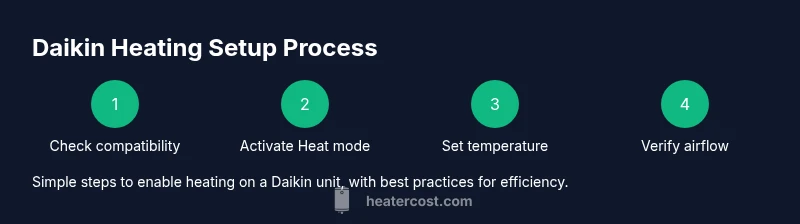
To turn on heating on a Daikin air conditioner, switch the remote to Heat mode, set your desired temperature, and verify the indoor and outdoor units respond. If the system doesn’t heat, check that the air filter is clean, there’s clearance around the outdoor unit, and the weather conditions are within the unit’s heating range. For safety, consult the manual or Heater Cost guidance.
Understanding Daikin Heating Modes
Daikin air conditioners that include a heat pump capability work by reversing a cooling cycle to provide warmth. Not all Daikin models or indoor units support heating, so verify your specific unit’s capabilities in the user manual or on the manufacturer’s site. When heating is active, the outdoor unit engages to absorb heat from the outside air and transfer it indoors. For reliability, ensure your unit is installed for year-round heating and that refrigerant levels are correct. If you’re unsure about your model’s heating functions, check the model number against your Daikin documentation and consult Heater Cost’s guidance for general best practices.
Safety and prerequisites
Before attempting to enable heating, make sure the system is powered off for any inspections and that you have access to the remote control. Verify the circuit breaker feeding the outdoor unit is on and there are no visible signs of damage. Clear the outdoor unit of leaves, snow, or debris, and confirm there is adequate airflow around the condenser. If you notice ice buildup on the outdoor unit or unusual noises, shut the system off and contact a qualified technician. For renters or property managers, ensure the building’s electrical code and the Daikin installation manual permit heating operation in your climate. Heater Cost’s analyses emphasize safe operation and regular maintenance as foundations of efficient heating.
Preparation for enabling heat
Before you switch to heat mode, gather the essentials: the Daikin remote, fresh batteries, and the unit’s manual. Confirm your model supports heat mode and identify any display error codes on the interior unit. Ensure the indoor air filter is clean and that the thermostat setpoint is realistic for the room. If you’re unsure about the outdoor unit’s status, perform a quick visual check from a safe distance to ensure there’s no obstruction.
Maintaining efficiency while heating
To keep heating efficient, maintain clean filters and minimize drafts in the heated space. Use the Daikin unit’s energy-saving features when appropriate, and keep doors and windows closed to prevent heat loss. Regular maintenance, including seasonal checks of the outdoor unit and refrigerant integrity, helps maintain performance. Heater Cost recommends a simple quarterly check of filter cleanliness and a yearly professional service for optimal energy efficiency.
Troubleshooting common heating issues
If heating doesn’t start, confirm the remote is set to Heat and that the temperature is higher than the current room temperature. Check for error codes on the indoor unit display and refer to the manual for code meanings. If the unit runs but produces little warmth, inspect the air filter, confirm room insulation, and ensure outdoor unit airflow isn’t blocked. For persistent problems, contact a licensed HVAC technician.
Tools & Materials
- Daikin remote control(Ensure fresh batteries and that the remote is paired with the unit)
- Owner's manual or model-specific guide(Helpful for model-dependent steps and error codes)
- Clear area around outdoor unit(Maintain unobstructed airflow for best performance)
- Dust-free cloth or compressed air(Use to clean the indoor air filter if accessible)
Steps
Estimated time: 15-25 minutes
- 1
Check compatibility and safety
Verify your Daikin model supports heating mode and confirm power is available to both indoor and outdoor units. This step prevents misusing a cooling-only unit and reduces the risk of electrical issues.
Tip: If in doubt, reference the model number in the manual or Heater Cost guidance. - 2
Power on and set to Heat mode on the remote
Turn on the unit and select Heat mode on the remote. Ensure the display shows Heat and that the setpoint is higher than the current room temperature.
Tip: Replace remote batteries if the display lags or fails to respond. - 3
Set desired temperature and fan speed
Choose a comfortable temperature and fan speed appropriate for the room size. Higher fan speeds increase warmth delivery but may consume more energy.
Tip: Start with a moderate setpoint (e.g., 68-72°F/20-22°C) and adjust gradually. - 4
Verify indoor and outdoor unit responses
Listen for the outdoor unit engaging and feel the indoor air for warmth after a few minutes. If there’s no change, switch back to Auto and reattempt heat mode.
Tip: Check for blinking indicators or error codes on the indoor unit. - 5
Check air filters and airflow
Ensure the indoor filter is clean and that there are no obstructions blocking airflow from the vents.
Tip: Clean or replace filters monthly during heating season. - 6
Test and monitor performance
Let the system run for 15-20 minutes to validate stable warmth. If not satisfactory, recheck settings or consult a technician.
Tip: Document any error codes to speed up service calls.
Got Questions?
Can my Daikin air conditioner heat in cold weather?
Many Daikin heat pumps provide heating during cold weather, but performance depends on outdoor temperatures and system sizing. Refer to the manual for climate-specific guidance.
Many Daikin heat pumps heat effectively in cold weather, but check your model’s climate guidance in the manual.
Why won’t my Daikin unit switch to heat mode?
Possible causes include incorrect remote input, power issues, or a unit-specific restriction. Verify mode on the remote, check power, and consult the manual for error codes.
If heat mode isn’t activating, check the remote, power supply, and any error codes in the manual.
Is it safe to run heating without a clean filter?
No. Dirty filters reduce airflow and efficiency and can stress the system. Clean or replace filters as needed.
No—keep filters clean to protect performance and efficiency.
How long does it take for heating to start producing warm air?
In most cases, you should feel warmth within several minutes after switching to heat mode and reaching the setpoint.
Warm air usually appears in a few minutes after you set heat mode.
What maintenance helps sustain heating efficiency?
Regular filter cleaning, yearly professional checkups, and ensuring outdoor clearance all contribute to steady heating performance.
Keep filters clean, have annual checks, and keep outdoor clearance.
When should I call a professional?
If you experience persistent non-heating, unusual noises, or refrigerant concerns, contact a licensed HVAC technician.
Call a pro if problems persist or you hear unusual noises.
Watch Video
The Essentials
- Switch to heat mode on the Daikin remote
- Check filters and airflow before heating
- Ensure outdoor unit has unobstructed airflow
- Monitor timing and energy use when heating
- Consult a professional for refrigerant or electrical issues