How to Put Heater on Aircon: Step-by-Step Guide
Learn how to enable heating on a compatible air conditioner with heat pump mode. This practical guide covers safety, compatibility checks, step-by-step activation, and energy considerations to keep your home warm efficiently.


This guide shows you how to enable heating on a compatible air conditioner that uses heat pump technology. It covers prerequisites, safety checks, and how to operate the thermostat in heat mode, along with a clear set of steps and a basic test routine. By following these steps, you’ll understand what equipment you need, common pitfalls to avoid, and how to verify warm air is circulating.
Understanding heat pump-enabled air conditioners
Heat pump systems provide both cooling and heating by moving heat between indoors and outdoors. When your air conditioner includes a heating function, it can deliver warm air using reverse-cycle technology. This section explains how to recognize a heat pump setup, the typical components involved (indoor unit, outdoor condenser, reversing valve, and thermostat), and the terminology you’ll encounter such as hot-start, defrost, and reverse-cycle operation. If you’re asking how to put heater on aircon, the answer depends on whether your unit is designed for heating and whether the reversing valve and refrigerant circuit are configured for winter operation. Check your model’s manual and the outdoor unit label to confirm compatibility. If heating is supported, proceed with the steps in this guide and keep expectations realistic about performance in very cold outdoor temperatures.
Safety checks before you begin
Before interacting with electrical components or opening panels, power down the system at the breaker and confirm the unit is de-energized using a voltage tester. Wear safety gloves and use proper tools. Read your thermostat and outdoor unit manuals to understand any model-specific precautions. Ensure pets and children are away from the work area. This chapter also covers who should perform the work if you’re unsure about handling electrical connections, refrigerant lines, or panel loosenings. According to Heater Cost, following the manufacturer’s safety guidelines is essential to protect you and your equipment while you learn how to put heater on aircon.
Compatibility and feature checks you should make
Not all air conditioners can heat effectively, especially older cooling-only models. Verify that your system is a heat pump or a cooling/heating inverter with a reversing valve. Look for terms like heat mode, reverse-cycle, or SPG heat on the control panel. Check that your thermostat communicates correctly with the indoor unit and that the outdoor unit is free of debris. If your system is split or multi-split, ensure all zones are configured to heat mode and that the ductwork or air distribution paths can deliver warm air uniformly. This section helps you confirm before you attempt to turn on heater mode, reducing the risk of short cycling or improper operation.
Common issues and what they imply
If you switch to heat mode and still don’t feel warm air, the problem may lie with refrigerant flow, a clogged air filter, a dirty outdoor coil, or an undersized system for the space. Defrost cycles can briefly pause heating in cold weather, and reversing valve faults may prevent heat mode from engaging. Listen for unusual noises, check for iced coils, and inspect the condensate drain for blockages. While diagnosing, consider whether your space requires a larger unit or supplemental heating. Heater Cost recommends a systematic approach: rule out simple air path problems first, then explore mechanical or refrigerant-related issues with a qualified technician if heating performance remains inadequate.
Energy use and practical considerations
Using heat mode on an air conditioner can be more energy-efficient for some homes than running a separate heater, especially in moderate climates. However, performance and cost vary by unit, insulation quality, and outdoor temperatures. To maximize efficiency, maintain clean filters, seal air leaks, and use a programmable thermostat to reduce waste. This section explains how to balance comfort with energy cost awareness and how to set reasonable temperatures so your system runs smoothly without overworking.
Maintenance and seasonal readiness
Regular maintenance supports reliable heating from your air conditioner. This includes timely filter changes, outdoor unit cleaning, and confirming that the refrigerant charge remains within manufacturer specifications. In seasons when you rely on heat mode, schedule a professional check at least once a year to inspect electrical connections, sensor calibrations, and the reversing valve. By staying proactive, you’ll reduce the likelihood of sudden failures and keep your heater-on-aircon setup performing as intended.
Tools & Materials
- Owner’s manual(Keep handy for model-specific steps)
- Thermostat with heat setting(Programmable or smart thermostat recommended)
- Safety gloves(Protect hands when handling panels)
- Screwdrivers (Phillips/flathead)(For panel access)
- Voltage tester / multimeter(Optional safety check for electrical work)
- Flashlight or headlamp(Improve visibility inside panels)
- Clean cloth and coil brush(Dirty outdoor coil or indoor fins may reduce efficiency)
Steps
Estimated time: 30-45 minutes
- 1
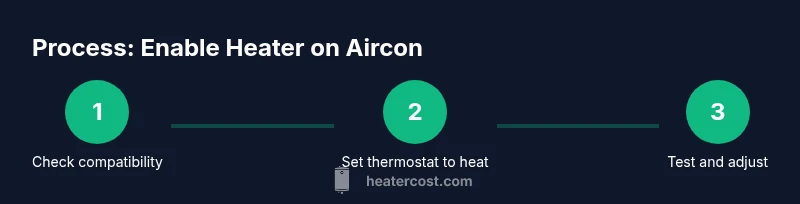
Verify compatibility
Locate your unit’s model and confirm it supports heating. Check for heat mode or reverse-cycle terminology in the manual or control panel. If the unit is cooling-only, do not force it into heating as this could damage components.
Tip: If unsure, contact the manufacturer or a licensed technician to confirm heating capability before proceeding. - 2
Turn off power and prep area
Switch off the circuit breaker feeding the outdoor and indoor units. Use a voltage tester to confirm no live circuits before you remove any panels. Clear the area around the outdoor condenser and indoor air handler.
Tip: Label breakers and panels to avoid confusion when you restore power. - 3
Set thermostat to heat mode
On the thermostat, select heat mode and set an initial target temperature. If your system supports economy or energy-saving modes, start in a comfortable baseline while you test air flow and temperature response.
Tip: Give the system a few minutes to stabilize after changing modes. - 4
Check airflow paths
Ensure air filters are clean and vents are open. Confirm there are no obstructions around the indoor unit and that outdoor airflow is not blocked by debris, snow, or vegetation. Poor airflow can hinder heating performance.
Tip: Clean or replace dirty filters before deeper diagnostics. - 5
Inspect outdoor unit and reversing valve
If safe to access, visually inspect the outdoor unit for debris and ice. A stuck reversing valve or iced coils can prevent heating. Do not attempt refrigerant work; call a pro if you suspect a valve or leak.
Tip: Never hammer on components; use manufacturer-approved defrost or reset procedures if provided. - 6
Test the system
Power the system back on and observe if warm air is produced from the vents. Note cycle times, any unusual noises, or short cycling. If no heat is produced after a few cycles, switch back to cooling and schedule service.
Tip: Document symptoms with timestamps to help a technician diagnose later. - 7
Confirm safety and seal the work
Ensure all panels are reattached, connect any wires securely, and restore power. Reset any time settings on the thermostat if needed. Verify that safety labels are in place and that the area is clean.
Tip: Keep a basic maintenance log for the system.
Got Questions?
Can all air conditioners heat the space, or do I need a heat pump?
Most cooling systems built as heat pumps or with reverse-cycle capability can heat. If your unit is cooling-only, it cannot provide heating. Always check the model specifications and the thermostat compatibility before attempting heating.
Most heat pumps can heat, but cooling-only units cannot. Verify your model specs before enabling heat mode.
Is heating via aircon more expensive than a dedicated heater?
Energy use depends on climate, insulation, and unit efficiency. Heat pump heating can be cost-effective in milder weather, but costs rise as outdoor temperatures drop. Compare performance across seasons and use a programmable thermostat to manage use.
Costs depend on climate and efficiency; heat pumps can save money in moderate weather with proper settings.
What should I do if the system won’t switch to heat mode?
First, confirm compatibility and wiring as per manuals. Check for a defrost cycle or control settings that disable heating in certain conditions. If unresolved, contact a licensed technician to inspect the reversing valve and refrigerant circuit.
If heat mode won’t engage, check compatibility and basic settings; otherwise, call a pro to inspect hardware.
Are there safety concerns I should watch for?
Electrical components can present shock risks; never work on live circuits. Keep outdoor units clear of snow and debris, and ensure proper ventilation around indoor units. Follow manufacturer safety guidelines at every step.
Electrical safety is crucial; ensure power is off and follow manuals if unsure.
Should I hire a professional for installation or only for repairs?
If you’re unsure about electrical work or refrigerant systems, hire a licensed HVAC technician. For routine maintenance and basic operation checks, you can often handle preparation and testing with manufacturer guidance.
For electrical or refrigerant issues, a professional is recommended.
Watch Video
The Essentials
- Verify heating capability before attempting.
- Follow safety steps and manufacturer guidance.
- Ensure airflow and outdoor clearance for effective heat.
- Test system operation and document issues early.