How to Use Heater on AC: A Homeowner’s Guide 2026 Tips
Learn how to safely and efficiently use the heater on your air conditioner, typically a heat pump. This guide covers system types, safety, thermostat settings, maintenance, and troubleshooting for homeowners.


This guide teaches you how to use the heater function on an air conditioner—typically a heat pump. You’ll learn to identify your system, safely switch to heating mode, set thermostats for comfort and efficiency, monitor defrost cycles, and perform basic maintenance to keep heating performance reliable. Follow the steps and safety checks to prevent wasteful energy use and potential damage.
Understanding Heating in an AC System
Heat pumps are the backbone of many modern heating strategies, especially in milder climates. Instead of generating heat by burning fuel, they move existing heat from outdoors to indoors, delivering warmth efficiently through refrigerant cycles and a compressor. When you learn how to use heater on ac, you’re basically engaging the heating mode of a heat pump or hybrid system. The Heater Cost team emphasizes that efficiency hinges on using proper defrost cycles, matching outdoor temperatures, and selecting a compatible thermostat. By grasping these mechanics, homeowners can evaluate whether to rely on the heat pump for most of the season or supplement with auxiliary heat during very cold snaps. Expect smoother operation if you know the difference between heating mode and backup heat and recognize how outdoor temperatures influence performance.
Confirm Your System Supports Heating
Not every air conditioner provides built-in heating. Identify whether your unit is a heat pump, a dual-fuel system, or a traditional cooling-only AC with separate heating options. Check the thermostat for a heat mode option, inspect the outdoor unit for labels indicating heat pump operation, and review the owner’s manual. If you’re unsure, look for terms like heat pump, reverse cycle, or auxiliary heat. The Heater Cost analysis notes that performance varies by climate and system design, so verify compatibility before relying on the heater feature. This confirmation helps you avoid attempting heating with a cooling-only setup, which can damage components or waste energy.
Safety First: Electrical, Refrigerant, and Ventilation Considerations
Before enabling heating, power down the system when inspecting panels or touching wiring. Never bypass safety switches or remove panels with power on. Ensure the outdoor unit has clear airflow and is free from debris, and check that refrigerant lines are intact and not leaking. Adequate ventilation around the indoor unit is essential to prevent overheating or frost buildup. Regular safety checks reduce the risk of electrical shocks, refrigerant exposure, and mechanical failures. If you notice ice buildup on the outdoor coil or reduced airflow, turn off the system and consult a professional.
Preparation: What to Check Before You Switch to Heating
Prepare the space and system by inspecting air filters, ensuring they are clean or replaced, and confirming that the thermostat is communicating with the HVAC equipment. Verify that the indoor air isn’t blocked by furniture or curtains and that supply and return vents are open. Check the outdoor unit’s clearance and remove any snow or debris that could impede heat exchange. Confirm that the thermostat batteries are fresh and the software is up to date if you use a smart thermostat. These steps help the heating cycle start strong and prevent short cycling or inefficiencies.
Step-by-Step: Turning On Heating Mode on Your AC (Heat Pump)
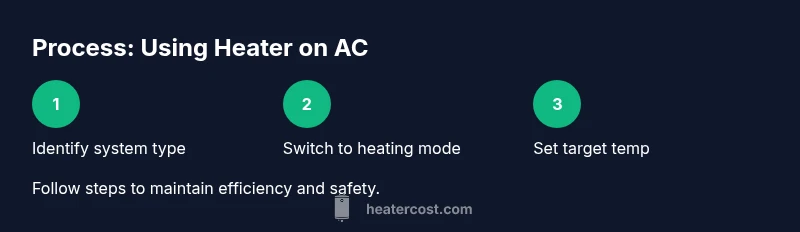
- Set the thermostat to heat mode and verify the display shows a heating target. 2) Increase the setpoint gradually by 2–4 degrees at a time to avoid shocking the compressor. 3) Allow the system to run for several minutes to confirm warm air is being distributed. 4) If the outdoor temperature is very low, expect longer cycling and possible auxiliary heat. 5) Check for consistent airflow and listen for any unusual sounds. 6) If you use a smart thermostat, enable seasonal energy savings and monitor usage. The goal is a smooth transition with minimal noise and steady warmth.
Thermostat Settings for Comfort and Efficiency
Choosing the right temperature target is key. Start with a comfortable default (for many homes around 68–72°F or 20–22°C) and adjust gradually. Use a programmable schedule to reduce heat when you’re away or asleep, and enable fan settings only when it improves comfort without wasting energy. In milder winters, setpoints lower during the day and higher at night if you’re home. For energy-conscious homes, pair the heat mode with an energy-saving thermostat mode and ensure zoning if your home has multiple zones.
Defrost Cycles and Practical Usage Tips
Defrost cycles are an essential part of heat pump operation in cold weather. When outdoor coils frost over, the system temporarily switches to defrost mode to melt ice and restore efficiency. You might notice a brief warm-up interruption or a slight change in airflow during this cycle. Don’t manually disable defrost; it protects system efficiency and prevents frost-related damage. If defrost runs excessively or air flow seems weak after defrost, schedule a service check to ensure coils, sensors, and refrigerant levels are in good condition.
Maintenance to Keep Heating Efficient
Regular maintenance is a cornerstone of reliable heat pump heating. Change or clean filters every 1–3 months depending on usage and dust levels. Schedule professional inspections at least once a year to verify refrigerant charge, electrical connections, and coil cleanliness. Clean outdoor coils gently with a soft brush when accessible, and keep the surrounding area free of vegetation or debris. A well-maintained system operates more efficiently, reduces energy costs, and prolongs equipment life.
Troubleshooting Common Issues
If heating suddenly feels weak, start with simple checks: confirm the thermostat is in heat mode, verify the setpoint, and inspect air filters. Listen for unusual noises that could indicate a loose belt, fan issue, or refrigerant problem. If there is a frost buildup after a thaw, ensure outdoor clearance and check the defrost function. Low indoor humidity, insufficient airflow, or cold drafts can all point to duct or vent blockages. When in doubt, consult a pro to diagnose refrigerant leaks or compressor concerns.
When to Call a Pro and What to Expect
Certain tasks require licensed professionals, including refrigerant handling, electrical work beyond simple battery changes, and significant airflow or coil issues. If you notice persistent cycling, a pungent or unusual odor, ice on the outdoor coil, or a sharp increase in energy use, schedule an HVAC evaluation. A professional will typically inspect refrigerant charge, perform tests on sensors and control boards, and verify that the defrost system operates correctly. Regular maintenance by a qualified technician helps prevent costly breakdowns and keeps heating performance steady.
Tools & Materials
- HVAC owner's manual(Keep model-specific installation and safety instructions handy)
- Thermostat manual or app access(Ensure you can set heat mode and target temperature)
- Screwdriver set (Phillips and flat-head)(For panel access if needed after power down)
- Voltmeter or multimeter(Useful for basic electrical checks with power off)
- Basic safety gear (gloves, safety glasses)(Wear when inspecting outdoor unit or panels)
- Replacement air filters(Stock ahead of heating season; check fit and size)
Steps
Estimated time: 30-45 minutes
- 1
Identify system type
Confirm your AC unit supports heating by locating heat pump labeling or checking the owner’s manual. If the system is not a heat pump or dual-fuel, do not rely on an internal heater. Understanding the system ensures safe operation and avoids damage.
Tip: If unsure, contact a licensed HVAC tech to confirm compatibility before enabling heating mode. - 2
Power down for inspection
Turn off power at the outdoor disconnect and indoor breaker before touching any wires or panels. This reduces the risk of electric shock while you inspect filters and ductwork.
Tip: Use a lockout tagout sticker if you have access to one to prevent accidental re-energization. - 3
Switch to heating mode
Set the thermostat to heat mode and ensure the display shows a heat target. If you have a dual-stage system, select the appropriate stage for your conditions.
Tip: Avoid raising the temperature too quickly; gradual changes prevent compressor strain. - 4
Set a sensible target temperature
Start with a comfortable target (often around 68–72°F or 20–22°C) and adjust in small increments. If the space doesn’t feel warm after 15–20 minutes, check air filters and return vents.
Tip: Program a schedule for when you’re home to maximize energy savings. - 5
Monitor defrost and airflow
Observe for any frost on outdoor coils or changes in indoor airflow. Defrost cycles may momentarily alter warmth; this is normal for heat pumps in cold weather.
Tip: If you hear banging or grinding during defrost, turn the system off and call a pro. - 6
Post-use checks
After use, check that air is warm, vents are unobstructed, and filters are clean. Note any abnormal sounds or reduced performance for scheduling maintenance.
Tip: Keep a simple heating log to track performance across seasons.
Got Questions?
Can I use the AC heater function in any weather?
Heat pumps work best in moderate conditions; extremely cold weather reduces efficiency. In very cold climates, auxiliary heat may be needed.
Heat pumps work best in milder weather, and in very cold conditions you might rely on auxiliary heat.
Is emergency heat different from normal heat mode?
Emergency or auxiliary heat uses a supplementary heat source and is less efficient. Use it only when the primary heat pump is not keeping up.
Emergency heat uses extra warmth but costs more energy, so use it when needed.
Do I need a professional to switch to heating mode?
Most systems allow heating mode via the thermostat, but some installations require professional setup or service. Check your manual and consult an HVAC technician if unsure.
Most setups you can switch yourself, but some cases require a pro.
How often should I service a heat pump?
Have the system inspected at least once a year and after seasonal heavy use. Regular maintenance helps prevent unexpected failures.
Annual checks keep your heat pump reliable and efficient.
What safety checks should I perform before turning on heating?
Ensure the breakers are off before inspecting panels, verify clear space around outdoor unit, and replace filters. Do not touch refrigerant lines unless trained.
Power off before inspection and keep filters clean.
Why does the outdoor unit frost over and how is it resolved?
Frost on outdoor coils occurs when outdoor temperatures drop and humidity condenses. The system automatically defrosts; if frost persists, schedule service.
Frost happens in cold weather; defrost normally fixes it, but persistent frost needs a pro.
Watch Video
The Essentials
- Identify system type before using heat mode
- Switch to heat mode safely with gradual setpoint changes
- Maintain filters and airflow for efficiency
- Monitor defrost cycles and outdoor coil condition
- Schedule annual professional maintenance