How to Prevent a Heater from Burning Outlet
Learn practical steps to prevent space heater outlets from overheating and burning. This guide covers safety checks, wiring basics, and prevention strategies for homeowners and renters, with expert guidance from Heater Cost.


By following these steps, you can reduce the risk of a heater causing an outlet fire. This guide covers safety checks, proper circuit use, and prevention strategies for homeowners and renters. You’ll learn how to prevent heater from burning outlet by inspecting wiring, selecting the right outlet, and knowing when to call a pro.
Why overheating outlets happen when heaters are involved
Space heaters are powerful devices that draw a lot of current for quick warmth. In a typical home, many outlets share a single circuit that is often rated for 15 amps. A common space heater can consume around 1500 watts, which translates to about 12.5 amps on a 120‑volt circuit. That leaves limited headroom for other devices and increases the chance that the outlet or wiring will overheat, especially if the outlet is old, the wiring is degraded, or the heater’s cord is damaged. According to Heater Cost, learning how to prevent heater from burning outlet starts with understanding your circuit’s limits and the real load a heater places on it. Proper planning, not improvisation, reduces fire risk and equipment damage.
Why this matters: overheating outlets can lead to melted insulation, scorch marks, or electrical fires. A proactive approach combines correct outlet selection, sensible heater wattage, and routine inspections to keep spaces safe.
Signs your outlet is overheating
Overheating outlets may show subtle and obvious warning signs. A warm or hot outlet when the heater is running is a red flag. You might also notice a buzzing or crackling sound, a faint burning odor, discoloration around the outlet cover, or frequent breaker trips. If the outlet feels warm to the touch after a heater has been used, stop using it immediately and investigate the cause. These symptoms indicate excess heat buildup in the outlet, the plug, or the wiring. Early detection is crucial, because the longer heat is allowed to build, the greater the risk of insulation damage or fire.
Tip from Heater Cost: avoid relying on “normal heat” as a signal; heat may indicate a fault, not a feature.
Immediate safety actions if you notice signs of overheating
If you smell burning plastic, see scorch marks, or feel heat radiating from the outlet, take immediate action. Unplug the heater from the outlet with the circuit still powered if you can do so safely, or switch off the corresponding circuit at the breaker before touching the outlet. Keep the heater away from walls, drapes, and other combustibles. If there is visible smoke, evacuate the area and call emergency services if necessary. Do not use the outlet again until it’s inspected by a qualified electrician. Quick, correct action can prevent a small problem from becoming a dangerous fire.
Important safety note: never bypass a damaged outlet or cord, and never use a space heater near water sources.
Understanding electrical loads and circuits
Most homes rely on 15‑amp or 20‑amp circuits. A heater drawing 12–15 amps on a 15‑amp circuit is already near capacity, leaving little room for other devices. The general guideline is the 80% rule for continuous loads: on a 15‑amp circuit, aim for a continuous load around 12 amps (roughly 1440 watts at 120 volts); on a 20‑amp circuit, about 16 amps (roughly 1920 watts). Knowing these limits helps you choose a heater with a wattage that won’t push the circuit over the edge. If you routinely trip breakers on cold days, it’s a sign that your circuit is overloaded. A simple way to prevent overload is to dedicate the heater to its own circuit or use a heater with lower wattage.
From Heater Cost: choosing the right balance between heater wattage and circuit capacity is a core preventive measure.
Best practices for heater placement and wiring
Placement matters as much as wattage. Always place the heater on a noncombustible surface, away from curtains, furniture, and rugs. Use a grounded outlet and avoid daisy-chaining multiple devices through one extension cord. If you must plug into a shared outlet, ensure the total load never exceeds the circuit rating and that the heater has an automatic shutoff in case of tipping or overheating. In damp spaces like basements or bathrooms, use a GFCI‑protected outlet and never operate a space heater in a wet environment. Regularly inspect cords for nicks, fraying, or loose prongs, which can dramatically raise fire risk.
Safety reminder: do not rely on a long or damaged cord to reach a distant outlet; the extra length adds resistance and heat.
Choosing the right heater and outlet configuration
Select heaters with built‑in safety features such as automatic shutoff at a set temperature, tip‑over protection, and a cool‑to‑the‑touch housing. When possible, hardwire or set the heater on a dedicated circuit rather than plugging it into a general living space outlet. If you require a new or upgraded outlet, install a properly rated outlet (15A or 20A) on a dedicated circuit with correct gauge wiring. For damp areas, choose a unit rated for bathroom or outdoor use only if appropriate and install a GFCI outlet. Avoid cheap adapters and ensure your equipment is certified by a recognized safety standard.
Tip: a small, well‑placed portable heater will sometimes perform better and with less risk than an oversized unit that strains the circuit.
Routine maintenance and inspection checklist
Create a simple monthly checklist: feel the outlet after 15–30 minutes of heater use for heat, check the outlet and cover for discoloration, test the breaker for smooth operation, and examine the heater cord for cracks or scorch marks. Replace any damaged outlets or cords immediately. Keep the area around the heater clear of clutter and dust to prevent heat buildup. If you notice frequent flickering lights, warm outlets, or tripped breakers, schedule a professional inspection. Routine maintenance reduces risk and extends the life of your heating system.
From Heater Cost perspective: routine checks help catch problems before they become fires.
When to call a licensed electrician
If an outlet or circuit shows signs of distress—persistent warmth, discoloration, buzzing, a burning smell, or repeated breaker trips—call a licensed electrician. Do not attempt to repair or bypass damaged wiring yourself. An electrician can assess circuit load, verify wire gauge, test for potential arcing, and upgrade wiring or install a dedicated circuit when necessary. Local codes may require inspections or permits for any rewiring or new circuit installation.
Key point: professional assessment is essential when heat symptoms persist.
Long-term safety and code considerations
For long-term safety, align your setup with local electrical code requirements and best practices. Consider AFCI/GFCI protection where applicable, tamper‑resistant outlets for child safety, and properly rated breakers in the panel. Keep smoke detectors functional and tested, and schedule periodic professional inspections for aging homes or if you’ve expanded electrical loads. Upgrading wiring and circuits—when required by code—is a sound investment in home safety, reliability, and energy efficiency.
Bottom line: proper installation, routine maintenance, and professional upgrades when needed are the best defense against outlet fires associated with space heaters.
Tools & Materials
- Non-contact voltage tester(Verify power is off before handling outlets or wiring.)
- Outlet tester(Check outlet health after work to confirm proper wiring.)
- Flathead screwdriver(General outlet cover and device screws.)
- Phillips screwdriver(Outlet and panel screws; avoid damaging components.)
- Voltage meter or multimeter(Measure voltage and continuity where safe.)
- Replacement outlet (15A/20A, tamper-resistant, grounded)(Match circuit rating and damp location requirements if applicable.)
- GFCI outlet (where moisture is possible)(Prefer in kitchens, garages, basements, or bathrooms.)
- Fire extinguisher (Class A/B/C)(Keep accessible for electrical fires.)
- Extension cord (not recommended)(Only as temporary workaround; avoid daisy-chaining heaters.)
Steps
Estimated time: 60-90 minutes
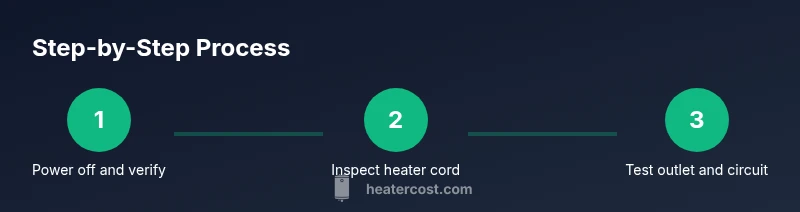
- 1
Power down and verify
Turn off the heater and switch off the corresponding circuit at the breaker. Use a non-contact tester to confirm that the outlet and nearby wiring are de‑energized before you touch anything. This step reduces the risk of shock while you inspect.
Tip: Always test for power before handling wiring. - 2
Inspect the heater cord and plug
Look for cracks, cuts, scorch marks, or a loose plug. A damaged cord can overheat at the outlet, causing heat transfer and potential ignition. Do not use a damaged cord; replace it before continuing.
Tip: Replace damaged cords immediately to prevent fires. - 3
Check the outlet and surrounding area
Feel the outlet for unusual warmth after operating the heater briefly. Inspect the outlet face for discoloration, melted insulation, or a melted plug head. Clear the area of any combustible materials and ensure the outlet is properly mounted.
Tip: Discoloration or warmth is a warning sign—do not ignore it. - 4
Test circuit capacity and heater wattage
Compare the heater wattage with your circuit’s rating. If your heater draws near 12–16 amps on a 15A or 20A circuit, consider relocating to a dedicated circuit or using a heater with lower wattage. This helps prevent overloading.
Tip: When in doubt, lower the heater wattage or move to a separate circuit. - 5
Replace damaged outlets or wiring
If the outlet shows signs of damage, replace it with a properly rated device. Ensure wiring is secure and that insulation is intact. Avoid over-tightening screws which can damage the outlet.
Tip: Damaged outlets require immediate replacement. - 6
Create a dedicated circuit where possible
For regular heater use, install a dedicated 15A or 20A circuit with appropriate wiring gauge. This minimizes load on other outlets and reduces heat buildup on shared circuits.
Tip: A dedicated circuit is the safest long-term solution. - 7
Avoid extension cords and daisy-chaining
Extension cords introduce extra resistance and heat, especially with high‑wattage devices like space heaters. If you must use one, choose a heavy‑duty cord and ensure it is rated for the heater’s wattage—never run it under rugs or through doorways.
Tip: Never rely on an extension cord for permanent heating. - 8
Schedule professional inspection
Have a licensed electrician review aging wiring and ensure your panel can handle current loads. Ask about AFCI/GFCI protection, updated outlets, and any code-required permits.
Tip: Pro upgrades improve safety and home value.
Got Questions?
What are the most common causes of outlets burning when using heaters?
Most often, overheating results from overloading a standard outlet, using damaged cords, or worn wiring. A heater can push a circuit near or beyond its limit, especially if other devices share the same outlet. Poor connections and degraded outlets also raise the risk of heat buildup.
Most outlet fires come from overloading, damaged cords, or old wiring in shared outlets.
Can I plug a heater into a regular outlet without upgrading wiring?
You can plug a heater into a standard outlet only if the total load stays within the circuit’s limit and the outlet is in good condition. If you frequently run the heater, a dedicated circuit is safer and reduces risk.
Yes, but only if the load stays within limits; otherwise consider a dedicated circuit.
Is it safe to use extension cords with space heaters?
Extension cords are generally not recommended for space heaters, especially for continuous heating. They can overheat, degrade insulation, or cause tripping. If you must use one temporarily, choose a heavy-duty cord rated for the heater’s wattage and do not run it under rugs.
Extension cords are risky with heaters—use them only briefly and with a heavy-duty, properly rated cord.
What should I do if I smell burning plastic from an outlet?
If you smell burning plastic, unplug the heater if it is safe to do so, switch off the circuit, and evacuate if there is smoke. Do not use the outlet until it has been inspected by a licensed electrician.
Unplug carefully if safe, switch off the power, and call an electrician for inspection.
How can I tell if my circuit can handle a space heater long-term?
Check the circuit rating in your breaker panel (usually 15A or 20A) and compare it with the heater’s wattage. If the heater approaches or exceeds 80% of the circuit capacity, plan for a dedicated circuit or a lower-wattage heater.
Know your circuit rating and keep load well below capacity for safety.
Watch Video
The Essentials
- Unplug and inspect before touching outlets
- Don’t overload a single outlet or circuit
- Use a dedicated circuit for space heaters when possible
- Replace damaged cords/outlets immediately
- Consult a licensed electrician for wiring upgrades or code compliance