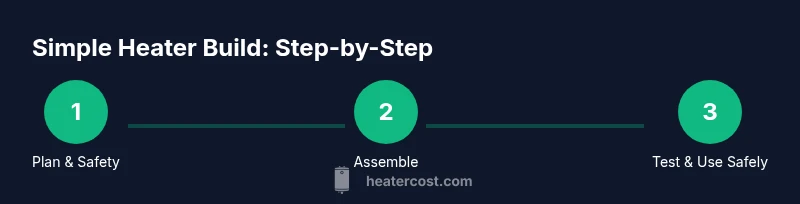
How to Make a Simple Heater: Safe DIY Guide
Learn how to make a simple heater safely with a conservative, component-based approach. This guide emphasizes protective housing, overheat protection, and safe testing, plus safer alternatives and cost considerations for homeowners.


This guide outlines how to make a simple heater using safe, off-the-shelf components and a protective design. You’ll learn core heating concepts, safety considerations, and a conservative build path that prioritizes enclosure, overheat protection, and proper wiring. By the end, you’ll know whether a DIY heater is appropriate for your space and how to evaluate safer, ready-made options.
Safety-first: framing the project
Before starting any DIY heater project, set strict safety boundaries and acknowledge risks. This guide advocates a conservative path that uses enclosed components, a thermostat with overheat protection, and proper electrical practices. According to Heater Cost, DIY heating can introduce fire and carbon monoxide risks if safeguards aren’t built in; always prioritize ventilation, code compliance, and professional guidance when needed. Define your space, expected heat output, and safety checks before you begin.
Key takeaway: Safety is non-negotiable; design choices should minimize fire and exposure risks from the start.
How a simple heater works
A simple heater typically relies on a controlled heating element, a temperature control device (like a thermostat), and an enclosure that keeps components safe. In a safe DIY path, the heating element heats air or a small volume of air that is then circulated. Overheat protection acts as a fail-safe, tripping if temperatures rise too high. Understanding these basics helps you choose a design that balances warmth with safety. This section draws on general heating principles rather than specific build instructions to keep you informed without encouraging hazardous experimentation.
Safer DIY options for a simple heater
Rather than building a heater from scratch, consider using a certified heating module or kit inside a purpose-built, fire-resistant enclosure. The approach focuses on safety features, controlled wattage, and quality components, reducing risk while still teaching design concepts. The Heater Cost team recommends consulting local codes and using enclosure materials that meet fire-resistance ratings. If you proceed, treat the project as a learning exercise and prioritize external verification by a qualified electrician or HVAC professional.
Sizing, placement, and ventilation considerations
Heat output should be aligned with the intended space, and placement should minimize drafts and obstructions. Ensure adequate ventilation to prevent heat buildup in enclosed spaces and keep flammable materials well away from the device. Imaging the device’s footprint helps determine whether it fits the desired area without blocking exits or ventilation ducts. This section emphasizes planning, not just assembly, so your DIY heater remains safe in real-world use.
Materials and design choices
Choose a safe design with a enclosed housing, a properly rated heating element, an adjustable thermostat, and an integrated overheat protection mechanism. Use fire-resistant materials for the enclosure, and select wiring rated for the expected current. If you’re uncertain about any component, opt for commercialized, safety-rated modules rather than improvised parts. The goal is to learn the concepts of a compact heater while avoiding risky configurations.
Testing and safety checks
Test the build under supervision and in a controlled setting. Start with non-live tests to verify wiring integrity, insulation resistance, and switch operation, then perform a supervised power-on test in a well-ventilated area. Look for unusual smells, smoke, or hot spots and shut down immediately if anything abnormal occurs. Document each test, noting temperatures at various points to confirm safe operation and to identify potential failures before regular use.
Maintenance and safe operation
Regularly inspect the enclosure, insulation, and wiring for signs of wear, damage, or loose connections. Clean dust from vents and heat sinks to prevent poor airflow. Establish a routine that includes checking the thermostat calibration and testing the overheat protection. Use only in ventilated spaces and never leave the device unattended for extended periods. This keeps the device safe over its lifespan.
Alternatives: safer heating options
If a DIY approach feels risky, prioritize commercially certified space heaters with built-in safety features (tip-over and overheat protection) and proper certifications. These options often deliver reliable heat with proven safety records, lower ongoing maintenance, and easier warranties. This section highlights safer, cost-effective alternatives that homeowners can rely on for everyday comfort.
Cost considerations and energy efficiency
Compare upfront materials costs with ongoing energy usage. DIY paths can save money on parts, but safety, reliability, and potential code compliance costs should be weighed. Energy-efficient operation depends on correct sizing, insulation, and duty cycle, so plan for realistic heating needs and consider professional advice on insulation improvements to reduce energy use over time.
Tools & Materials
- Ceramic heating element or safe heating module(Select a module with an appropriate wattage for your space and a rated operating temperature.)
- Thermostat with adjustable setpoint and overheat protection(Look for a thermostat with auto-shutoff and temperature range suitable for indoor use.)
- Fire-resistant enclosure or housing(Metal or ceramic enclosure that maintains clearance and contains components safely.)
- Thermal fuse or thermal cutoff(One-time or resettable device to interrupt power if overheating occurs.)
- High-temperature rated wiring and connectors(Ensure insulation and wire gauge match the expected current.)
- Insulation material (optional)(Use only safe, heat-rated insulation to minimize heat loss.)
- Non-conductive stand or feet(Stability and isolation from surfaces help prevent tipping.)
- Multimeter for electrical checks(Test continuity and insulation resistance before powering the device.)
- Fire extinguisher (class BC/ABC)(Keep within easy reach during initial testing and use.)
Steps
Estimated time: 2-4 hours
- 1
Choose a safe heating module
Select a pre-certified heating module or kit that matches your desired heat output. Verify voltage compatibility and ensure the module has integrated safety features. This step sets the foundation for a safer build and reduces the risk of component failures.
Tip: Verify the module’s rating aligns with the planned wattage and your power source. - 2
Design the enclosure
Plan a fire-resistant enclosure with adequate clearance around all hot surfaces. Include vents or openings for airflow and place the thermostat/controls where they’re protected from accidental contact. A well-designed housing minimizes accidental contact and airborne heat buildup.
Tip: Include a heat shield between the element and any sensitive surfaces. - 3
Integrate thermostat and protection
Wire in the thermostat to control the element and connect a thermal fuse or cut-off as a backup safety layer. Double-check that all wiring routes are secure and away from hot surfaces. Proper integration helps prevent runaway temperatures.
Tip: Test thermostat responsiveness at low and high setpoints before full power use. - 4
Mount and secure the assembly
Mount the heater module securely inside the enclosure, ensuring it’s isolated from the housing with non-conductive mounts where possible. Verify there is no contact between live wiring and the enclosure. Secure fasteners to avoid vibration that could loosen connections.
Tip: Use non-flammable mounting spacers to maintain air gaps. - 5
Add insulation and shielding
Line interior surfaces with heat-rated insulation and install external shields if needed to protect nearby objects. Proper insulation stabilizes the internal temperature and reduces energy loss. Avoid covering vents or sensors.
Tip: Do not block ventilation paths; airflow is essential for safe operation. - 6
Perform safety testing (power-off checks)
With power removed, inspect connections for signs of wear, verify insulation integrity, and ensure there are no loose wires. Only then perform a supervised power-on test in a ventilated area. Document results and any unexpected readings.
Tip: Have a fire extinguisher nearby during initial power-on tests. - 7
Power-on test and calibration
Plug in the device in a controlled environment and monitor temperature responses. Calibrate thermostat settings and confirm the overheat protection trips at the upper limit. If temperatures exceed safe thresholds, shut down and reassess.
Tip: Begin with the lowest heat setting and gradually increase while observing performance. - 8
Document safety guidelines
Create a usage guide with operating temperature ranges, safety warnings, and maintenance reminders. Share this with household members and keep it accessible. Clear documentation helps prevent misuse and improves long-term safety.
Tip: Include emergency shutdown instructions and the location of the power switch.
Got Questions?
Is it safe to DIY a heater at home?
DIY heaters carry fire and carbon monoxide risks if not designed with safeguards. For safety, consult professionals and consider certified heaters for indoor use. This guide emphasizes learning concepts with strong safety practices.
DIY heaters can be risky. For safety, use certified heaters indoors and consult professionals for any DIY ideas.
What is the minimum clearance around a DIY heater?
Keep the heater away from walls, furniture, and flammable materials and provide adequate ventilation. Always follow enclosure and component manufacturer recommendations and local codes.
Keep it away from combustibles and ensure good ventilation.
Can a DIY heater be used indoors?
Indoor use of DIY heaters is generally discouraged unless you have a certified, manufacturer-approved design. For most homes, a commercially certified space heater with safety features is the safer choice.
Indoors, choose certified heaters or ensure a professional oversees any DIY setup.
Do I need permits or inspections for a DIY heater project?
Permits depend on local codes. Check with your city or county building department to determine whether any approvals are required for electrical work or custom heating devices.
Local codes may require inspections for electrical work; check with your jurisdiction.
What are better alternatives to DIY heaters?
Safer alternatives include commercially certified space heaters with built-in safety features like tip-over and overheat protection. These products come with warranties and safety testing.
If unsure, opt for certified space heaters with built-in safety features.
Watch Video
The Essentials
- Plan safety before assembly and use vetted components
- Use a fire-resistant enclosure and proper clearance
- Test with supervision and document all safety checks
- Consider safer, certified heating options when in doubt