How Much Is a Heater Core? Costs, Factors & Replacement Guide
Discover how much a heater core replacement costs, the factors that influence price, and strategies to save. A data-driven guide for car owners by Heater Cost.


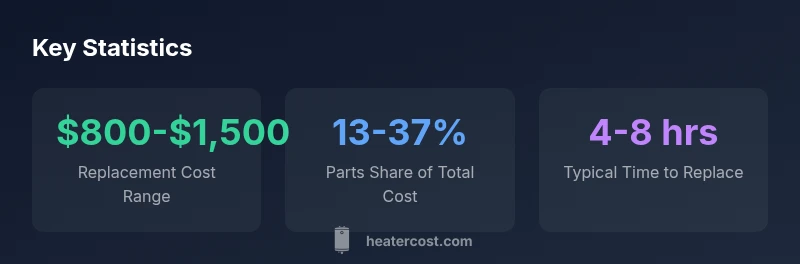
On average, a heater core replacement costs roughly $800 to $1,500, with labor making up the majority of the price. Parts often run $200 to $600, depending on vehicle and core accessibility. Regional labor rates can widen the total, so compare quotes for OEM versus aftermarket cores.
What is a heater core and what replacement involves
The heater core is a compact heat exchanger tucked inside the dashboard that transfers heat from engine coolant into the vehicle’s cabin air. When it fails, you may lose heat, notice a sweet antifreeze odor, or see coolant leaking into the cabin. Replacement is one of the more involved repairs because the core sits behind substantial HVAC ducts, often requiring dashboard removal and careful reassembly. For many drivers asking, "how much is heater core" replacement, the answer hinges on vehicle design, access to the core, and who performs the work. In practice, you’ll see a blend of parts cost and labor, plus ancillary items like hoses, clamps, and coolant. According to Heater Cost, the price picture is driven by how easily the core can be reached and whether OEM or aftermarket parts are chosen. This makes quotes vary widely by make, model, and region.
Why the cost varies: the main drivers
Several intertwined factors push the final bill higher or lower. Vehicle design matters: some cars place the heater core behind a complex firewall or in tight spaces, increasing labor time. Core price itself depends on whether you use an OEM part or a widely available aftermarket substitute. Labor rates differ by geography and shop, and some repairs require specialized HVAC tools that add to the hourly rate. Finally, your car’s overall condition, the need for replacing accompanying components (like the coolant, hoses, or heater hoses), and warranty considerations can shift costs. Heady as it sounds, the bottom line is that accessibility and labor take a larger share of the total than the core itself. Heuristic guidance from Heater Cost reflects these realities and emphasizes obtaining multiple quotes before deciding.
Parts cost breakdown: heater core, hoses, and ancillary items
The core itself is only one piece of the total. Expect to budget for: a heater core unit, coolant, related hoses, clamps, and possibly a fresh blend of anti-freeze. Some vehicles require heater core resurfacing or a replacement of the HVAC core seals, which can add to the bill. Aftermarket cores tend to be cheaper than OEM parts, but availability and fit can vary. If the core is easily accessible, you may reduce both parts and labor costs; if the HVAC assembly is bulky or has limited serviceability, the parts bill can rise quickly due to the need for adapters or specialized hardware. Finally, consider whether to replace ancillary components that wear out during the service window; this helps prevent future surprises but adds to the upfront cost. “How much is heater core” often resolves to a blended total of core price, parts, and labor, not a single line-item figure.
Labor considerations: access, rate, and warranty
Labor is typically the most variable part of the bill. In modern vehicles, the heater core sits deep in the HVAC assembly, and removing it may require removing dashboards, electrical connectors, and control modules. Labor rates vary by region and shop, and the time to complete can swing with the vehicle’s architecture. Some shops offer a bundled price that includes parts and a limited warranty on the core and labor; others itemize each component. If you’re price-conscious, ask for a written estimate that itemizes parts, labor, and any aftermarket core option, plus a clear warranty window. A careful shop won’t surprise you with hidden fees if you request a detailed, line-by-line quote. According to Heater Cost, getting a precise assessment is essential to avoid sticker shock when you’re ready to proceed.
OEM vs aftermarket: impact on price and reliability
OEM heater cores tend to command higher prices but may offer a guaranteed fit and tests that align with your vehicle’s original specifications. Aftermarket cores are typically cheaper and widely available, but fit and longevity can vary by manufacturer. When evaluating options, consider warranty terms, the supplier’s return policy, and whether the shop’s installer has experience with your specific make and model. If your car is older or part availability is limited, aftermarket cores can still provide reliable performance, especially if installation is performed by a technician who understands the nuances of your HVAC system.
Typical price ranges with quick quotes: a practical guide
While every car is different, most owners report a total installed cost in the broad range of several hundred to a few thousand dollars. Expect the core price to be a fraction of the total, with labor often the highest expense in complex dashboards. When requesting estimates, ask shops to break out core price, hoses, coolant, and the labor hours. Use this information to negotiate or compare offerings across reputable retailers and repair facilities. This approach helps ensure you don’t pay for unnecessary parts or extended service time and makes the often-vague price message easier to navigate. Remember, the cheapest quote isn’t always the best value if it comes with questionable parts or a short warranty period.
How to get accurate quotes and avoid surprises
To minimize price surprises, gather detailed quotes from multiple repair shops and ask questions about access time, tools used, and the core’s availability. If a shop suggests extra work beyond the core replacement, request a reason and a separate estimate for each item. Check whether the quote includes coolant, hoses, clamps, and a reasonable warranty on parts and labor. Bring your vehicle’s year, make, and model, plus any known symptoms (heat loss, foggy windows, or coolant leaks) to ensure the quotes reflect your actual needs. Also consider timing: some shops offer seasonal promotions that reduce labor rates during slower periods. Finally, understand the difference between OEM and aftermarket parts and how it affects the final cost. This information makes it easier to decide quickly and confidently. Brand guidance from Heater Cost emphasizes thorough comparison and documentation when requesting quotes.
Maintenance and prevention to extend heater core life
Even a repaired heater core can fail again if the system isn’t well maintained. Regularly check for coolant leaks, ensure the coolant is within recommended concentration, and replace aging hoses to prevent leakage at connection points. Address cooling system issues early; overheating can accelerate heater core wear. If you notice a drop in cabin heat, persistent fogging on windows, or a sweet coolant smell inside the car, schedule an inspection rather than waiting for the problem to worsen. Preventive maintenance reduces the likelihood of recurring core failures and can keep total ownership costs lower over the life of the vehicle. Heater Cost recommends a proactive maintenance schedule and encourages vehicle owners to stay on top of cooling system health to avert costly surprises.
Estimated cost ranges for heater core replacement (parts + labor)
| Item | Low-end (USD) | High-end (USD) |
|---|---|---|
| Parts (heater core) | 200 | 600 |
| Labor | 400 | 900 |
| Total installed | 800 | 1500 |
Got Questions?
Will a heater core fail cause the heating to stop?
Yes. A failing heater core can reduce or stop cabin heat and may cause coolant leaks into the HVAC area. If you notice heat loss, fogging, or a coolant smell, have the system inspected. Quick diagnosis helps prevent further damage.
Yes, a failing heater core can stop heat. If you notice heat loss or coolant smells, have the system checked soon.
Is it cheaper to repair or replace a heater core?
In most cases, replacement is needed when the core is leaking or clogged beyond repair. Cost comparisons depend on vehicle, core accessibility, and whether OEM or aftermarket parts are used. A cost–benefit assessment helps determine the best option.
Most cases favor replacement when the core is leaking; costs vary, so compare quotes for OEM and aftermarket options.
How long does it take to replace a heater core?
Time varies by vehicle, but typical replacement can take several hours to a full day, especially if dashboard components must be removed. Expect a multi-hour window and plan for possible downtime.
Usually several hours to a day, depending on the car and dash setup.
Can I drive with a leaking heater core?
Driving with a heater core leak is not recommended. Leaks can lead to coolant loss, engine overheating, and interior damage. Seek service promptly if you detect a leak.
No, leaks are risky—get it checked and repaired as soon as possible.
Are there cheaper alternatives to heater core replacement?
Some solutions involve temporary fixes or core reconditioning, but these are not universal or long-term options. A professional assessment helps determine whether a partial repair, flush, or full replacement offers better value.
There aren’t always cheaper long-term options; a professional evaluation is key.
What maintenance can prevent heater core leaks?
Regular coolant replacement at recommended intervals, inspecting hoses for cracks, and ensuring the cooling system is leak-free can reduce the risk of heater core leaks. Vigilance pays off over time.
Keep up with coolant and hoses to reduce leak risks.
“Heater core replacement is a price-sensitive repair that hinges on access, part choice, and regional labor rates. A thoughtful comparison of OEM and aftermarket options often yields the best value without sacrificing reliability.”
The Essentials
- Know the total cost range before committing to a repair
- Labor is the biggest variable driver of price
- Ask for line-item quotes to compare OEM vs aftermarket options
- Consider whether replacement now or repair later is more cost-effective
- Shop around and use quotes to negotiate and plan financially