How Difficult Is a Heater Core Replacement?
Discover how hard heater core replacement is, what makes it difficult, essential tools, step-by-step guidance, safety tips, and when to DIY or hire a pro. A practical 2026 guide for homeowners and DIYers.


Replacing a heater core is a mid- to high-difficulty automotive repair that varies by vehicle. Expect extensive disassembly, potential dash removal, coolant draining, and careful hose work. For beginners, hire a pro; experienced DIYers can succeed with manuals and proper tools. Plan 6–12 hours.
Understanding the difficulty and what it includes
The heater core lives inside the vehicle's HVAC firewall and exchanges heat from engine coolant to warm the cabin. Replacing it often means substantial dash or trim removal, routing around airbags or instrument clusters, and careful coolant handling. Access can be the single biggest hurdle—some cars expose the core through a simple panel, others require extensive disassembly. This variability is why the Heater Cost team emphasizes that the difficulty depends more on access than the core itself. If you’re new to automotive work, expect a longer timeline and the risk of reassembly errors that could affect HVAC performance or vehicle electronics.
Vehicle design and access: why some cars are easier than others
Vehicle architecture drives the challenge. Front-wheel-drive models with compact engine bays may offer cleaner access paths, while larger trucks or luxury cars often place the core behind multiple assemblies. Corrosion, seized fasteners, and tight hose clearances compound the job on older models. According to Heater Cost analysis, clearer access panels and modular dash components can dramatically reduce the time and risk, but this is not universal. Always consult your factory service manual for model-specific steps and torque specs to avoid damaging clips, ducts, or the firewall.
Tools, workspace, and safety considerations
A clean, well-lit workspace with good ventilation is essential. Have a coolant-safe pan, rags, a funnel, and a container for old coolant. Wear gloves and eye protection, and disconnect the battery before starting. A torque wrench, a metric/SAE socket set, screwdrivers, pliers, and a trim removal tool kit are typically required. Ensure you have the correct replacement heater core, replacement gaskets/seals, and spare hose clamps. Prepare a plan for cooling-system bleeding after refilling, which is crucial to prevent air locks and overheating.
Step overview: what the process looks like
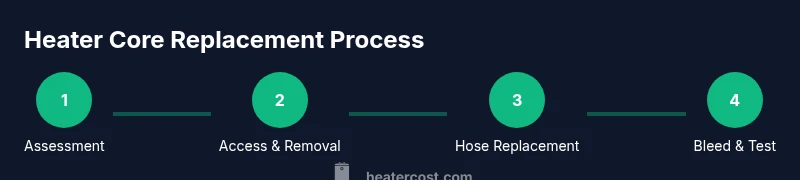
In broad terms, replacement follows a sequence: (1) gain access to the heater core, (2) drain and relieve pressure from the cooling system, (3) disconnect and remove hoses, clamps, and the core housing, (4) fit the new core with proper seals, (5) reattach hoses and fill/circulate coolant, (6) bleed air and test for leaks, and (7) reinstall any dash components and confirm HVAC function. The exact order can vary by vehicle; always defer to the service manual for model-specific nuances. This is why a well-planned approach and organized workspace matter more than speed.
Common pitfalls and safety considerations
Avoid opening the cooling system when the engine is hot; hot coolant can cause burns and splashes. Do not force panels or clips, which can crack dashboards or damage wiring. Label every hose, clip, and connector during disassembly to ease reassembly. Be mindful of air entering the cooling system during bleed, which can cause overheating if not properly removed. Dispose of old coolant in accordance with local regulations, and keep the area clean to prevent slips on spilled fluid.
DIY vs professional: deciding what's right for you
If you have prior experience with interior trim, HVAC components, and coolant systems, you may manage a DIY replacement. However, many DIYers underestimate the time and risk, especially with dash removal and air bleeding. For reliability and safety, consider a professional if you lack a dedicated workspace, the right tools, or access to a service manual. A pro will often guarantee the job and warranty the repair, which is a meaningful consideration for a long-term vehicle investment.
Time, costs, and planning for 2026
Expect a long project window; many cars take a full day or more when performed by a careful DIYer, while professionals may complete it faster but at higher labor costs. Part costs depend on the make/model and whether you replace only the core or include hoses, seals, and clamps. Plan for potential ancillary tasks, such as dash reseating, instrumental recalibration, or HVAC reassembly checks. The goal is a leak-free, properly bled cooling system and a working heater that reliably warms the cabin.
Next steps and how to prepare
Start by confirming the exact model-year procedure in your service manual, then assemble your tools and safe work environment. Create a step-by-step plan with photos to guide reassembly. If you’re uncertain about any dash components or HVAC wiring, prioritize safety and consider professional support. A thorough approach now prevents costly mistakes later and protects your vehicle’s climate control reliability.
Tools & Materials
- Complete vehicle service manual for your make/model(Exact heater core replacement procedure; torque specs; dash removal steps)
- Socket set (metric and SAE)(Deep sockets may be needed for hard-to-reach fasteners)
- Torx andTamper-proof bit set(Many vents and panels use Torx fasteners)
- Flathead and Phillips screwdrivers(Varied sizes; have a precision set for trim pieces)
- Trim removal tools(Plastic pry tools protect dash surfaces)
- Drain pan and coolant-safe containers(For draining and capturing old coolant)
- Coolant (pre-mixed if possible)(Use the correct type for your engine coolant system)
- Rags, shop towels, and degreaser(Keep the work area clean to avoid contamination)
- New heater core and seals/gaskets(Ensure model-specific fit and compatibility)
- Additional hose clamps and fittings(Have spare clamps in various sizes)
- Bleed syringe or funnel with bleed port(Helps evacuate air during refilling)
Steps
Estimated time: 6-12 hours
- 1
Power down and prep safety
Park on a level surface, set the parking brake, and remove the keys. Disconnect the negative battery terminal to avoid short circuits while handling dash components and airbags. Gather all tools and lay out a clear work area.
Tip: Take photos of each step as you go to simplify reassembly. - 2
Drain coolant and relieve pressure
Place a drain pan under the radiator or coolant reservoir and loosen the drain valve or hoses to relieve pressure safely. Let the system drain until no more fluid flows. Return any cap or valve to closed position after draining.
Tip: Wait until the engine is completely cool to avoid scalding and pressure release hazards. - 3
Access the heater core
Remove necessary dash panels or glove-box assemblies to access the heater core housing. Some models require removing the knee bolster or center console. Work slowly to avoid breaking trim pieces or disconnecting sensors.
Tip: Label fasteners and screws by location for easier reassembly. - 4
Disconnect heater core hoses and clamps
Carefully loosen hose clamps and detach heater core inlet and outlet hoses from the core housing. Note hose routing; damage to hoses or fittings can cause leaks after replacement.
Tip: Have a helper hold hoses as you remove clamps to prevent sudden coolant spills. - 5
Remove the old heater core
Extract the heater core from its housing, paying attention to any retaining clips or seals. If the core is stubborn, recheck for hidden fasteners. Avoid bending or puncturing the core during removal.
Tip: Inspect the core housing for corrosion or damage that might need repair. - 6
Install the new heater core
Position the new core with seals in place, ensuring correct orientation. Reattach retaining hardware and confirm a snug fit without crushing the core. Reconnect any sensors or vents that were detached.
Tip: Double-check gasket alignment before tightening to prevent leaks. - 7
Reconnect hoses and fill coolant
Reconnect hoses to the new core and secure clamps. Refill with the appropriate coolant and follow the bleed procedure to remove air from the system.
Tip: Work gradually and monitor for leaks as you bleed the system. - 8
Test, verify, and finish
Start the engine and run it to operating temperature while monitoring for leaks and heater performance. Reinstall dash components and perform a final HVAC check. Reset any monitors or service reminders if applicable.
Tip: Keep an eye on temperature gauge and heater output for the first 15–20 minutes of operation.
Got Questions?
Is heater core replacement worth attempting myself?
It depends on your experience, model, and workspace. If you’re comfortable with interior trim, HVAC systems, and coolant handling, you can attempt it with patience and detailed manuals. For many, professional service offers better reliability and a warranty.
If you’re experienced with interior work and coolant systems, you can try it with a detailed manual; otherwise, hiring a pro is the safer choice.
How long does a heater core replacement typically take?
Most replacements range from a half-day to a full day for skilled DIYers, with longer timelines on complex models. Professionals may complete it faster, depending on access and shop workflow.
Typically a half-day to a full day for a DIYer; pros may do it quicker depending on the car.
What are the signs of a failing heater core before replacement?
Common indicators include reduced cabin heat, sweet antifreeze odor, foggy windows, coolant leaks near the passenger side, and sudden temperature fluctuations while heating. These symptoms suggest heater core or related components may be failing.
Look for weak heat, a sweet smell, foggy windows, or leaks near the heater core.
Can I drive with a leaking heater core?
Driving with a leak is not recommended. It risks coolant loss, engine overheating, and HVAC failure. If you must drive, limit mileage and seek a repair promptly.
No—don’t drive long distances with a heater core leak; coolant loss and overheating can occur.
What safety precautions should I not skip?
Always disconnect the battery, allow the engine to cool before opening the cooling system, wear gloves and eye protection, and dispose of coolant properly. Safe handling of trim pieces and wiring is essential to avoid injury and damage.
Wear gloves and goggles, disconnect the battery, and wait for the engine to cool before handling coolant.
Are there alternatives if the heater core is clogged but usable?
Flushing or cleaning a clogged heater core is sometimes attempted, but it’s not a guaranteed fix and can cause damage if done improperly. Replacement is often the more reliable long-term solution.
Flushing can help in some cases, but replacement is usually more reliable for long-term warmth.
Watch Video
The Essentials
- Plan for a long project; 6-12 hours typical.
- Access is the main difficulty, not just the core itself.
- DIY is possible for experienced hobbyists; otherwise hire a pro.
- Bleed and test the cooling system to prevent overheating.