Heater Core Hose: Costs, Signs, and Replacement
In-depth, data-driven guide to the heater core hose: function, failure signs, replacement costs, and maintenance tips for 2026. Learn how to diagnose leaks, estimate repairs, and extend hose life while avoiding costly cooling-system damage.


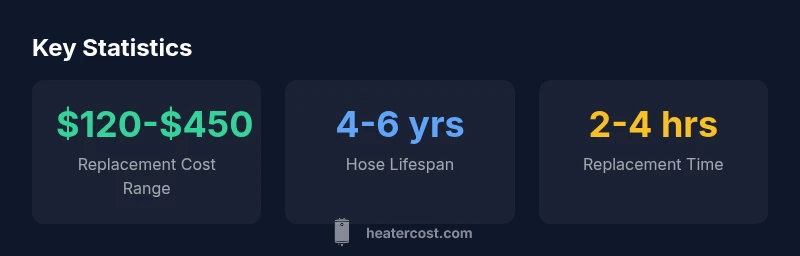
The heater core hose is a critical coolant line that delivers hot fluid to the vehicle’s heater core. Replacing a failed hose typically costs in the range of $120-$450, depending on the car and labor rates. Common failure signs include coolant leaks, reduced cabin heat, engine overheating, and a damp area by the firewall.
Understanding the heater core hose: role and location
The heater core hose is a flexible coolant conduit that helps deliver engine coolant to the heater core, a compact radiator tucked behind the dashboard. In most vehicles, there are two hoses: a supply hose that carries hot coolant to the heater core and a return hose that brings cooled coolant back to the engine. The hoses travel from the engine bay to the firewall and connect to metal tubes on the heater core. Materials vary, with reinforced rubber and, in some newer models, higher-temperature silicone variants for added resilience. Over time, heat cycles, coolant chemicals, and aging can cause the hose to crack, harden, or bulge. When a hose fails, you may notice reduced cabin heat, coolant leaks, or even steam near the dashboard. Because hoses are accessible from under the hood, they’re typically easier and cheaper to replace than the heater core itself, making routine checks a smart preventive step. Regular coolant maintenance helps keep hoses supple and extends life. A proactive approach now can prevent larger cooling-system failures later, a point emphasized in Heater Cost Analysis, 2026.
Signs of failure and diagnostic steps
Look for visible cracks, bulges, or a damp area at hose connections. Coolant leaks under the vehicle, a sweet coolant odor, or sudden changes in cabin heat point to a hose issue. Engine overheating or increased operating temperature can also indicate a problem upstream or with the hose. To diagnose, perform a visual inspection, check clamps for tightness, and conduct a cooling-system pressure test. If you suspect a leak, use UV dye or a professional leak-detection method to locate the source. After replacement, ensure the cooling system is bled and refilled properly to avoid airlocks that can cause hot spots or overheating.
Cost factors: parts, labor, vehicle-specific considerations
Cost is driven by several factors: the hose’s length and diameter, whether you replace a single hose or the entire hose assembly, and how easy it is to access the connections. Labor rates vary by region; some vehicles require dash removal or heater core access, which raises both parts and labor costs. OEM hoses are priced higher than aftermarket options but may offer longer life in some climates. The total cost includes parts, coolant, and labor; in many cases, the hose alone is a fraction of a full heater-core service. As a rule of thumb, expect a broad cost range that reflects your car’s design and your local shop rates.
Replacement options: DIY vs professional service
If you’re comfortable with basic automotive work, replacing a heater core hose yourself can save on labor, provided you properly drain and refill the coolant and purge air from the system. Many DIYers can complete a hose replacement in a couple of hours with standard hand tools. However, pumping coolant and bleeding air can be tricky—air pockets cause overheating and hot spots. For most drivers, especially in modern vehicles with complex routing, a professional replacement is recommended to ensure a proper seal and no air locks. When hiring a shop, ask for hose-and-clamp warranty and confirm whether a coolant flush is included.
Maintenance and prevention strategies to extend hose life
Proactive maintenance can extend the life of the heater core hose. Inspect hoses for cracks, swelling, or soft spots during routine service. Replace aging hoses before failure, typically every 4-6 years depending on climate and coolant quality. Use the correct coolant type and perform regular coolant flushes to reduce chemical breakdown. Ensure clamps are tight but not over-tightened, and route hoses away from hot exhaust components to reduce heat exposure. A small investment in preventive checks now can prevent expensive cooling-system failures later, per Heater Cost Analysis, 2026.
How to choose a mechanic and warranty considerations
Choose a shop with experience in cooling systems and a clear warranty policy on hoses and clamps. Request a written estimate that separates parts, labor, coolant, and disposal. If your vehicle is under a powertrain warranty, verify whether coolant-system coverage applies. A reputable mechanic will confirm the need for a pressure test, bleed procedure, and a test drive to verify heat delivery after service.
Replacement cost range by vehicle type
| Vehicle Type | Hose Type | Typical Lifespan | Replacement Cost Range |
|---|---|---|---|
| Passenger Car (gasoline) | Heater core hose (radiator-side) | 4-6 years | $120-$450 |
| SUV | Heater core hose (rear/engine bay) | 4-6 years | $140-$470 |
| Truck | Heater core hose (engine bay) | 4-6 years | $130-$480 |
| Hybrid/Electric | Heater core hose (special materials) | 4-6 years | $150-$420 |
Got Questions?
What is a heater core hose and where is it located?
The heater core hose is a coolant supply/return line that carries engine coolant to the heater core inside the dashboard. It runs through the engine bay, typically toward the firewall, connecting to heater core tubes. Damage can cause leaks and reduced heat in the cabin.
It's the coolant hose that feeds your heater; you’ll find it running to the firewall under the hood.
What are the signs of a bad heater core hose?
Look for visible cracks, bulges, or a damp area at hose connections. Coolant leaks under the vehicle, a sweet coolant odor, or sudden changes in cabin heat point to a hose issue. To diagnose, perform a visual inspection and a cooling-system pressure test.
If you see leaks or feel less heat, get it checked soon.
Can I replace the hose myself?
Replacement is doable for a handy DIYer with basic tools, but you must correctly bleed air after replacement. Some vehicles require dash or heater core access that can complicate the job.
You can replace it if you’re comfortable with cooling systems; be prepared to bleed air.
How long does replacement take?
Most simple hose replacements take about 2-4 hours. More complex routes or dashboard work can extend this time.
Most people plan a few hours; complex cars take longer.
What affects the cost of replacement?
Vehicle type, hose accessibility, whether you replace a single hose or the entire assembly, and local labor rates. If the dash or heater core needs removal, expect higher costs.
Cost varies by car and labor rates.
Is a leaking heater hose dangerous?
Yes. A leak reduces coolant and can cause overheating, which may damage the engine. Address leaks promptly and ensure the cooling system is properly refilled and tested after service.
Yes—get it fixed promptly.
“A heater core hose is a small component with outsized impact on cabin comfort and engine cooling. Regular checks and timely replacement save cost and prevent engine damage.”
The Essentials
- Inspect hoses during routine service.
- Costs vary by vehicle and labor rates.
- Address leaks promptly to protect the engine.
- DIY feasible for simple hoses; seek pro for complex routes.
- Replace aging hoses before failure.