Can You Leave a Plug-In Heater On Overnight? A Safety Guide
Explore whether it's safe to leave a plug-in heater on overnight, the risks involved, and practical safety steps. Learn alternatives for warmth, how to reduce danger, and what homeowners should know.


Can you leave a plug-in heater on overnight? In most cases, it's not recommended due to fire risk, electrical overload, and carbon monoxide concerns if the unit is faulty or used with gas heating alternatives. The safer approach is to use a thermostat-controlled heater, a timer, or a dedicated space heater with safety features, and never leave it unattended.
Understanding the Risks of Overnight Use
Can you leave a plug in heater on overnight? The short answer is generally no, especially in ordinary living spaces where children, pets, or clutter can create unexpected fuel sources for a fire. Electric plug-in heaters do not emit carbon monoxide, but that does not remove other hazards. A heater can overheat cords, outlets, or nearby fabrics; a tip-over can ignite bedding or furniture; and a fault in the device can lead to sparks. According to Heater Cost, many home incidents trace back to unattended heating devices that were inexpensive but not built for continuous overnight operation. Even if a heater seems to work well, continuous use increases cumulative wear on internal components, which can raise the risk of an electrical fault. If you’re asking can you leave a plug in heater on overnight, consider whether your space needs sustained warmth or if a safer alternative could maintain comfort with less risk. Keep in mind that room size, insulation, and existing heat sources affect how safely you can depend on a plug-in heater for extended periods. The takeaway is that overnight operation should be avoided unless you’ve carefully planned for safety and used a model with robust protections.
Understanding the Risks of Overnight Use
Can you leave a plug in heater on overnight? The short answer is generally no, especially in ordinary living spaces where children, pets, or clutter can create unexpected fuel sources for a fire. Electric plug-in heaters do not emit carbon monoxide, but that does not remove other hazards. A heater can overheat cords, outlets, or nearby fabrics; a tip-over can ignite bedding or furniture; and a fault in the device can lead to sparks. According to Heater Cost, many home incidents trace back to unattended heating devices that were inexpensive but not built for continuous overnight operation. Even if a heater seems to work well, continuous use increases cumulative wear on internal components, which can raise the risk of an electrical fault. If you’re asking can you leave a plug in heater on overnight, consider whether your space needs sustained warmth or if a safer alternative could maintain comfort with less risk. Keep in mind that room size, insulation, and existing heat sources affect how safely you can depend on a plug-in heater for extended periods. The takeaway is that overnight operation should be avoided unless you’ve carefully planned for safety and used a model with robust protections.
Tools & Materials
- Plug-in space heater with safety features (tip-over switch, overheat protection)(Choose certified models with UL/ETL/CSA markings.)
- GFCI or grounded wall outlet(Avoid using extension cords; plug directly into the wall outlet.)
- Working smoke detector in the room(Test monthly and replace batteries as needed.)
- Working carbon monoxide detector (for mixed-fuel areas)(Place near sleeping areas if any fuel-burning appliance exists nearby.)
- Thermostat or programmable timer(Set to auto-shutoff or low-temperature baseline to limit runtime.)
- Fire extinguisher (ABC, rated)(Keep within easy reach in the same room as the heater.)
- Clear space around heater (at least 3 feet / 1 meter)(Remove papers, clothing, and fabrics from the heater’s vicinity.)
- Cord management supplies (non-slip tape or clips)(Use to keep cords away from walkways and daisy-chains.)
Steps
Estimated time: 20-40 minutes
- 1
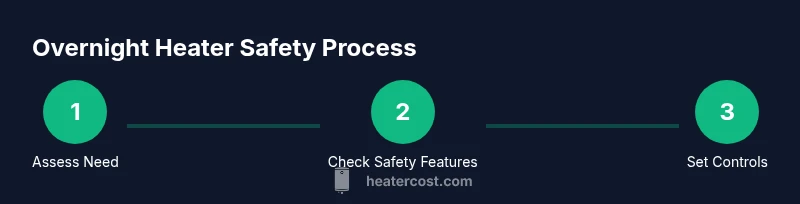
Assess safety and need
Evaluate room insulation, existing heat sources, and whether overnight warmth is truly necessary. If the goal is to save energy, consider alternatives before committing to an overnight run.
Tip: If the room feels drafty, address insulation first—adding insulation reduces the needed duration of heater use. - 2
Check heater safety features
Verify the unit has a tip-over switch and an overheat protection device. Confirm the plug and cord show no signs of wear, exposed wiring, or warmth beyond normal levels when in use.
Tip: Test the safety features per the manufacturer’s instructions before relying on them overnight. - 3
Inspect electrical setup
Plug the heater directly into a wall outlet. Do not use extension cords or power strips, which can overheat and cause a fire. Ensure outlets are not overloaded by other devices.
Tip: If the outlet becomes warm to the touch, stop using it and consult an electrician. - 4
Position heater correctly
Place the heater on a stable, nonflammable surface away from curtains, beds, and clutter. Maintain at least a 3-foot clearance on all sides and avoid high-traffic areas where it could be bumped.
Tip: Use a heat-resistant mat or base to prevent heat transfer to surfaces. - 5
Set a safe control
If overnight use is necessary, set a timer or thermostat to limit runtime. Prefer a heater with automatic shut-off after a fixed period or at a safe low temperature.
Tip: Program it to shut off after 6–8 hours, then re-evaluate room conditions before turning back on. - 6
Check detectors and exit plan
Ensure smoke detectors are functioning and easily audible from sleeping areas. Have an evacuation plan in case you notice smoke or a smell of burning.
Tip: Keep a flashlight and a phone easily accessible in the room at night. - 7
Morning safety check
Unplug the heater when waking, inspect the outlet and cord for heat damage, and store the unit safely if you’re not using it again. Do not leave the unit plugged in while unattended for long spans.
Tip: If you see scorch marks or melted plastic, replace the heater immediately. - 8
Evaluate alternatives for next time
Reassess whether overnight warmth is essential. Consider improving insulation, weather sealing, or using a more efficient heating solution.
Tip: Compare energy usage and safety features of models recommended by experts.
Got Questions?
Is it safe to leave a plug-in heater on overnight?
Generally not recommended due to fire risk and electrical overload. If overnight use is unavoidable, use a heater with safety features, a timer, and monitor the space closely.
Leaving a plug-in heater on overnight is usually not safe, but with a timer and safety features, you can reduce risks. Always monitor the space if you must run it.
What are the safest alternatives to overnight heating?
Consider improving insulation, using programmable thermostats on central heating, layering clothing, and using a bed robe or blanket. If you still need heat at night, use a heater with auto shut-off and keep risk factors to a minimum.
Improve insulation, use a programmable thermostat, or rely on layers. If you must heat at night, choose a model with auto shut-off and keep it away from combustibles.
Can I use a thermostat with a plug-in heater?
Yes, many plug-in heaters work with external thermostats or smart plugs that can control runtime. Ensure compatibility and follow manufacturer guidance on safety.
Yes, you can, but check compatibility and follow safety guidelines.
Do plug-in heaters cost more to run overnight?
Running any space heater overnight adds energy use to your bill. Compare wattage, run time, and local electricity rates to estimate impact.
Yes, overnight use adds energy costs; compare wattage and rates to estimate impact.
What safety features should I look for?
Look for tip-over switch, overheat protection, auto shut-off, sturdy base, and certifications. Regular inspection of cords and plugs is essential.
Seek tip-over and overheating protections and official certifications.
What should I do if I smell burning while the heater is on?
Turn off and unplug the heater immediately, move away any combustibles, and inspect for damage. If unsure, leave the area and contact a professional.
If you smell burning, switch off, unplug, and inspect or seek help.
Watch Video
The Essentials
- Avoid overnight use unless safety measures are in place.
- Choose heaters with clear safety features and proper certifications.
- Always unplug when not actively monitoring the room.
- Use timers or thermostats to control runtime.
- Prioritize insulation and room planning to reduce the need for overnight heating.