Is it OK to Leave an Oil Heater On Overnight? A Safety Guide
Find out whether you should leave an oil-filled heater on overnight, plus practical safety steps, safer alternatives, and maintenance tips to protect your home and loved ones.


Leaving an oil-filled heater on overnight is generally not recommended. If you must, choose a model with auto shutoff, keep it away from flammable materials, and never leave it unattended. This quick answer introduces the safety context and sets expectations for practical, risk-aware steps you can take tonight and beyond.
Is it ok to leave oil heater on overnight?
Is it possible to rely on an oil-filled radiator for overnight warmth? The short answer is: it’s usually better to turn it off when you go to sleep. According to Heater Cost, overnight use should be a last resort, not a default safety pattern. If you must run heat overnight in a very cold room, plan for strict safety controls: use a unit with automatic shutoff, verify the surface is stable and clear, and ensure you have working smoke detectors. The goal is to reduce risk while keeping living spaces reasonably comfortable. This section sets the framework for safer alternatives and practical steps you can apply in real homes.
How oil-filled radiators work and why overnight use matters
Oil-filled radiators heat by warming oil inside their fins, which then radiates heat into the room. The compact design minimizes fan noise and helps maintain a steady temperature. Because they run on electricity, their safety largely depends on electrical integrity and placement rather than a combustion process. A good model includes thermal cutoffs and a tip-over switch. When you ask, is it ok to leave oil heater on overnight, the answer hinges on both device quality and environment. If you plan to keep heat on for extended periods, select a unit with automatic shutoff and keep it well away from flammable items, draped fabric, or clutter that could trap heat.
Risks of overnight operation with electric oil heaters
Overnight operation increases several risks: electrical faults can ignite if the plug or cord is damaged; the heater might overheat if the thermostat sticks or air flow is blocked; and a tip-over incident could occur if the unit is bumped during sleep. While oil-filled heaters don’t produce combustion, they can still become extremely hot and cause surface burns or ignite nearby materials. Regular maintenance and situational awareness are essential to minimize these hazards.
Real-world scenarios where overnight heating is used
Some households in extremely cold climates may temporarily rely on overnight heating during cold snaps, but this should be paired with strong safety protocols: a stable, bare surface; clear space around the unit; continuous smoke detector monitoring on every floor; and an established plan to check the unit during the night if possible. It’s important to distinguish between temporary, supervised use and habitual overnight operation. This distinction helps homeowners decide when safer alternatives are preferable.
Safer strategies to keep warm overnight without leaving it on
Consider upgrading to a programmable thermostat tied to a central heating system for reliable overnight warmth, or supplement with layered bedding, thermal curtains, and warm clothing. If you still need a portable heater, use it only as a temporary measure, and pair it with a draft-stopping plan for windows and doors. A good rule is to create a warm base with your home’s main heating and use supplemental methods that don’t require constant heat.
If you still choose to run it overnight: safety practices
If overnight use is unavoidable, place the heater on a stable, nonflammable surface, well away from walls, curtains, and bedding. Keep the cord out of traffic paths and never use an extension cord. Set the thermostat to a low, steady temperature and enable any auto shutoff feature. Ensure there is a functioning smoke detector on every level and test it monthly. Before bed, do a quick visual check to confirm nothing is obstructing vents or the heater’s intake.
What to look for in a heater for overnight reliability
When shopping for an overnight-ready heater, prioritize models with: auto shutoff, a reliable tip-over switch, overheating protection, and a sturdy base. Look for a wide clearance zone around the unit and a robust cord with no visible wear. Read the user manual for guidance on recommended operating conditions, and confirm that the unit is certified by a recognized safety standard body. A device with these features reduces risk and makes overnight use more feasible under controlled conditions.
Maintenance and pre-sleep checks to reduce risk
Keep the heater clean from dust and lint that can accumulate on fins or vents. Inspect the power cord for cracks or exposed wires and replace damaged cords promptly. Check that smoke detectors are active, and ensure you have a dry, safe storage routine for the device when not in use. Regular testing of safety features—like the auto shutoff and tip-over switch—helps ensure reliability. If anything seems off during a pre-sleep check, turn the heater off and unplug it.
Heater Cost’s practical guidance and closing takeaways
The Heater Cost team emphasizes prudence when considering overnight use of oil heaters. Our practical guidance centers on safety features, smart placement, and minimizing exposure to heat sources during sleep. If you cannot avoid overnight operation, pair responsible equipment choices with precautions and always follow local safety guidelines. The Heater Cost team recommends prioritizing safer alternatives whenever possible and consulting the manual for your specific model.
Tools & Materials
- Smoke detector (battery-powered, working)(Install on every level; test monthly.)
- Heat-resistant mat or stand(Place heater on a noncombustible surface; keep clear space underneath.)
- Manual for heater model(Keep for safety features and maintenance guidance.)
- Dedicated outlet (no extension cords)(Use a dedicated wall outlet; do not daisy-chain.)
- Fire extinguisher(Have accessible in case of emergency.)
- Working smoke/CO detector on every floor(Note: electric oil heaters do not emit CO; CO detector adds safety for other fuels.)
Steps
Estimated time: 20-30 minutes
- 1
Assess room and heater condition
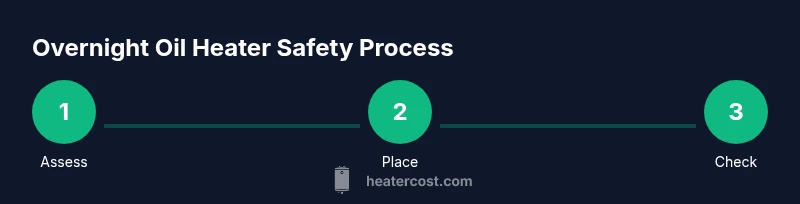
Check that the heater surface is clean and undamaged. Ensure the room has enough ventilation if needed and that there are no flammable items within a safe radius. Confirm the heater’s auto shutoff and tip-over features are functional.
Tip: If you discover any cord wear or damage, do not use the heater until repaired. - 2
Choose safe placement
Place the heater on a stable, nonflammable surface away from walls and fabrics. Maintain a clear space around the unit to prevent heat buildup near curtains or furniture. Avoid high-traffic areas where someone could trip over the cord.
Tip: Use a wall outlet, not an extension cord; this reduces fire risk. - 3
Set safety controls
Activate auto shutoff and set the thermostat to a low, steady level. If your model offers a sleep mode, enable it as appropriate. These controls help limit heat exposure and prevent overheating.
Tip: Periodically verify the thermostat maintains a stable reading. - 4
Create a nighttime safety routine
Before bed, read the heater’s status and inspect the outlet. Ensure no drapes or papers are nearby. Check that the room has working smoke detectors and that you have a clear plan if you hear unusual sounds or smells.
Tip: Keep a flashlight handy in the bedroom in case you need to inspect the unit at night. - 5
Follow shutdown protocol if you wake
If you wake during the night, do a quick visual check and consider turning the heater off before returning to bed. If you must keep heat, ensure the unit remains unobstructed and continues to be monitored.
Tip: Do not leave the heater unattended for long periods while you’re awake. - 6
Morning inspection and unplug
First thing in the morning, inspect the heater and cord for signs of wear or heat damage. Unplug the unit when not in use and store it safely away until next need. Confirm the smoke detectors were functioning overnight.
Tip: A consistent morning routine enhances overall home safety. - 7
Evaluate alternatives for future nights
If you frequently need overnight warmth, explore safer options such as central heating, programmable thermostats, or energy-efficient blankets. Reassess room layout and insulation to reduce cold spots.
Tip: Investing in better insulation can reduce the need for overnight heaters. - 8
Document safety checks
Keep a simple log of safety checks, findings, and any maintenance actions. This helps track patterns and ensures no step is forgotten during cold spells.
Tip: A written checklist improves consistency and safety over time.
Got Questions?
Is it safe to leave oil heaters on overnight?
Generally, it is not advised to leave an oil heater on overnight. If you must, rely on models with auto shutoff, clear space around the unit, and never leave it unattended. Always follow the manufacturer’s safety guidelines and local codes.
It’s generally not advised to leave an oil heater on overnight. If you must, use auto shutoff, clear space, and never leave it unattended.
Can I use an extension cord with an oil heater?
No. Use a dedicated outlet. Extension cords can overheat and pose a fire risk, especially with space heaters.
Avoid extension cords; use a dedicated outlet to reduce fire risk.
What should I look for in a heater for overnight use?
Look for auto shutoff, tip-over protection, overheating protection, and a sturdy base. Verify the unit is certified and that it provides stable thermostat control.
Choose a heater with auto shutoff and tip-over protection for overnight use.
Are electric oil heaters safer than gas heaters for overnight use?
Electric oil heaters do not burn fuel and thus do not emit carbon monoxide, which is a benefit over many gas heaters. Nevertheless, always follow safety guidance, keep them away from combustibles, and use appropriate detectors.
Electric heaters don’t produce CO, but you still must follow safety steps and keep spaces clear.
What if my home is very cold and I need overnight warmth?
Consider upgrading to central heating or a programmable thermostat for controlled overnight warmth. Use supplemental methods like layered clothing and insulating measures while keeping any portable heater as a backup.
For very cold nights, central heating or a programmable thermostat is safer than persistent overnight heat.
What maintenance checks should I perform regularly?
Inspect the cord and plug for wear, clean vents, test safety features, and ensure detectors are functional. Schedule periodic professional service if the unit is old or if you notice unusual smells or heat.
Regular checks include cords, vents, and safety features; replace worn parts promptly.
Watch Video
The Essentials
- Turn off overnight whenever possible.
- Choose models with auto shutoff and tip-over protection.
- Keep the heater away from flammables and use a stable surface.
- Use a dedicated outlet and install working smoke detectors.
- Explore safer alternatives for long-term overnight warmth when feasible.