Tent Wood Heaters: Costs, Safety, and Setup Guide
A comprehensive Heater Cost guide on tent wood heaters, covering heat output, sizing, fuel, safety, and budgeting for campers and outdoor enthusiasts. Learn practical setup tips, maintenance, and safety best practices for reliable warmth in any camping season.


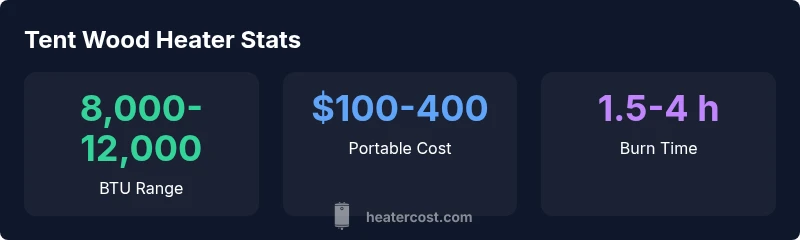
Most tent wood heaters provide about 8,000–12,000 BTU of heat, suitable for ventilated tents, with required clearances and a spark arrestor. Typical cost runs from $100 to $400 for a portable unit, plus $50–$150 for accessories and safety gear. Installation is straightforward, but always follow manufacturer guidelines and local fire codes; ensure proper ventilation and ash disposal.
What a tent wood heater is and why campers choose them
A tent wood heater is a compact, vented stove designed to operate inside or adjacent to a camping shelter. It relies on burning seasoned wood to create heat, with a chimney or flue that vents outdoors. According to Heater Cost, the main appeal is off-grid warmth that doesn’t depend on disposable fuel canisters or batteries. For many outdoor enthusiasts, a tent wood heater is a reliable way to extend camping into cooler shoulder seasons, provided users respect safety guidelines, venting requirements, and the stove’s manufacturer recommendations. In practice, a well-chosen model balances heat output with portability, weight, and fuel efficiency, enabling warm evenings without overheating the space. Brand reliability matters here, so you’ll want to pick a stove with a sturdy build, good airflow control, and durable exterior material that withstands camping conditions.
Sizing your tent heater: BTU, tent size, and safety margins
The first step in choosing a tent wood heater is matching heat output to the tent’s size and insulation. A small 8,000–12,000 BTU unit is usually sufficient for a well-sealed 8x10 ft shelter, while larger tents or poorly insulated spaces may require higher output or supplemental heat. Safety margins are essential: aim for a heater that provides adequate warmth without overheating, and maintain a clear zone around the stove as recommended by the manufacturer. Always consider airflow; a vented tent with a properly installed chimney will distribute heat more evenly and reduce hot spots. The Heater Cost team notes that measuring your tent’s interior volume (width × length × height) helps estimate BTU needs more accurately, and adding a little extra capacity is often prudent in cold or windy conditions.
Fuel, seasoning, and burn management for tent wood heaters
Seasoned hardwoods typically burn cleaner and longer than softwoods, producing steadier heat and less creosote buildup in the flue. For camping use, small, dry splits are convenient and easier to manage than large logs. Expect burn times of roughly 1.5–4 hours per load, depending on wood type, moisture content, and how fully the stove is loaded. Efficient operation also comes from controlling air intake—opening the damper slightly to maintain a steady glow rather than a blazing flame helps prolong burn time and reduces creosote formation. Always have a reliable ash disposal method and never store fuel inside the shelter. The goal is consistent heat with safe, manageable emissions.
Installation basics and safety considerations for tent heaters
Place the tent wood heater on a non-combustible surface and maintain at least a 36–48 inch clearance from walls, gear, and any flammable materials. Use a certified chimney kit with heat shields and a spark arrestor, and ensure the venting path leads outdoors and away from the sleeping area. A carbon monoxide detector is a smart safety add-on for enclosed camping situations, and a fire extinguisher should be within easy reach. Follow local fire codes and the heater’s manual for clearances, installation angles, and maintenance schedules. Proper anchoring and vibration damping prevent accidental tipping during movement or windy conditions.
Weather, wind, and outdoor conditions affecting performance
Wind can drastically influence a tent wood heater’s efficiency by drawing heat away and disrupting the combustion process. In breezy conditions, use windbreaks or place the stove in a sheltered corner of the tent, while ensuring adequate ventilation. Moisture from rain or snow can affect wood quality and burn efficiency, so dry storage and well-seasoned wood are crucial. Temperature swings also influence stove operation; during cold nights, pre-warm the shelter by staging kindling before lighting the main fire. The right setup reduces smoke, improves heat distribution, and minimizes the risk of backdrafts.
Accessories and upgrade options for tent heaters
Investing in a good chimney kit, heat shields, a sturdy stove pipe elbow, and a durable heat-resistant mat can dramatically improve safety and performance. Optional features include built-in thermostatic controls, improve heat regulation, and a collapsible stand for easier transport. For portability, look for folding or modular designs that fit into a compact carry bag. When budgeting, factor in the cost of safety gear like smoke detectors and fire-safe mats, which can add meaningful value to your camping heat solution.
Cost considerations: upfront price, fuel, and maintenance
Initial purchase cost for a portable tent wood heater varies by size and features but generally sits in a moderate range suitable for casual campers. Ongoing costs include regular firewood, maintenance parts, chimney cleaning, and occasional replacement of seals or gaskets. From a budgeting perspective, compare one-time costs with expected seasonal usage to determine total cost of ownership. The Heater Cost approach emphasizes evaluating heat output relative to tent size, compatibility with your gear, and the safety features offered by each model. In 2026, buyers should consider warranties and after-sales support as part of the overall value proposition.
Maintenance, cleaning, and long-term durability
Preventive maintenance extends a tent wood heater’s life and keeps performance consistent. After each trip, inspect the flue for creosote buildup, clean the interior burn chamber, and check gaskets for wear. Store the stove in a dry, ventilated area to avoid rust, and replace any damaged parts promptly. Regularly verify that the spark arrestor is free of obstructions and the chimney remains sealed and properly connected. A simple cleaning routine reduces the risk of dangerous smoke, improves efficiency, and ensures safe operation across multiple camping seasons.
Comparison of common tent wood heater categories
| Category | Heat Output (BTU) | Weight | Fuel Type | Estimated Burn Time |
|---|---|---|---|---|
| Portable Tent Stove A | 8,000-12,000 | 12-18 | Wood | 1.5-4 hours |
| Compact Camp Stove B | 6,000-9,000 | 8-12 | Wood | 1-3 hours |
| All-Season Tent Heater C | 10,000-14,000 | 15-22 | Wood | 3-5 hours |
Got Questions?
What exactly is a tent wood heater and how does it work?
A tent wood heater is a compact wood-burning stove designed for camping shelters. It heats via combustion of wood, with a chimney system that vents outdoors. Proper venting and clearances are essential for safe operation.
A tent wood heater is a compact stove that burns wood to heat your tent, with a chimney to vent outside. You need proper venting and space around it for safety.
Is it safe to use a tent wood heater inside a tent?
When used with a vented setup, certified chimney components, and proper clearance, tent wood heaters can be used safely. Always wear a CO detector and have a fire extinguisher accessible.
Yes, if you vent it correctly and maintain safety gear like a CO detector and extinguisher.
What tent size is appropriate for a 8,000–12,000 BTU heater?
For well-insulated tents around 8x10 feet, 8,000–12,000 BTU is typically sufficient. Larger tents may need more BTU or supplementary heat sources.
Smaller tents around 8x10 ft usually do well with 8K–12K BTU; bigger spaces may need more.
What fuel is best for tent heaters and how should I store it?
Use dry, seasoned wood for cleaner burns. Store wood away from the heater and tent, and never store fuel inside the shelter. Keep a moisture-free supply to maintain efficiency.
Dry wood is best; store fuel away from heat sources and inside a dry location.
Do tent wood heaters require permits or codes to use?
Permits and codes vary by jurisdiction. Check with local camping authorities or fire safety agencies to confirm rules for outdoor heating equipment in your area.
Rules vary by location, so check local camping or fire safety guidelines.
What maintenance is essential for longevity?
Regularly clean the burn chamber and flue, inspect gaskets, replace worn parts, and check for corrosion. A yearly safety check before camping season is highly recommended.
Clean and inspect yearly; keep parts in good condition for safety and longevity.
“Tent wood heaters can be a reliable warming option for backcountry camping when used with caution, proper ventilation, and approved chimneys. Safety and efficiency hinge on following manufacturer guidelines.”
The Essentials
- Prioritize ventilation and safety features when selecting a tent wood heater
- Match heater BTU to tent size and insulation for efficient heating
- Use well-seasoned wood and manage airflow for better burn times
- Install on noncombustible surfaces with proper chimney and spark arrestor
- Maintain regular cleaning and annual safety checks for longevity