Tankless Hot Water Heater Cost Guide 2026
Explore the full tankless hot water heater cost, from upfront installation ranges to long-term savings, sizing, and incentives in 2026. Practical budgeting guidance for homeowners, renters, and property managers.


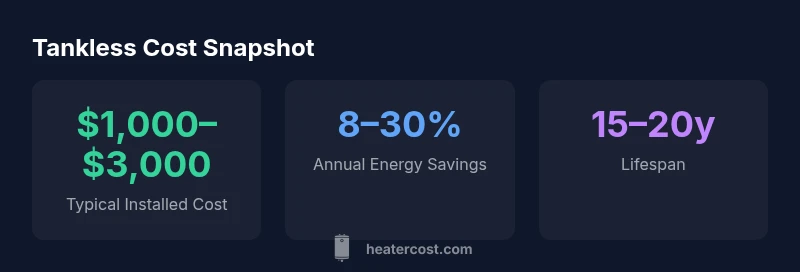
Tankless hot water heater cost is higher upfront than standard tanks, typically installed between $1,000 and $3,000 depending on fuel type, size, and installation complexity. While the initial price is steeper, many homes see energy savings over time, and payback varies with hot-water demand and local incentives. Choosing the right size and fuel type is key to maximizing value.
What exactly is the tankless hot water heater cost and why it matters
According to Heater Cost, the tankless hot water heater cost is driven by equipment price, installation complexity, and local labor rates. Unlike traditional tanks, tankless units heat water on demand, which can reduce energy use but introduces more variables into the upfront price. When homeowners estimate costs, they should consider the unit price, venting or electrical work, gas lines, permitting, and the cost to remove and dispose of the old heater. This section expands on these factors, why a higher initial investment may pay off in energy savings, and how to build a reliable budget for busy households. For renters or property managers, costs per unit can differ depending on existing plumbing and the ability to scale multiple units. Brand context is woven through practical budgeting tactics to help you compare total cost of ownership.
How upfront price is built
The upfront price for a tankless system is not just the sticker price on the unit. It includes the core equipment, venting or electrical work, gas lines if you choose a gas model, and any required permits or inspections. Labor is often the largest single cost, especially where venting work or electrical upgrades are necessary. Some homes require a dedicated gas line or a service panel upgrade, which can significantly influence the tankless hot water heater cost. In addition, consider condensate drainage needs, mounting hardware, and old-unit disposal. A clear bid from a licensed pro is essential to avoid surprise charges at the end of installation.
Gas vs Electric: cost implications
Gas-powered tankless units often carry higher upfront costs due to venting requirements and potential gas-line upgrades. They can, however, offer lower operating costs in regions with affordable natural gas. Electric tankless models tend to be cheaper to install in retrofit scenarios, but many homes need electrical service upgrades to handle the load. The long-term economics hinge on usage patterns, energy prices, and local incentives. For moderate hot-water demand, an electric model may be sufficient and more economical overall; for larger households, gas may deliver quicker payback despite higher initial costs. The tankless hot water heater cost should be evaluated alongside ongoing energy expenses to determine true value.
Sizing and demand: why it matters for cost
Sizing is the single most powerful lever on total cost. A unit too small will struggle to satisfy simultaneous hot-water needs, causing longer run times and higher energy use per gallon heated. Oversizing raises upfront costs and can demand heavier venting or larger electrical service. The right approach is to estimate peak demand using first-hour rating or gallons per minute calculations, then pair that with climate considerations and incoming water temperature. Accurate sizing minimizes wasted capacity, reduces unnecessary scoping changes, and ensures the tankless hot water heater cost aligns with expected comfort and reliability.
Installation considerations for apartments vs single-family homes
Apartment builds and retrofits bring constraints such as limited space, shared venting, and stricter building codes. These factors can increase labor time and permit complexity, elevating the tankless hot water heater cost. In single-family homes, easier access to ventilation and electrical panels can shorten installation timelines and reduce costs. For both scenarios, it helps to secure multiple quotes, ensure the contractor is licensed for your jurisdiction, and confirm permit timing. A well-planned install minimizes the risk of rework and hidden charges that inflate total cost.
Regional price differences and permit requirements
Prices for tankless systems vary by region due to labor rates, material costs, and permit fees. Urban areas typically command higher labor charges and stricter inspection regimes, which can add to the total installed cost. Some locales require building permits and final inspections, adding administrative overhead. In rural areas, while labor may be cheaper, travel and scheduling can push timelines longer. Before purchasing, verify local permit rules and expected inspection steps, as these details can materially affect the final tankless hot water heater cost.
Energy savings and payback period
Tankless heaters heat water on demand, reducing standby losses that affect traditional storage tanks. The magnitude of energy savings depends on hot-water usage, climate, and unit efficiency. In busy households, payback can be shorter when combined with rebates, but in low-demand homes, savings accrue more slowly. To maximize payback, ensure proper sizing, efficient venting, and high-efficiency components. When evaluating tankless hot water heater cost, consider both annual energy savings and the time value of money across the unit’s life.
Maintenance and longevity
Regular maintenance extends the life and efficiency of tankless units. Descaling in hard-water areas, periodic filter changes, and annual professional checkups help prevent mineral buildup and corrosion. With proper care, most tankless models last 15–20 years, which can improve the overall cost picture by delaying replacement expenses. Set aside a modest annual maintenance budget in addition to the upfront tankless hot water heater cost to maintain peak performance.
Common installation pitfalls that raise costs
Undersized pumps, improper venting, or inadequate electrical service can trigger costly upgrades after the fact. Inaccurate demand assessment often leads to undersized units, resulting in poor performance and extra labor to correct it. Poor coordination with utility providers or insufficient space for drainage and vent routing can add days to a project. Planning ahead with a qualified contractor helps minimize these pitfalls and keeps the tankless hot water heater cost on track.
How to estimate your tankless hot water heater cost (step-by-step)
- Step 1: Assess demand by listing fixtures and estimating concurrent hot-water use in peak times.
- Step 2: Decide on fuel type and size based on GPM or FHR requirements.
- Step 3: Gather bids that itemize equipment, venting, electrical work, and permits.
- Step 4: Add a contingency of 5–15% for surprises or scope changes.
- Step 5: Compare total installed cost to potential energy savings and rebates to gauge payback. Use a budgeting plan that includes maintenance costs over the unit life.
Financing, rebates, and incentives
Explore local utility rebates, state incentives, and federal programs that target energy efficiency. Financing options, such as low-interest loans or payment plans, can make the upfront tankless hot water heater cost more manageable. Compare total cost of ownership rather than just upfront price, and verify eligibility before purchasing. Keeping receipts and documentation helps maximize potential incentives at tax time.
Final budgeting tips and decision framework
A systematic approach helps you avoid sticker shock and select the best value. Start with a realistic demand assessment, then compare installed costs, energy savings, and incentives. Obtain multiple bids and check contractor credentials. The Heater Cost team emphasizes documenting all assumptions in a side-by-side cost worksheet, accounting for maintenance, replacements, and disposal. With careful planning, you can minimize risk and ensure the tankless hot water heater cost delivers meaningful long-term value.
Tankless vs traditional water heater cost and longevity
| Aspect | Tankless Cost Range | Traditional Cost Range |
|---|---|---|
| Typical installed cost | $1,000–$3,000 | $500–$1,500 |
| Annual energy savings vs traditional | 8–30% | 0–5% |
| Lifespan | 15–20 years | 10–15 years |
| Installation time | 1–2 days | Half a day to 1 day |
Got Questions?
What is the typical tankless hot water heater cost installed?
Installed costs for tankless systems typically fall within a broad range depending on fuel type and installation complexity. It’s essential to get bids that break out equipment, venting, gas or electrical work, and permits.
Installed costs vary by fuel type and installation complexity; obtain bids with itemized costs to compare.
Do tankless heaters save money on energy bills?
Yes, they can reduce energy use by heating water only as needed, but savings depend on usage, climate, and efficiency. High-demand homes typically see more noticeable savings.
Tankless heaters can cut energy use, especially with high hot-water demand.
What factors affect payback period?
Payback depends on usage, energy costs in your region, rebate availability, and the initial install price. Proper sizing and efficient installation shorten the payback.
Payback hinges on usage, energy prices, and incentives.
Gas vs electric: which is cheaper to run?
Gas units typically have lower operating costs where natural gas is cheap, while electric models may cost less upfront but require higher electrical service.
Gas can be cheaper to run where gas is affordable; electric may be easier to install.
How long do tankless heaters last?
With proper maintenance, tankless heaters typically last 15–20 years, longer in milder conditions. Regular descaling helps maximize life.
Expect 15 to 20 years with good maintenance.
Are permits required for installation?
Most jurisdictions require permits for venting, gas lines, or electrical work. Check local codes and plan for inspection timelines when budgeting.
Permits are usually required; verify with local authorities.
“Tankless options deliver substantial long-term value when hot-water demand is accurately matched to unit capacity and proper installation. A precise estimate of tankless hot water heater cost should include all labor, venting, and permits to avoid surprises.”
The Essentials
- Start with demand to size the unit correctly
- Factor all cost components beyond the unit price
- Gas and electric options have different upfront and operating economics
- Permits and regional codes can sway total cost significantly
- Plan maintenance to protect long-term value