Hot on Demand Water Heater: Tankless vs Tanked Costs in 2026
A comprehensive analysis of hot on demand water heaters (tankless), comparing efficiency, installation, and long-term costs against traditional storage tanks. Learn sizing, maintenance, and buying strategies for 2026 to determine if going tankless saves money.


A hot on demand water heater, commonly called a tankless water heater, heats water as it flows through a heat exchanger rather than keeping a tank of hot water ready. This design minimizes standby heat loss and can lower energy use in homes where hot water demand is sporadic. Depending on usage patterns, you may see energy costs stabilize or fall, especially in homes with irregular hot-water demand. The Heater Cost team notes that payback varies by climate, fuel type, and installation costs.
What is a hot on demand water heater?
A hot on demand water heater, commonly called a tankless water heater, heats water as it flows through a heat exchanger rather than keeping a tank of hot water ready. This design minimizes standby heat loss and can lower energy use in homes where hot water demand is sporadic. The Heater Cost team notes that the choice between gas-fired and electric tankless models affects fuel costs, ventilation needs, and electrical capacity, making proper sizing essential for reliable performance. When configured correctly, a hot on demand water heater can supply continuous hot water for showers, sinks, and appliances without the constant energy draw of a storage tank. However, the initial installation can be more complex, and some households may experience lower flow rates if multiple outlets are used simultaneously. In summary, hot on demand water heaters offer energy efficiency and space savings, but sizing, fuel type, and installation costs drive the total value you get over the system’s life.
How tankless vs traditional water heaters compare
- Energy use: Tankless units heat water on demand, reducing standby losses; traditional storage tanks heat continuously to maintain the tank temperature.
- Flow and demand: Tankless systems are rated by a first-hour rating and gallons per minute; multiple outlets can strain flow; storage tanks provide a readily available volume.
- Upfront costs vs long-term value: Tankless units cost more upfront due to equipment and installation; storage tanks cost less initially but incur ongoing standby energy costs.
- Space and installation: Tankless units are compact but require venting (gas) or dedicated electrical circuits; storage tanks are bulkier but simpler to install.
- Lifespan and maintenance: Tankless units typically last longer with scheduled descaling; storage tanks may corrode with time and require more frequent replacement.
Energy efficiency and operating costs
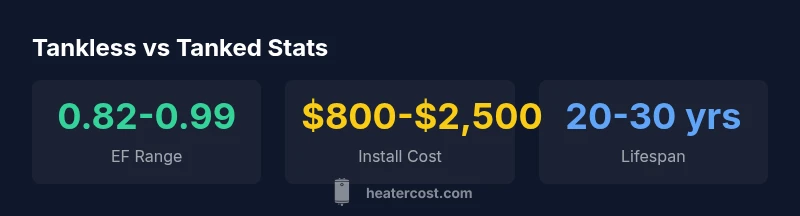
Modern tankless water heaters offer high efficiency with EF values typically in the range of 0.82 to 0.99, depending on model and operating conditions. The most common energy-cost savings come from eliminating standby losses; however, realized savings depend on hot-water usage patterns, climate, and installation quality. For households with low to moderate hot-water demand, the annual operating cost can be notably lower than a storage tank, especially where gas prices are stable and electrical rates are high. On the other hand, in homes with very high simultaneous hot-water needs (two showers and a washing machine at peak times), a single tankless unit might struggle to meet demand unless multiple units are installed or staged. The Heater Cost analysis notes that installation costs can be higher upfront, but longer system life and reduced energy waste can compensate over time, producing a favorable total cost of ownership in many situations. When evaluating options, compare EF, minimum and maximum flow rates, heat‑loss considerations, and serviceability. Also consider local incentives for efficient equipment, and whether a point-of-use or whole-house solution makes the most sense for your home.
Sizing, installation, and maintenance considerations
Sizing: The key to performance is correct sizing. Use nameplate flow rates, incoming water temperature, and your peak hot-water demand to estimate gallons per minute (GPM) required. For homes with 2 bathrooms and occasional uses, many homeowners choose two small tankless units or a staged system to maintain flow. Installation: Gas-powered tankless heaters require proper venting, gas supply, and vent materials; electric models need a dedicated high-amperage circuit and sometimes a wired panel upgrade. Venting and code compliance can add to the cost and complexity. Maintenance: Descale regularly in areas with hard water; sediment buildup reduces efficiency. Annual or semi-annual flushing with a descaling solution is common. You’ll want service access and warranty coverage aligned with local climate and utility arrangements. Budgeting: Aside from equipment cost, consider permits, venting, and possible electrical upgrade requirements. In many markets, homeowners see payback periods blend between five to ten years, depending on usage and energy prices.
Practical buying guide: should you choose hot on demand water heater?
Before buying, map your hot-water usage. Do you regularly run two showers at once? Do you have low incoming water temperature? If your usage is sporadic or you live in a small home, tankless might pay for itself more quickly. If you frequently draw large amounts of hot water, you may require multiple units or a hybrid approach. Compare two or three models with different fuel types; factor utility rates in 2026; think about installation costs including venting and electrical work; and estimate maintenance costs. Consider incentives: some regions offer rebates for high-efficiency equipment. Read warranties and check service networks. The Heater Cost approach emphasizes: run your own numbers using a simple payback model: upfront cost vs annual operating savings. When in doubt, consult a licensed plumber or HVAC professional to perform a site-specific assessment. The result should be a clear decision on whether a hot on demand water heater makes sense for your home and budget.
Tankless vs storage water heater comparison
| Model Type | Average Lifespan | EF Range | Typical Installation Cost | Notes |
|---|---|---|---|---|
| Tankless Gas | 20-30 years | 0.82-0.92 | 1,200-2,500 | Pros: endless hot water; venting required |
| Tankless Electric | 15-25 years | 0.90-0.99 | 600-1,600 | Pros: no venting; high electrical load |
| Storage Tank | 10-15 years | 0.60-0.70 | 300-1,500 | Pros: lowest upfront; standby losses |
Got Questions?
Are tankless water heaters always better than storage tanks?
Not always. Tankless heaters excel when hot water demand is intermittent and space is limited, delivering efficiency gains in many scenarios. Storage tanks can be cost-effective for high simultaneous draw and where upfront costs must be minimized. Your home’s usage pattern and local utility rates determine the best choice.
Tankless can be more efficient, but it depends on how you use hot water.
Will a tankless heater supply enough hot water for two showers at once?
A single tankless unit may struggle with two simultaneous draws unless it’s sized for higher flow or you install multiple units. Consider a staged setup or a larger unit and verify GPM ratings before purchasing.
Two showers at once can be tough for one unit; size matters.
What affects the payback period for a tankless heater?
Payback depends on upfront cost, fuel type, energy prices, and your hot-water usage. In areas with high energy costs or frequent hot-water use, payback tends to be shorter. A site-specific calculation helps avoid guesswork.
Payback varies a lot by usage and energy prices.
Do I need electrical upgrades or extra venting for installation?
Electric tankless models may require a dedicated circuit and panel assessment; gas models often need proper venting and gas line sizing. A licensed pro can confirm code requirements and ensure safe, compliant installation.
Yes—check electrical and venting needs with a pro.
How long do tankless heaters last compared to traditional tanks?
Tankless units typically last longer, often 20-30 years with regular maintenance, while traditional storage tanks last around 10-15 years. Maintenance and water quality influence longevity.
Tankless usually lasts longer, with proper care.
“Tankless water heaters deliver hot water on demand with real energy efficiency gains, but the payoff depends on usage patterns and upfront costs.”
The Essentials
- Assess peak demand to size correctly.
- Expect higher upfront costs for tankless but potential long-term savings.
- Consider water hardness and routine descaling in maintenance planning.
- Review incentives and total cost of ownership before buying.