Why Don't Water Heaters Last Longer: A Practical Lifespan Guide
Discover why water heaters fail sooner than expected and learn practical steps to extend their life, including maintenance routines, installation checks, and cost-conscious replacement strategies.


Short answer: Most premature failures come from sediment buildup, poor maintenance, and installation or sizing errors. According to Heater Cost, neglecting regular flushing, improper thermostat settings, and faulty expansion or relief components accelerate wear and corrosion. The quickest path to a longer life is a proactive maintenance routine and timely replacement when the unit shows aging signs or persistent leaks.
Common reasons your water heater doesn't last as long
Water heaters fail prematurely for a handful of common reasons, most of which are preventable with basic maintenance and careful selection. Sediment from minerals in hard water settles at the bottom of the tank and acts like an abrasive, shortening the life of the tank and heating elements. Frequent short cycling—where the heater repeatedly turns on and off to meet small hot-water demands—causes extra wear on the burner, thermostat, and heating elements. Installation mistakes, improper venting, or incorrect sizing (too small for your draw pattern or oversized for the house) also shorten lifespan by forcing the unit to work harder. Water quality, including high mineral content and acidic water, accelerates corrosion and the breakdown of internal components such as the anode rod. Finally, neglecting routine maintenance, including annual flushing and component inspection, compounds all of these issues and leads to leaks and efficiency loss.
How to assess your unit's age and condition
To decide whether your water heater is likely to live much longer or needs replacement soon, start by identifying the model and age from the data plate. The serial number often encodes install date, which helps estimate remaining life. Look for signs of wear: visible corrosion, yellowing or leaking around fittings, and puddles under the tank. Run the hot-water tap: if temperature fluctuates or the water comes inconsistent, the unit may be failing or undersized. Listen for rumbling, popping sounds from mineral buildup, or a persistent metallic smell that indicates corrosion. And check the temperature-and-pressure (T&P) relief valve: a leaking valve is a warning sign. A professional inspection can verify insulation integrity, anode rod condition, and whether parts are still available.
Maintenance habits that extend lifespan
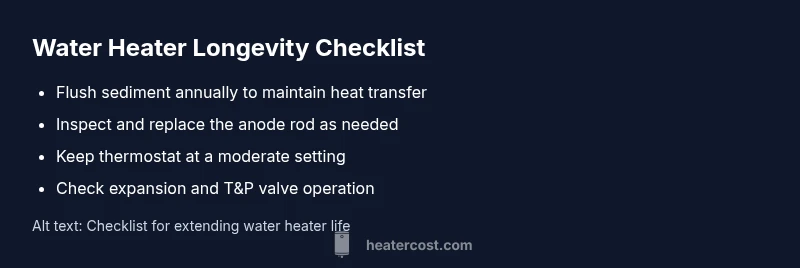
Establish a simple, proactive maintenance routine that fits your home. Schedule an annual flush to remove sediment and prolong heating efficiency. Test and replace the anode rod every few years if it is heavily corroded; this sacrificial rod helps guard the tank. Keep the thermostat at a moderate setting to reduce strain and energy use. Inspect the pressure relief valve and expansion tank, ensuring correct operation and no leaks. Insulate the hot-water pipes and the tank if your climate is cold, reducing heat loss. Finally, address water quality issues with a water-softening system or compatible treatment to slow mineral buildup. Small, consistent maintenance can meaningfully extend life and prevent emergency repairs.
Installation and sizing pitfalls that shorten lifespan
Poor installation quality or incorrect sizing cause the unit to cycle more, wear out parts faster, and waste energy. A unit installed without proper venting (gas models) can accumulate dangerous buildup and trigger premature failures. Electrical wiring must meet the unit’s amperage requirements and be up to code; undersized breakers or loose connections create heat and degrade components. Incompatible expansion tanks or missing anti-siphon devices can create pressure issues that shorten life. If you’re replacing an existing heater, verify the new model’s capacity aligns with household hot-water demand and consider energy-efficient options for longer-term savings.
When to repair vs replace: making a durable choice
Knowing when to repair or replace is essential for long-term reliability. If the unit is approaching the end of its expected life, has multiple recurring leaks, or requires frequent, costly fixes, replacement with a more efficient model may be the wiser choice. Energy-efficient replacements can reduce operating costs and improve reliability, especially in homes with high hot-water demand. On the other hand, small component failures like a faulty thermostat or a leaking valve can often be fixed affordably and extend service life. A professional estimate can help you compare the cost of repairs versus a replacement with a per-yearized cost view.
Cost considerations and budgeting for longevity
Investing in longevity means balancing upfront costs with long-term savings. Replacement costs vary by type (tank vs tankless), capacity, and installation complexity, while maintenance expenses are comparatively modest. Budget for an annual flushing and inspection, plus occasional part replacements like anode rods or relief valves. Consider financing options and potential energy-savings when evaluating a new unit. Focus on reliability, efficiency, and local utility incentives that can lower the total cost of ownership over time. Heater Cost's approach is to help homeowners weigh options without scaremongering, emphasizing practical, data-informed decisions.
Quick checks you can do today
- Look for visible leaks around connections and the tank bottom, and listen for unusual noises that signal sediment buildup.
- Confirm the T&P relief valve operates freely and doesn’t bleed.
- Check the thermostat setting and ensure it isn’t set too high.
- Inspect insulation on both the tank and the hot water pipes.
- If you’re comfortable, shut off power and drain a small amount of water to test the drain valve. If you notice significant issues, stop and call a professional.
Ready-to-implement preventive routine
Put a simple schedule on the calendar: monthly quick checks (leaks, pipe insulation, venting for gas units), quarterly water flow and pressure assessment, and annual flush and anode-rod inspection. Keep a maintenance log with dates and notes to track wear patterns and help you spot declining performance early. By establishing a predictable routine, you reduce the risk of unexpected failures and maximize the life of your water heater.
Steps
Estimated time: 2-3 hours
- 1
Power down and isolate power and water
Shut off electricity or gas to the unit, then close the cold-water supply to stop new water from entering the tank. Relieve pressure by opening a hot-water faucet nearby. This keeps you safe and prevents scalding or leaks during the fix.
Tip: Always start with safety; if you smell gas, evacuate and call your gas provider. - 2
Check for leaks and corrosion
Inspect the tank, fittings, and valves for dampness or rust. Leaks often indicate worn seals or a compromised tank and may require immediate attention.
Tip: Document any leaks with photos for your technician. - 3
Flush sediment from the tank
Connect a hose to the drain valve and release a small amount of water to see if sediment is present. Open the drain fully to flush out settled mineral deposits until the water runs clear.
Tip: Flush slowly to avoid splashing and scalding from hot water. - 4
Inspect and replace the anode rod
If you can access the anode rod, remove and inspect it for heavy corrosion or loss of material. Replace if it’s severely corroded to protect the tank from rust.
Tip: Anode rod replacement is a common repair; keep a spare on hand. - 5
Test thermostat and heating element
Verify the thermostat reads accurately and the heating element engages. Replace a faulty element or calibrate the thermostat if readings are off.
Tip: Electric units may require a professional if wiring is involved. - 6
Check expansion tank and T&P valve
Ensure the expansion tank is not waterlogged and the T&P valve releases water only when pressured. Repair or replace as needed.
Tip: Never cap or disable the T&P valve; it’s a critical safety device. - 7
Inspect venting and gas connections (gas models)
For gas water heaters, ensure venting is unobstructed and vent connections are sealed. Poor venting can cause backdrafts and premature failures.
Tip: If you smell gas, leave the area and call emergency services. - 8
Decide on replacement timing
If the unit shows significant corrosion, persistent leaks, or frequent repairs are planned, plan a replacement for better reliability and efficiency.
Tip: Budget for a modern, energy-efficient model to reduce ongoing costs.
Diagnosis: Water heater runs out of hot water quickly or doesn't reach set temperature consistently
Possible Causes
- highSediment buildup in tank from hard water
- highAging appliance approaching end of life
- mediumIncorrect thermostat settings or faulty heating element
- lowLeaks or compromised expansion/anode components
Fixes
- easyFlush tank to remove sediment and restore heat transfer
- mediumInspect and replace aging components (anode rod, heating element) as needed
- easyCheck thermostat settings, gas venting or electrical supply; correct wiring and venting
- hardCall a professional for leaks or unit replacement if tank shows signs of corrosion
Got Questions?
How long do water heaters last?
Lifespan varies by type and maintenance. Tankless models often outlast traditional tanks when properly maintained, and regular upkeep can significantly extend life for both types.
Lifespan varies by type and maintenance; regular upkeep extends life for both tank and tankless models.
What are common signs a water heater needs replacement?
Frequent leaks, persistent rust-colored water, fluctuating or insufficient hot water, unusual noises, and rising energy use are all warning signs that a heater may be nearing end of life.
Leaks, rust, or inconsistent hot water are warning signs your heater may be near the end of its life.
How often should I flush my water heater?
As a general rule, an annual flush helps maintain efficiency and prolongs life. In areas with very hard water, consider more frequent flushing after consulting a pro.
Flush yearly to keep efficiency up; harder water may require more frequent flushing.
Is it better to repair or replace an aging water heater?
If the unit is old or requires frequent repairs, replacement with a newer, more efficient model may be the wiser long-term choice. A pro can provide a cost comparison.
If it’s old or constantly needing repairs, replacement might save you money in the long run.
Does thermostat setting affect lifespan?
Yes. Keeping the thermostat at a moderate setting reduces strain, saves energy, and can extend component life. Avoid constantly raising it to high heat.
A moderate thermostat helps the heater last longer and saves energy.
Watch Video
The Essentials
- Take action early to extend life with maintenance.
- Sediment and improper sizing are major lifespan culprits.
- Choose properly sized, installed units to avoid premature wear.
- Plan replacement before failure to minimize downtime and energy waste.