What to Clean Your Heater With: A Practical Guide
Learn safe, effective methods for cleaning your heater, including what to clean heater with, recommended cleaners, and maintenance tips to extend lifespan and efficiency.


If you're asking what to clean heater with, the safe answer is simple: mild cleaners, water, and basic tools. Start with a vacuum brush to remove dust, then wipe with a damp microfiber cloth and a tiny amount of mild detergent on stubborn grime. Always unplug the unit and follow the manufacturer's instructions.
Why Regular Cleaning Matters
Dust and grime can reduce heater efficiency, raise energy costs, and create safety hazards when vents, coils, or fans are clogged. A clean heater typically runs more efficiently, heats more evenly, and experiences fewer breakdowns. For homeowners, renters, and property managers, establishing a simple cleaning routine—especially in spring and fall when HVAC use shifts—helps protect investment and comfort. When considering what to clean heater with, start with a gentle approach that respects electrical components and mechanical parts. Regular attention also makes ongoing maintenance easier by preventing the buildup of stubborn grime that demands harsher methods later. Heater Cost analyses suggest that consistent cleaning supports efficiency and longevity, translating into lower operating costs over the long term.
In practice, you’ll focus on exterior surfaces, accessible vents, fans, and filtration points. Do not attempt to disassemble sealed combustion chambers or internal heat-exchanger areas unless you’re a trained technician. For many residential units, cleaning is a DIY task for the exterior shell and accessible parts, while internal components require professional service. The key is to know your equipment and follow the manual’s safety recommendations. As you plan, consider the environment: keep the space ventilated, avoid moisture near electrical outlets, and wear protective gear during cleaning. Throughout this guide, you’ll learn what to clean heater with and why safe materials matter.
What to Clean Your Heater With: The Safe Agents
When deciding what to clean heater with, prioritize gentleness and compatibility with metal, plastic, and electrical components. Mild dish soap mixed with water works well for exterior surfaces and non-electrical parts. For stubborn grime, a small amount of isopropyl alcohol (at least 70% concentration) on a microfiber cloth can help without leaving residue. Distilled water reduces mineral streaks and corrosion risk. Vinegar can be useful for exterior metal surfaces when diluted (1:1 with water) but should never be sprayed into electrical openings or onto coils.
Avoid bleach, ammonia, paint thinners, or abrasive solvents which can corrode metal, degrade insulation, or damage coatings. Do not pour liquids into vents or electrical housings. Always consult the owner’s manual for model-specific instructions and never overlook manufacturer safety warnings. With the right cleaners, you can remove dust, grease, and grime while preserving performance. Remember: the aim is to clean, not condition or force-clean critical components. The central rule is to use mild products and protect electrical parts.
Tools and Cleaners You Can Trust
Having the right tools makes the job safer and faster. A soft vacuum with a brush attachment helps lift dust from grills and vents without bending fins. Microfiber cloths remove streaks and moisture evenly, while a soft brush loosens stubborn debris in tight spaces. A spray bottle with a mild soap solution, a small bowl of distilled water, and optional isopropyl alcohol for spot-cleaning provide a flexible kit. Gloves and safety goggles protect hands and eyes from splashes or sharp edges. If you’re cleaning around sensitive electronics, keep liquids away from control panels and power cords. Finally, a dry lint-free cloth helps finish by ensuring surfaces are dry and residue-free before use.
Having these tools on hand supports a safe, effective clean and minimizes the chance of damage. Always power down and unplug before you begin, and work in a well-ventilated area. If you’re unsure about a component, test a small area or consult the manual first. Remember that some units require filter changes or professional service rather than DIY cleaning, especially for central heating systems or sealed combustion parts.
Cleaning Different Heater Types and Risk Considerations
Electric space heaters, baseboard heaters, and small portable units have different cleaning needs than gas furnaces or ducted heating systems. For electric units, focus on exterior housings, grilles, and exposed fans. Never immerse any electric component in liquids. Gas furnaces require careful handling: avoid cleaning inside the combustion chamber or heat exchanger unless you’re trained, and do not attempt to access sealed areas without a professional. For heat pumps, exterior coils can be dusted or vacuumed, but consult the manual for any refrigerant or coil-care notes. In all cases, unplug power before cleaning, and do not bypass safety interlocks. When in doubt, lean on a professional service for deeper maintenance. The goal is to remove debris without dislodging parts or creating a safety risk.
Safety and Maintenance Best Practices
Safety should come first. Wear protective gear, unplug all power sources, and avoid moisture near electrical outlets. Use a damp, not soaking-wet cloth to prevent moisture intrusion. Do not spray cleaners into vents or controls; sprays can travel into sensitive areas. After cleaning, dry all surfaces thoroughly to prevent corrosion. Create a simple maintenance schedule that aligns with usage: a quick exterior wipe every few weeks during intense heating seasons and a thorough interior inspection annually by a technician. Keeping records of cleanings helps track wear and plan for replacements. By following these practices, you’ll improve safety and preserve efficiency.
Maintenance Scheduling and When to Call a Pro
For many homes, exterior cleaning and vent clearing can be done by homeowners on a quarterly or seasonal basis. More complex tasks—such as internal coil cleaning, burner inspection, or tight ductwork—should be handled by licensed technicians. If you notice unusual noises, pilot light issues, burning smells, or decreased performance after a cleaning, schedule a professional inspection promptly. Regular maintenance reduces the likelihood of unexpected breakdowns and can catch issues early before they escalate. A disciplined approach to what to clean heater with, combined with proper maintenance, helps maximize lifespan and energy efficiency.
Tools & Materials
- Vacuum with brush attachment(Use to lift dust from grills and vents without bending fins)
- Microfiber cloths(Use damp for exterior surfaces; lint-free for finishing)
- Soft bristle brush(Loosen debris in tight spaces)
- Mild dish soap(Dilute in water for exterior cleaning)
- Distilled water(Minimizes mineral deposits and streaks)
- Isopropyl alcohol (70%)(Spot-cleaning for stubborn grime; avoid electricals)
- Spray bottle(Mix cleaning solution)
- Gloves(Protect hands from grime and solvents)
- Safety goggles(Shield eyes from splashes)
- Towel or absorbent mat(Protect surfaces during cleaning)
Steps
Estimated time: 45-60 minutes
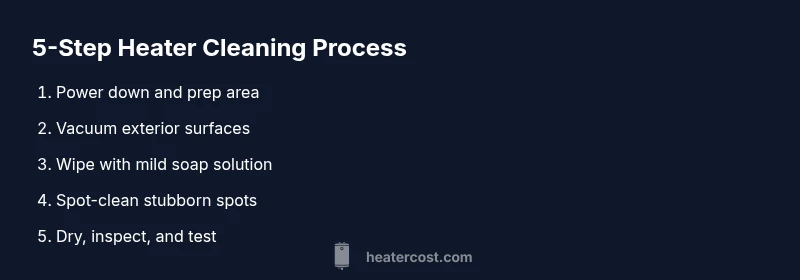
- 1
Power down and prep
Unplug the heater and allow it to cool. Move any nearby objects to create a safe workspace and lay a towel to catch any drips. This step reduces the risk of electrical shock and keeps the area clean.
Tip: If you must reach behind the unit, avoid pulling on cables; instead, unplug from the wall and move the unit gently. - 2
Vacuum exterior surfaces
Use a brush attachment to remove loose dust from grills, vents, and the exterior housing. Pay attention to fan vents and intake areas where dust collects.
Tip: Keep the vacuum nozzle at a slight distance to avoid dislodging small components. - 3
Wipe with mild soap solution
Mix a small amount of dish soap with distilled water in a spray bottle. Lightly mist a microfiber cloth and wipe exterior surfaces. For stubborn grime, repeat with a slightly damp cloth.
Tip: Do not spray liquids directly onto the heater; moisture can travel into controls. - 4
Spot-clean stubborn spots
Dampen a cloth with isopropyl alcohol for stubborn spots on metal surfaces, avoiding control panels. Gently rub and wipe away residue, then dry with a clean cloth.
Tip: Test a small, inconspicuous area first to ensure no finish damage. - 5
Inspect and dry interior access points
Inspect exterior vents for blockages and ensure any removable filters are clean or replaced per manufacturer guidelines. Wipe and dry interior surfaces that are accessible without disassembly.
Tip: Never disassemble sealed units; contact a pro for internal cleaning. - 6
Reassemble and test
Return any panels, turn the power back on, and run a test cycle to ensure proper operation. Listen for unusual sounds or odors during the test.
Tip: If anything sounds off, power down and seek professional service.
Got Questions?
Can I use bleach or ammonia to clean a heater?
No. Bleach and ammonia can corrode metal parts and damage insulation. Stick to mild soap and water, or isopropyl alcohol for spots, and always follow the manual.
Bleach and ammonia should be avoided because they can damage the heater. Use mild soap and water or alcohol for spots.
Is it safe to clean a gas furnace blower housing myself?
Internal combustion components require specialized training. Do exterior cleaning and basic vent clearing yourself, but schedule professional service for internal inspection and deep cleaning.
Internal furnace parts should be cleaned by a professional; exterior cleaning is okay if you follow safety steps.
How often should I clean a space heater?
Clean exterior and accessible parts seasonally or monthly during heavy use. More extensive cleaning or maintenance should align with manufacturer recommendations and professional timelines.
Clean the outside regularly, and get a professional check if you use it a lot.
What should I use to wipe electronic controls?
Use a damp microfiber cloth with a mild soap solution. Do not spray liquids directly on controls; avoid abrasive cleaners near electronics.
Wipe controls gently with a damp cloth and avoid spraying liquids directly on them.
Can I use vinegar on a heater?
Diluted vinegar can help exterior metal surfaces, but do not apply near coils or electrical parts. Rinse with distilled water and dry thoroughly.
Vinegar is okay on exterior metal if diluted and kept away from electrical areas.
Do I need to turn off the power at the breaker?
Yes. Always switch off power at the breaker and unplug the unit before cleaning to prevent shock or short circuits.
Turn the power off and unplug before cleaning every time.
Watch Video
The Essentials
- Unplug before cleaning and use mild cleaners.
- Avoid liquids in vents and electrical components.
- Regular exterior cleaning supports efficiency and safety.
- Different heater types require different care; consult the manual.
- Know when to call a professional for internal maintenance.