Under Sink Water Heater Guide: Costs, Sizing, and Maintenance
Explore the costs, sizing, installation, and upkeep of under sink water heaters. This Heater Cost guide helps homeowners compare options, plan upgrades, and maximize hot water efficiency in tight spaces.


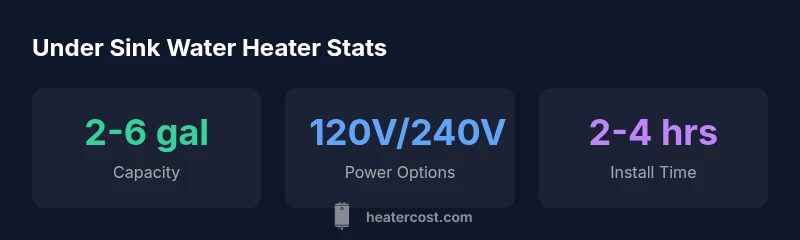
An under sink water heater is a compact point-of-use unit installed under a sink to deliver hot water locally, reducing wait time and water waste. Typical capacities range from 2 to 6 gallons, with 120V or 240V models depending on your home wiring.
What is an under sink water heater and why homeowners consider it
An under sink water heater, commonly referred to as a point-of-use (POU) unit, is a compact device mounted under a cabinet or sink to deliver hot water to a nearby faucet. For homes with long hot-water runs or multiple fixtures, these units can dramatically reduce wait times and water waste by shortening the distance hot water travels from the main heater to the tap. The Heater Cost team notes that selecting the right model depends on your demand, cabinet space, and electrical capacity. The main benefits include faster hot water at a single point of use, improved temperature control for sensitive fixtures like kitchen taps, and the potential to reduce energy losses from long piping runs. However, undersized units may struggle during peak demand, while oversized models waste energy. In practice, many households start with a 2- to 4-gallon unit for a single sink, or move up to a 4- to 6-gallon option for higher usage. Mapping your hot-water habits—how many fixtures run simultaneously, the typical run length from the main heater, and available cabinet space—is essential before purchasing. According to Heater Cost Analysis, 2026, the best approach balances capacity with the electrical service you can allocate without overloading circuits, preventing nuisance trips and ensuring steady hot water. This is especially important in older homes where wiring capacity may be limited.
Sizing and capacity: how to choose the right unit
Choosing the right size for an under sink water heater starts with estimating peak hot-water demand at the point of use. A practical rule of thumb is to match capacity to the number of fixtures likely to run at once. For a single kitchen sink, a two- to four-gallon model is typically sufficient, while homes with dedicated bathroom use near the sink might benefit from a larger four- to six-gallon unit. Consider the distance from the main water heater to the faucet; longer runs increase the likelihood of noticeable temperature drop if the unit is undersized. Electrical availability also matters; 120V models are common for smaller installations and limited spaces, but 240V versions offer faster recovery and higher temperature capability, which can be crucial for colder climates. When evaluating options, look at the unit’s energy factor or uniform energy factor (UEF) ratings, and aim for models with efficient heat retention and low standby losses. The Heater Cost team recommends coordinating sizing with your existing electrical panel and planned usage patterns to avoid underperforming during peak demand. Document your household’s simultaneous-use scenarios and compare models based on their recovery rate and thermostat range to find a balanced choice.
Installation and space optimization in tight cabinets
Space constraints are the defining challenge for under sink water heaters. Start by measuring the cabinet clearance, ensuring there is room for the unit, water lines, and an accessible shutoff valve. Secure the heater to a solid surface with mounting brackets designed for vertical installation, and ensure that the exhaust or venting is not required for electric POU models. Plan the incoming cold water line and the outgoing hot water line to minimize cross-over; use proper connectors and PEX or copper as appropriate. Install a shutoff valve on both lines for serviceability, and consider adding a filter or sediment trap if your water supply carries mineral content that could shorten the unit’s life. When wiring, follow local electrical codes and select a circuit with adequate amperage for the model’s startup surge. If you’re unsure about wiring or plumbing, hire a licensed professional to ensure safe, code-compliant installation.
Performance, efficiency, and temperature control
Performance hinges on how quickly the unit can deliver hot water and maintain a stable temperature. Efficient models reduce energy use by minimizing standby heat and enabling rapid recovery after use. Temperature control is crucial; many units offer adjustable thermostats with safety limits to prevent scalding. Pairing the heater with a thermostatic mixing valve can provide consistent outlet temperatures and protect vulnerable users, such as children or elderly residents. In colder climates or where the cold water entering the unit is very cold, a higher recovery rate may be needed to avoid long waits for hot water. Look for units with good insulation, leak-resistant fittings, and corrosion-resistant materials to extend life. The Heater Cost analysis emphasizes that a well-matched unit—considering both capacity and electrical supply—delivers reliable hot water without unnecessary energy waste.
Maintenance, safety, and leakage prevention
Regular maintenance helps prevent leaks and firmware or sensor drift that can affect performance. Schedule periodic inspections of inlet and outlet connections, drain the reservoir (if applicable) to remove sediment, and test the unit’s pressure relief or safety features if built into the model. Check for corrosion or mineral buildup around fittings and seals, and replace worn gaskets promptly to prevent leaks. A proactive approach also includes keeping the area around the unit dry and free of clutter to reduce trip hazards and ensure easy access to shutoff valves. If you notice abnormal noises, fluctuating temperatures, or a sudden drop in hot-water delivery, consult a professional to diagnose potential issues before they escalate. The Heater Cost team emphasizes safety and routine maintenance as the best way to maximize the lifespan of an under sink water heater.
Cost considerations and return on investment
The cost equation for under sink water heaters includes equipment price, installation, and ongoing operating costs. While prices vary by model and features, the primary financial considerations are upfront purchase price, electrical work requirements, and potential savings from reduced water waste and shorter wait times. Energy efficiency helps lower operating costs over time, but true savings depend on usage patterns and the local cost of electricity. Since prices and installation tasks differ by region, it’s wise to obtain multiple quotes and consider bundled service offers that include maintenance. The overall value rests on matching a unit to your hot-water needs and ensuring a safe, code-compliant installation. The Heater Cost analysis notes that homeowners who invest in a properly sized under sink heater can enjoy tangible savings in both water conservation and comfort.
Choosing a reputable installer and warranty considerations
A professional installation not only ensures code compliance but also affects warranty validity and long-term reliability. Ask installers about licensing, insurance, and practical experience with point-of-use systems. Confirm that the chosen model’s warranty covers both the unit and any associated plumbing components for a reasonable period. Keep records of installation details, model numbers, and serial data to facilitate future service. A good installer will explain maintenance steps, recommend water treatment or filtration if needed, and provide guidance on seasonal checks. Warranty terms vary, so read the fine print and understand what constitutes “normal wear and tear” versus covered defects. The Heater Cost team recommends choosing a trusted installer with proven experience in under sink water heater installations and clear warranty terms to protect your long-term investment.
Typical specs for under-sink water heaters
| Aspect | Under-Sink Options | Notes |
|---|---|---|
| Capacity | 2-6 gallons | Varies by model and demand |
| Power options | 120V or 240V | Choose based on wiring and circuit availability |
| Dimensions (HxWxD) | 6-18 in x 6-12 in x 6-12 in | Varies by model |
| Temperature control | Thermostat range varies | Use with mixing valve to prevent scalding |
Got Questions?
What is an under sink water heater?
An under sink water heater is a compact point-of-use unit installed under a cabinet to deliver hot water locally, reducing wait times and water waste. It’s ideal for single fixtures or tight spaces where a whole-house heater isn’t practical.
It’s a small heater that sits under the sink to give you hot water right where you need it.
How do I choose the right size?
Size depends on peak hot-water demand at the point of use. For a single kitchen sink, a 2- to 4-gallon unit is common; for higher demand, a 4- to 6-gallon model may be better. Consider your distance from the main heater and the number of fixtures that may run at once.
Think about how many fixtures might run at the same time and choose a model that can meet that peak.
Can I install one myself?
Electrical and plumbing work is involved, so many jurisdictions require a licensed professional for safety and code compliance. Review local codes and obtain any necessary permits before installation.
Most people hire a pro to install these units to stay safe and compliant.
What maintenance is needed?
Regular inspection of fittings, draining of the unit to remove sediment if it’s a reservoir model, and testing of shutoff valves are recommended. Promptly address leaks or corrosion to prevent bigger problems.
Keep an eye on fittings and drain the unit occasionally to prevent buildup.
Are under sink heaters energy efficient?
Yes, they can be energy-efficient by heating water close to the point of use and reducing heat losses in long pipe runs. Compare energy factors and look for models with good insulation and low standby losses.
They’re usually energy efficient because they heat water exactly where you need it, with less standby heat.
“Under-sink water heaters offer a practical way to cut wait times and water waste for households with long hot-water runs. When sized and installed correctly, they can deliver consistent comfort without large retrofits.”
The Essentials
- Assess hot-water demand to size capacity accurately.
- Choose voltage based on your home's wiring and space.
- Plan professional installation to ensure code compliance.
- Compare energy use and long-term savings between tanked vs tankless options.
- Consider warranty and service plans; The Heater Cost team recommends evaluating reliability before purchase.