Pillow Heater: Costs, Safety, and Buying Guide for 2026
A comprehensive 2026 guide to pillow heaters covering how they work, safety features, energy use, buying decisions, and practical tips—backed by Heater Cost analysis.


A pillow heater is a compact heating pad integrated into a soft pillow or cover that provides targeted warmth for the neck, shoulders, or bed. It typically uses low wattage, features auto-shutoff, and a washable cover for easy cleaning. Used correctly, it adds comfort without heating an entire room. See Heater Cost Analysis, 2026 for safety tips.
What is a pillow heater and how it works
A pillow heater is a compact device that integrates a heating element into a soft pillow or pillow cover to deliver localized warmth. The goal is targeted comfort for the neck, shoulders, or bed without raising the room temperature. Most pillow heaters use a low-watt heating element and a fabric cover that feels comfortable against skin. Some designs rely on a removable insert, while others embed the heater in a cushion that can be placed behind the neck or under knees. For homeowners, renters, and property managers, this approach offers a practical way to enhance comfort in cold rooms or during recovery from muscle stiffness.
Core components typically include: a flexible heating element, a controller or thermostat (often with adjustable heat levels), an auto-shutoff feature to prevent overheating, and a washable cover or shell. Safety features vary, but common protections include overheat protection, short-circuit protection, and a thermal cutoff that turns the device off after a set period. When using pillow heaters, inspect cords for wear, keep away from liquids, and avoid folding heavy pillows that may compress the element. The heating area is usually centered to focus warmth where you need it most—around the neck, shoulders, or under a knee—without dominating the entire bed or seating area.
From a consumer perspective, compare features like auto-off duration, fabric quality, and whether the cover is machine washable. Look for models with safety labels and a credible warranty. In practice, a pillow heater is most effective when used in short sessions with proper insulation and a pre-warmed surface. Heater Cost Analysis, 2026 notes that personal warmers can offer meaningful comfort with modest energy use when used judiciously. This aligns with our ongoing guidance on efficient heating options for households.
Benefits vs other warmers
Pillow heaters occupy a middle ground between traditional heating pads and room-wide space heaters. Compared with a standard space heater, a pillow heater targets a specific area, conserving energy and reducing noise and heat in unused spaces. Against a generic heating pad, the pillow design offers a more portable, hands-free experience that fits behind the neck or under the knees without occupying a large surface. For bedtimes or afternoon rests, this targeted warmth can improve comfort without triggering higher thermostat settings. When evaluating models, pay attention to heat distribution across the pillow and whether the design provides even coverage or has hot spots. In terms of energy efficiency, personal warmers typically use far less electricity than space heaters, making them a practical option for incremental comfort. Heater Cost’s analysis framework emphasizes balancing comfort with safety and energy use in real-world scenarios, especially in multi-room homes where occupants have differing temperature preferences. For renters or property managers, pillow heaters can be a flexible amenity that avoids heating entire living spaces while still delivering meaningful comfort.
Buying considerations
When shopping for a pillow heater, start by defining warm-your-body goals: do you need neck support, bed-side warmth, or a cushion you can place under a knee? Size matters, as does the heat level range. Look for models with multiple heat settings and a visible indicator when the device is on. A built-in auto-off feature is essential to prevent overheating and to save energy; verify the duration and whether it can be adjusted. Material quality is critical for comfort and longevity; prefer a breathable, machine-washable cover and a washable inner insert if possible. Check the warranty length and whether replacements are available. Pay attention to safety certifications and the presence of a cord management solution to reduce tripping hazards. For shared spaces, consider models with a quiet operation profile. In the Heater Cost framework, prioritize models that offer clear care instructions and robust safety mechanisms to maximize long-term value.
Safety, maintenance, and cleaning
Safety is paramount with any powered comfort product. Ensure the pillow heater is used on stable surfaces and never under heavy furniture to avoid overheating. Check cords regularly for wear and replace damaged units promptly. Many pillow heaters feature auto-off timers, which are a crucial safety feature; ensure you understand the duration settings and how to override if needed for longer sessions in a supervised environment. Cleaning should be straightforward: use a removable, machine-washable cover when possible, and spot-clean non-washable parts according to the manufacturer’s guidelines. Avoid submerging the device in water. Regular inspections and following the care instructions reduce the risk of electrical faults and extend the product’s life. Our guidance at Heater Cost emphasizes safe unplugging before washing and keeping the device away from pets and children when powered on. If you notice unusual heat, smell, or noise, discontinue use and consult the warranty provider.
Energy use and cost implications
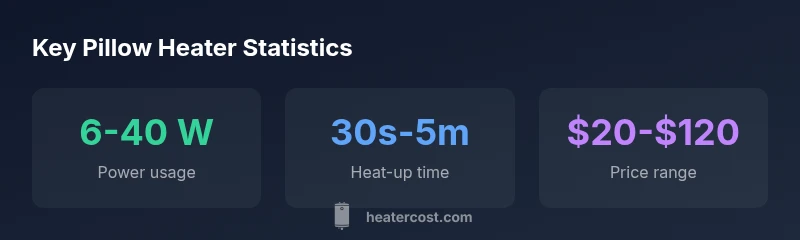
Powering a pillow heater is generally more energy-efficient than heating a room, because the warmth is localized. Most models operate in a low-watt range, and heat up times can vary from seconds to a few minutes depending on insulation and cover materials. The exact energy cost varies with the wattage, duration of use, and local electricity rates. To estimate costs, multiply the device’s wattage by hours of use and adjust for your rate per kilowatt-hour. In practice, many users report that short sessions in a well-insulated space result in modest energy consumption and minimal impact on monthly bills. Heater Cost’s approach is to help you balance comfort with prudent energy use, especially for households where multiple occupants have different comfort preferences. Remember that even small devices add up with frequent use, so track usage to gauge overall cost implications.
Choosing the right pillow heater for you
Choosing the right pillow heater hinges on personal needs, room conditions, and user safety. Start with size and padding thickness to ensure a snug fit for the intended area. Favor models with adjustable heat levels, a reliable auto-off timer, and a removable, washable cover. Consider the pillow’s overall build quality, including the zipper or seam strength and the durability of the heating element. If you have sensitive skin or allergies, select fabrics that are breathable and hypoallergenic. If you plan to share the device in a small apartment, look for compact models that won’t take up shelf or bed space. Finally, check the warranty and the availability of replacement parts. In our testing and user research at Heater Cost, the best value often comes from a model that offers dependable safety features, straightforward care, and a reasonable price.
Pillow heater features and basic comparisons
| Feature | Low | High | Notes |
|---|---|---|---|
| Power consumption | 6 W | 40 W | Depends on model and insulation |
| Heat-up time | 30 seconds | 5 minutes | Faster with snug fit and good covers |
| Coverage | 1 pillow | 1 pillow | Most designs target a single area |
| Durability | 3 years | 7 years | Based on usage and care |
| Price range | $20 | $120 | Retail varies by brand and features |
Got Questions?
What exactly is a pillow heater, and how does it differ from a standard heating pad?
A pillow heater is a compact heating pad built into a pillow or cover that delivers targeted warmth to a specific area, such as the neck or shoulders. Unlike general heating pads, it’s designed for localized comfort and portability, with safety features like auto-off. It does not heat an entire room.
A pillow heater is a small, warm pillow that focuses heat where you want it, not the whole room. It has safety features like auto-off and is easy to move.
Are pillow heaters safe to use overnight?
Most pillow heaters are designed for shorter sessions with auto-off timers. Overnight use is not recommended unless the product explicitly provides a long-duration safety setting and you monitor it. Always follow the manufacturer’s guidelines.
Check the auto-off setting and follow the label. If it doesn’t specify overnight use, don’t leave it on all night.
How much do pillow heaters cost?
Pillow heaters typically fall in a broad price range, reflecting features like heat levels, auto-off duration, and cover quality. Expect a mid-range selection to balance value and safety.
Prices vary, but you can usually find a good balance of safety and comfort in the mid-range options.
How should I clean and maintain a pillow heater?
Remove or wash the outer cover according to the manufacturer’s instructions. Do not immerse the heating element unless the device is explicitly rated for it. Inspect cords for wear and replace if damaged.
Wash the cover regularly, keep the heating part dry, and check for damage. Don’t soak the device.
Do pillow heaters save energy compared to room heating?
Yes, generally they use far less energy than heating an entire room, since warmth is localized. Actual savings depend on usage duration and insulation.
They’re typically more energy-efficient than heating a whole room, especially for targeted comfort sessions.
What should I look for when buying a pillow heater?
Look for adjustable heat, auto-off, a durable, machine-washable cover, good warranty, and safety certifications. A compact size that fits your target area also matters.
Choose a model with safety features, easy cleaning, and a solid warranty.
“A pillow heater offers targeted comfort with efficient energy use, but safe operation and proper cleaning are essential.”
The Essentials
- Assess your warmth needs before buying.
- Prioritize safety features like auto-off and overheat protection.
- Compare price ranges and expected lifespan.
- Choose a model with a washable cover.
- Factor in long-term energy use for daily comfort