Parts for Water Heaters: Key Components and Typical Costs
Explore common parts for water heaters, typical replacement costs, and maintenance tips. This Heater Cost guide explains components, wear patterns, and when to hire a pro.


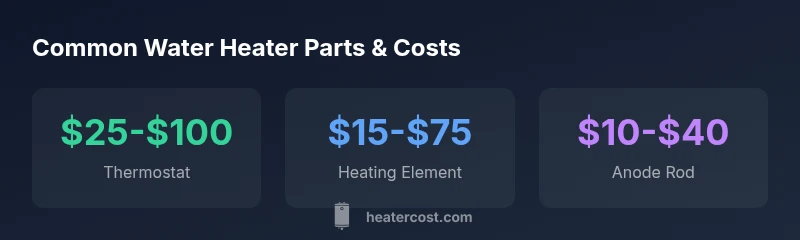
On average, common water heater parts cost between $25 and $100 per component, with heating elements and thermostats toward the higher end. For a typical repair, total part costs usually fall in the $60–$200 range, excluding labor. Costs vary by model, warranty status, region, and supplier, so plan for wiggle room in your budget.
Understanding the essential parts for water heaters
A residential water heater relies on a handful of essential parts to heat and deliver hot water reliably. In this guide we focus on the parts that homeowners most often encounter when performing maintenance or small repairs. By identifying the key components—thermostat, heating element, anode rod, relief valve, and associated gaskets—you can understand how a failure in one part affects the whole system. According to Heater Cost, the most cost-effective fixes often target thermostats and heating elements first, since these parts wear from frequent cycling and mineral buildup. The goal of inspection is to map symptoms (cold water, leaks, noise, fluctuating temperatures) to likely culprits. When shopping for parts, always have your water heater’s make and model handy because compatible components vary by brand and tank type. Distinguish between elements used in electric vs gas models, and between traditional tanked units and newer tankless designs. Knowing the proper names helps you order correctly and avoids costly mistakes. Part of this awareness is knowing the phrase parts for water heater and how it translates into practical fixes.
Common failure modes and signs you should replace them
Parts fail for several reasons: mineral buildup reduces heater efficiency; seals and gaskets degrade with heat cycles; and electrical or gas controls can drift out of spec. Typical symptoms include longer wait times for hot water, inconsistent temperatures, sudden drops in pressure, leaks around fittings, or unusual tripping of circuit breakers. Pay particular attention to the anode rod; a corroded rod shortens the life of the tank and can hint at broader corrosion issues. If you notice rust-colored water or a metallic taste, that can indicate an internal problem. Document the symptoms, compare them to the part’s expected life span in your model’s manual, and consider replacement before a total system failure. This proactive approach minimizes damage and saves energy over the long run.
Cost dynamics: parts pricing vs labor
Parts costs are typically lower than the labor component of a service call, but the two together determine the total repair bill. In many markets, standard components like thermostats and heating elements sit in the $25–$100 range, while more specialized parts (like high-altitude compliant valves) can exceed $100. Labor can range widely depending on accessibility, gas vs electric models, and local rates. The overall impact on your budget improves when you can identify the faulty part quickly, obtain an exact replacement, and schedule a single service call rather than multiple visits. Heater Cost analyses show that planning ahead for common replacements can reduce downtime and improve energy efficiency.
Safety-first: inspection and replacement basics
Before touching any hardware, shut off power to electric heaters at the breaker panel or switch off the gas supply on gas units. Let the tank cool to avoid burns, then gather the right tools and replacement parts with model numbers handy. Drain the tank per the manufacturer’s instructions, check the thermostat and electrical connections, and replace worn gaskets. For gas models, verify the venting is clear and the ignition system operates correctly. If you’re unsure about gas safety, or if the unit is old, consult a licensed technician. A careful, step-by-step approach reduces the chance of leaks and ensures that the new part integrates properly with existing piping and controls.
Maintenance routines to extend component life
Regular maintenance helps parts last longer and keeps energy use low. Schedule an annual flush to remove mineral buildup; test the TPR valve (pop tests) to ensure safety; inspect the anode rod for corrosion and replace it when its core is compromised. Keep the area around the unit clean and dry to prevent corrosion on fittings. Use a water-softening system if your area has hard water, but check compatibility with your heater. Monitor hot water temperature and avoid oversizing the thermostat, which strains internal components. Recording inspection notes helps you track wear and plan replacements before failures occur.
How to choose replacement parts and suppliers
Select parts that match your heater’s exact model and year. Use OEM parts when possible to preserve warranties and performance but consider reputable aftermarket options if cost is a concern. Compare sources for price and delivery speed, and check return policies. Read user reviews focusing on compatibility and durability, and request installation guidance if you’re unsure about a part’s fit.
Quick-start checklist for homeowners
Create a parts and tools wishlist, confirm part numbers, and schedule a maintenance window. Keep a spare thermostat and anode rod on hand for quick replacements. Maintain a log of service calls and replacements to predict future needs. If you notice leaks, temperature instability, or no hot water, consult the list of common part failures and consider a professional inspection.
Common water heater parts: lifespan and replacement ranges
| Part Type | Typical Lifespan | Common Failure Causes | Estimated Replacement Cost Range |
|---|---|---|---|
| Thermostat | 5-10 years | Electrical faults or sensor drift | $25-$100 |
| Heating Element | 6-12 years | Mineral buildup or burnout | $15-$60 |
| Anode Rod | 3-6 years | Corrosion protection depleted | $10-$40 |
| Pressure Relief Valve | 5-15 years | Wear or leakage | $20-$50 |
| Gaskets/Seals | 5-10 years | Heat cycles | $5-$25 |
Got Questions?
What are the most common parts for water heater replacements?
The thermostat, heating element, anode rod, relief valve, and gaskets are the parts homeowners most frequently replace. This typically resolves temperature, leaks, and efficiency issues.
The most common parts to replace are the thermostat, heating element, anode rod, relief valve, and gaskets.
How can I tell if a water heater part needs replacement?
Look for leaks, unusual noises, fluctuating temperatures, or loss of hot water. Compare symptoms to the part’s expected life in the manual and consider replacement before a total failure.
Watch for leaks, noises, or temperature swings as clues a part needs replacement.
Are tankless water heater parts more expensive?
Tankless units use different parts and can have higher replacement costs, but longer lifespans may offset some expenses. Prices vary by model and supplier.
Tankless parts can be pricier, depending on the model.
Can I replace water heater parts myself?
Some parts are DIY-friendly, but safety matters with gas and electrical systems. If you’re not confident, hire a licensed technician.
Some parts are doable yourself, but safety matters.
What is the typical cost range for replacing a water heater part?
Costs vary by part, typically from $10 to $100 for individual components, excluding labor.
Parts usually cost between ten and a hundred dollars.
How often should I inspect water heater parts?
Inspect annually, or after severe weather, and follow your manufacturer’s maintenance schedule. Regular checks help catch wear early.
Inspect annually to catch wear early.
“Understanding the aging window of each component helps prevent a total water heater breakdown. Regular maintenance and timely part replacements save energy and money.”
The Essentials
- Inspect parts yearly to avoid surprises
- Keep essential parts on hand for quick fixes
- Match part numbers to your exact model
- Expect wide price ranges for replacement parts
- Consult a pro for gas-heater safety and complex installs