Air Conditioner Heater Units for Home: 2026 Buying Guide
Explore air conditioner heater units for home, including how they work, sizing guidance, efficiency ratings, installation considerations, and maintenance tips. This data-driven guide from Heater Cost helps homeowners, renters, and property managers choose wisely in 2026.


This guide analyzes air conditioner heater units for home, explaining how dual-function heat pump systems operate, how to evaluate capacity, efficiency ratings, and installation options, plus cost ranges and maintenance tips. It blends practical buying advice with energy-cost considerations to help homeowners, renters, and property managers make informed decisions in 2026.
Understanding air conditioner heater units for home
Air conditioner heater units for home are commonly dual-function climate systems that provide both cooling and heating, typically through heat pump technology or hybrid configurations. In modern homes, these units can reduce the need for separate HVAC equipment and simplify zoning by using a single, integrated system. For homeowners and property managers, the key is to understand how these units fit your climate, insulation, and occupancy patterns. According to Heater Cost, starting with climate-appropriate sizing and then evaluating efficiency, installation complexity, and maintenance needs yields the most reliable long-term results. In practice, a well-chosen unit balances comfort with energy costs while minimizing upfront disruption during installation. When comparing options, consider whether your space benefits most from a ducted or ductless approach, and whether you want smart controls that integrate with existing home automation. By focusing on these fundamentals, you can select air conditioner heater units for home that stay comfortable year-round with predictable bills.
Sizing and climate considerations
Sizing is the cornerstone of performance. An undersized unit will struggle during peak heat or cold snaps, leading to higher energy use and uneven comfort. An oversized unit may short-cycle, fail to remove humidity effectively, and shorten equipment life. Start with a proper load calculation that accounts for square footage, ceiling height, insulation, window orientation, and occupant behavior. Climate matters: in hot-humid regions you’ll want configurations with strong dehumidification and high SEER ratings, while in milder climates heat pump efficiency and backup options matter more. Mini-splits offer flexible zoning and quick retrofits, but require careful refrigerant and electrical planning. The Heater Cost team recommends engaging a licensed contractor to perform a Manual J load calculation and to verify ductwork or wiring requirements before purchase.
Efficiency metrics, operating costs, and incentives
Two primary efficiency metrics drive operating costs: SEER (cooling efficiency) and HSPF (heating efficiency). Higher SEER and HSPF values generally correlate with lower energy bills, especially in households with year-round use. In practice, homes in different climates will experience varying savings based on usage patterns, thermostat settings, and local electricity rates. Look also for the Energy Star label and consider the system's COP/RSEER metrics for seasonal performance. Rebates and tax incentives for 2026 vary by jurisdiction, and systems with advanced heat-recovery features may qualify for higher credits. Heater Cost analysis shows that the financial payoff is highly contingent on proper sizing, installation quality, and local energy pricing. Planning around rebates can shorten the payback period significantly.
Installation, zoning, and customization options
Installation quality affects comfort and longevity as much as the unit itself. Ducted systems offer centralized control and consistent performance, but ductwork must be inspected and sealed to avoid losses. Ductless mini-splits provide flexible zoning without ducts, which is ideal for renovations or additions but requires precise refrigerant and line-set management. When choosing zoning, consider how many rooms require heating or cooling simultaneously, as this affects both comfort and energy bills. Configuration options include multiple indoor units tied to a single outdoor condenser, variable-speed compressors for better humidity control, and smart thermostats that optimize performance. The Heater Cost team emphasizes a plan for future expansions or room-specific needs to avoid outgrowing a system quickly.
Maintenance, warranties, and long-term costs
Regular maintenance extends the life of any air conditioner heater unit for home. Schedule seasonal filter changes, coil cleaning, and refrigerant checks, and plan annual inspections to catch reducing efficiency or unusual noises early. Warranties vary by system type and installation quality, so read the fine print on parts and labor coverage. Proper maintenance reduces the risk of breakdowns and ensures that the unit achieves its rated efficiency, which is crucial for meeting energy-cost expectations. Consider extending warranties with service contracts that cover routine maintenance and annual inspections. A proactive maintenance plan helps protect your investment and keeps energy costs predictable over the system’s life.
Practical buying checklist and scenarios
Before purchasing, create a detailed checklist: define climate needs, calculate annual usage, compare SEER/HSPF ratings, estimate installation costs, identify zoning requirements, and verify available rebates. For renters or short-tenancy situations, portable or retrofit options with minimal changes may be preferable. For homeowners, investing in higher SEER/HSPF ratings and proper duct sealing can yield long-term savings and comfort. In high-demand homes, consider a hybrid or dual-fuel setup for resilience during power interruptions or price spikes. The Heater Cost team suggests gathering at least three quotes, confirming warranty coverage, and requesting a load calculation from a licensed contractor to validate model choices.
Authority sources and credible research
For further reading and to verify claims, consult credible sources such as the U.S. Department of Energy, Energy Star, and federal energy data portals. These resources provide official guidance on heat pumps, efficiency standards, and rebates that may apply to air conditioner heater units for home. Examples include DOE efficiency programs and Energy Star product specifications, which help buyers compare performance and plan investments with confidence. Sources cited here include: https://www.energy.gov/eere/buildings/articles/heat-pumps-what-you-need-know, https://www.energystar.gov/products/heating-and-cooling, and https://www.eia.gov/energyexplained/heating-cooling/.
Comparison of common air conditioner heater units for home
| Unit Type | SEER/HSPF Range | Typical Installed Cost (USD) | Notes |
|---|---|---|---|
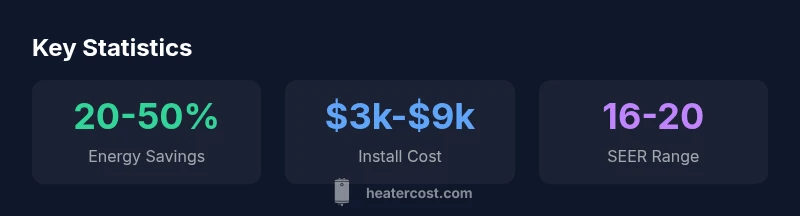
| Ducted central system (heat pump) | SEER 16-20; HSPF 8-10 | $5,000-$12,000 | Best for whole-home heating & cooling |
| Ductless mini-split (per zone) | SEER 16-30; HSPF 7-12 | $3,000-$8,000 per zone | Excellent for retrofits & zoning |
| Hybrid heat pump with backup | SEER 18-22; HSPF 9-11 | $6,000-$14,000 | Balanced efficiency & resilience |
Got Questions?
What is the difference between air conditioner heater units and separate AC + furnace setups?
Air conditioner heater units for home typically combine cooling and heating using a heat pump or hybrid design. Separate AC and furnace setups require two distinct appliances, which can increase space needs and maintenance tasks. Efficiency, installation complexity, and upfront costs differ, so comparing lifestyle needs and climate is essential.
Single-unit systems combine heating and cooling, while separate setups use two appliances. Consider your space and climate when choosing.
Are mini-split systems worth it for homes?
Mini-splits offer flexible zoning and simpler retrofits without ductwork, which can save installation time and energy in many homes. They may have higher per-zone upfront costs but can provide targeted comfort and lower energy bills in the right layout. A professional assessment helps determine if they’re the best fit.
Mini-splits work well for zoning and retrofits, but get a pro verdict on your space.
How long does installation usually take?
Typical installations range from 1 to 3 days for homes with existing ductwork, longer if extensive ductwork, wiring, or trenching is required. Scheduling depends on system type, site access, and local permitting. Your installer should provide a detailed timeline before work begins.
Usually 1 to 3 days, depending on setup and ductwork.
What efficiency ratings should I look for?
Focus on SEER for cooling efficiency and HSPF for heating efficiency. Higher values generally mean lower operating costs. Look for Energy Star labels where available and verify the ratings with the installer to ensure real-world performance matches specifications.
Seek high SEER and HSPF ratings; Energy Star helps gauge efficiency.
Can I install air conditioner heater units for home myself?
Professional installation is strongly recommended due to refrigerant handling, electrical work, and building codes. Incorrect installation can reduce efficiency, void warranties, and create safety hazards. Always hire a licensed technician for these systems.
Professional installation is advised for safety and efficiency.
Are there rebates or tax credits in 2026?
Many rebate and tax-credit programs exist, varying by location. Eligibility often depends on equipment efficiency, installation method, and local incentives. Check federal, state, and utility programs to maximize eligible credits.
Check local incentives and federal credits to reduce cost.
“Selecting the right air conditioner heater unit starts with accurate load calculation and climate fit. When sized correctly and installed by a pro, these systems deliver consistent comfort and meaningful energy savings.”
The Essentials
- Assess climate and home layout before choosing a unit type.
- Prioritize SEER and HSPF ratings to estimate operating costs.
- Budget installation and potential rebates in initial planning.
- Decide between ducted and ductless based on home structure.
- Maintain the system regularly to protect long-term performance.