How to Remove an Anode Rod from Your Water Heater
Learn how to remove anode rod from a water heater safely, inspect wear, and replace if needed. This Heater Cost guide covers tools, safety steps, and cost considerations.


Learn how to remove anode rod from a water heater safely and efficiently. This quick guide covers why you should inspect the rod, the essential tools, and the core steps to depressurize, unscrew, and replace the rod if needed. You’ll also know when to call a pro and how to estimate replacement costs.
Why inspecting and removing the anode rod matters
The anode rod is a sacrificial component inside most tank-style water heaters. It attracts corrosive elements in the water, protecting the steel tank from rust. Over time, the rod corrodes and weakens, reducing its protective capacity. Removing and inspecting the rod gives you a direct view of its condition, letting you plan replacement before leaks or catastrophic tank failure occur. Regular maintenance like this is a cornerstone of a long-lasting heater and helps homeowners avoid unexpected downtime. Heater Cost analysis shows that homeowners who check their rods every 2-5 years typically experience fewer tank leaks and lower emergency repair costs over the life of the unit. By learning how to remove anode rod from water heater safely, you gain a practical skill that saves money and preserves comfort during cold months.
Essential safety steps before you begin
Before touching a hot water heater, switch off the power source for electric units at the breaker or shut off the gas supply for gas models. Close the cold-water supply to minimize water flow into the tank while you work. Open a hot faucet somewhere in the house to vent pressure and speed up cooling. Wear protective gloves and safety goggles to shield your hands and eyes from hot water and sharp edges. Keep a drain pan and towels handy to manage accidental drips. If you’re unsure about any step, pause and consult a professional. This approach aligns with Heater Cost's safety guidance for 2026 and helps prevent scalding or injury while performing maintenance.
Tools and materials you’ll need for removing the anode rod
Gather the tools and materials listed below before you start. Essential tools include a drain pan, old towels, a wrench or socket set sized to fit the rod’s hex head, a flashlight, and a replacement anode rod if you plan to replace. Additional items like penetrating oil, a long magnet for retrieving dropped parts, and Teflon tape for re-sealing threads can save time. Have your manufacturer’s manual handy to confirm the rod type and removal direction. With these items on hand, you’ll minimize trips to the hardware store and keep the job moving smoothly.
Step-by-step: how to remove the anode rod from your water heater
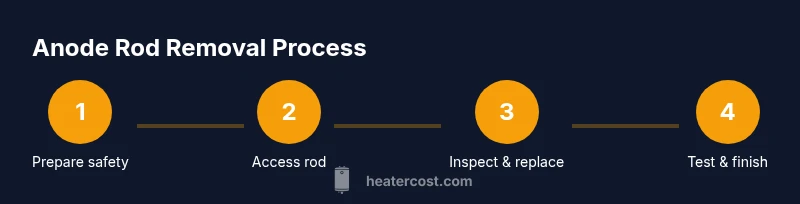
The following sequence describes the common process for a standard tank-style heater. Start by ensuring power and water are off, then check the top of the unit to locate the anode rod access. Use the correct hex socket to break the rod free by turning counterclockwise. If the rod is stubborn, apply a small amount of penetrating oil and wait a few minutes. Gently pull the rod straight out once it moves freely, avoiding tilting that could damage threads. Place the rod in a safe container to inspect its condition. If the rod is significantly corroded, replace it with a new one of the same type and material. Reinstall the cap or plug and reassemble any removed components, then fill the tank and restore power or gas. Finally, test hot water and check for leaks. This section provides the core approach to the task while emphasizing safety and care. If you’re unsure, you can review how to remove anode rod from water heater safely.
Inspecting the rod and deciding on replacement
Inspecting the rod is how you determine whether to replace it. A healthy rod is thick and relatively smooth; a rod that’s heavily corroded, hollowed, or crumbly should be replaced. Compare the rod’s condition to the manufacturer's guidelines for acceptable wear. If in doubt, bring the old rod to a hardware store or consult a professional. Replacement rods come in different materials (magnesium, aluminum, zinc-coated) and choices depend on water chemistry. Heater Cost recommends matching the replacement rod to your heater’s original specification and local water quality to maintain corrosion resistance.
Replacing the rod and resealing the tank
Once you’ve removed the old rod, install the new rod by threading it in by hand first to avoid cross-threading. Tighten with the wrench until snug, then give it a quarter-turn with a tool if needed, avoiding overtightening. Reassemble any parts you removed and ensure the top is sealed properly. Refill the tank with cold water, then restore power or gas and monitor for leaks around the rod port. Run a short hot-water cycle to flush air pockets and verify proper operation. Regular checks after replacement help maintain long-term reliability.
Common mistakes and maintenance tips
Common mistakes include over-tightening the rod, using the wrong hex size, or forgetting to vent and bleed the system after reinstalling. Always verify you have the correct rod type for your model—magnesium vs aluminum rods interact differently with water chemistry. Maintain your system by scheduling a rod inspection every 2-5 years, depending on water hardness. Record the service date and rod type in your home maintenance log to simplify future repairs and budgeting.
Final thoughts
Removing and inspecting the anode rod is a straightforward, practical maintenance task that can extend the life of your water heater. By following safety steps, using the right tools, and replacing worn rods promptly, you reduce the risk of costly leaks and heat outages. With the basics covered, you’ll be well equipped to handle routine maintenance and make informed cost decisions for 2026.
Quick reference checklist
- Power off and vent pressure before starting
- Use the correct hex socket and a drain pan
- Inspect rod for wear and replace if necessary
- Refill, reseal, and test for leaks after installation
Tools & Materials
- Drain pan or sturdy tray(Place under tank to catch water)
- Rags or towels(Wipe spills and dry fittings)
- Wrench or socket set(Sized to fit the rod’s hex head)
- Flashlight or headlamp(Good visibility on top of tank)
- Protective gloves(Heat protection and grip)
- Safety goggles(Shield eyes from splashes)
- Replacement anode rod(Bring a compatible rod if you plan to replace)
- Penetrating oil(Loosen stubborn rods)
- Teflon tape(Seal threaded connections on reinstallation)
Steps
Estimated time: 60-90 minutes
- 1
Power off and shut water supply
Turn off the electrical power at the breaker or switch off gas. Close the cold-water supply to prevent new water from entering the tank.
Tip: Label the breaker for future safety and avoid accidental re-energizing. - 2
Relieve pressure and prepare drainage
Open a hot faucet to vent pressure. Place a drain pan under the drain valve to catch any water that escapes.
Tip: Expect a small amount of water to leak when venting. - 3
Access the anode rod
Locate the anode rod access at the top of the heater. Have your socket or wrench ready to fit the hex head.
Tip: If access is tight, a flexible extension can help reach the head. - 4
Loosen and remove the rod
Carefully turn the rod counterclockwise with steady pressure until it screws free. Pull straight out to avoid cross-threading.
Tip: If it sticks, apply a small amount of penetrating oil and wait a few minutes. - 5
Inspect the rod and decide on replacement
Check for heavy corrosion, crumbling sections, or loss of thickness. Compare with a new rod of the same type to decide.
Tip: Replace if worn; otherwise keep as a spare for future maintenance. - 6
Install new rod and reseal
Thread the new rod by hand, then snug with a wrench. Reattach any caps or plugs and seal threads with teflon tape if required.
Tip: Avoid overtightening to prevent thread damage. - 7
Restore water and power, test
Fill the tank, restore power or gas, and check for leaks around the port. Run hot water to purge air and confirm proper operation.
Tip: Keep an eye on the top of the tank for several hours after testing.
Got Questions?
Do I always need to replace the anode rod after removing it?
Not always. If the rod shows minimal wear, you can save it for future use, but most homes replace worn rods with a compatible new one to maintain tank protection.
If the rod is in good shape, you may not need to replace it immediately, but worn rods should be swapped for ongoing protection.
Can I remove the anode rod from any water heater model?
Most tank-style models have an accessible anode port on the top, but some high-efficiency or niche models place the rod differently. Always consult your unit’s manual before proceeding.
Most tanks have a top-access rod, but check your manual for variations.
What happens if the rod is severely corroded?
A severely corroded rod indicates the tank’s protection is compromised. Replace with the correct type promptly to reduce the risk of leaks and costly repairs.
If the rod is badly corroded, replace it right away to protect the tank.
How often should I inspect or replace the anode rod?
General guidance is every 2-5 years, depending on water hardness and prior maintenance. Consider more frequent checks in hard water areas.
Check every 2-5 years, and more often if your water is hard.
Is it safe to perform this task in a tight space?
Yes, but proceed with caution. Use compact tools and ensure you can safely turn the rod without bumping hot surfaces or breaking fittings.
Yes—careful work in tight spaces is possible with the right tools.
What are common signs that my rod needs replacement?
Visible heavy corrosion, crumbling material, reduced rod thickness, or a change in water taste or smell are indicators to replace.
Look for corrosion, crumbling, or odd tastes in water as signs to replace.
Watch Video
The Essentials
- Shut off power and water before starting
- Inspect the rod for wear and plan replacement
- Use proper tools to prevent damage
- Test the system for leaks after reinstall