How to Check Heater Filter: A Step-by-Step Guide
Learn how to check heater filters, replace dirty ones, and keep your heating system efficient. A practical guide for homeowners, renters, and property managers.


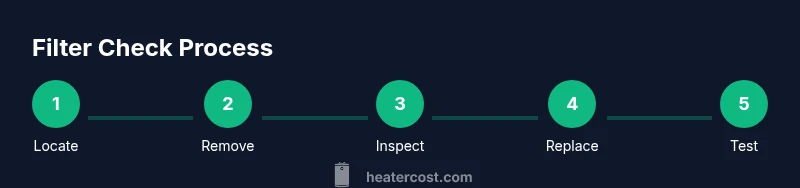
To check a heater filter, locate the filter panel, remove the filter, inspect for dirt, and replace if dirty. Check the filter size and type, compare to the return air grille, and reinsert if clean or new. For clogged filters, expect reduced airflow, higher energy use, and potential system strain. Always power off before inspection.
Why Checking the Heater Filter Matters
When learning how to check heater filter, you’ll discover a simple maintenance habit that yields big results. A clean filter supports proper airflow, reduces the risk of frozen coils, and helps your system run efficiently. The Heater Cost team notes that clogged filters are a leading cause of poor heat delivery and higher energy use, especially in homes with pets or dusty living spaces. Regularly inspecting the filter lets you catch a dropped air flow signal before it becomes a bigger problem. This section explains where to locate the filter, how to evaluate its condition, and what to do next. We’ll also discuss different filter types, sizing clues, and quick checks you can perform during routine maintenance. Keeping this habit helps homeowners, renters, and property managers maintain comfort and control over heating costs. According to Heater Cost, analyzing filter health is one of the simplest steps with outsized benefits.
How Dirty Filters Affect Heating Performance
A dirty heater filter restricts airflow, forcing the blower to work harder to move air through the system. You may notice reduced warm air, longer cycles, and cold spots in rooms. Restricted airflow can also cause the furnace to heat unevenly, which increases energy use and wear on components. The result is a less comfortable home and higher utility bills. Regular checks help you catch buildup early and prevent efficiency losses. In our experience at Heater Cost, even a slightly dirty filter can shave minutes off cycle times, improve air quality, and keep your system running closer to its rated performance. By understanding how dirt impacts performance, you can prioritize timely replacement and protect your heating investment.
How Often to Check and Replace Filters
Most homes benefit from checking the filter monthly during the heating season, with replacements as soon as the filter looks dark, clogged, or pressed against the grille. In homes with pets, heavy dust, or high occupant activity, more frequent checks may be warranted. Always refer to the filter packaging for exact replacement intervals and your HVAC manufacturer’s guidance. A good rule of thumb is to replace disposable filters every 1-3 months, while washable filters can be rinsed and re-used according to instructions. Consistency matters; a simple monthly routine can keep your system healthier and your energy bills lower. The Heater Cost team recommends setting a reminder to check the filter every 30 days during peak heating months.
Types of Filters and Finding the Right Size
Filters come in multiple styles and ratings, with the size printed on the frame. The most common residential options are fiberglass and pleated filters; pleated filters typically capture more particles and last longer, but may have higher resistance to airflow. If your system lists a MERV rating, aim for a balance between filtration and airflow compatible with your equipment. Always confirm the exact dimensions (height x width x depth) printed on the filter frame and match them to the return air grille opening. When in doubt, measure the slot with a tape measure and record the numbers. The right size not only fits securely but also prevents air bypass, where unfiltered air leaks around the filter.
Step-by-Step: Check Your Heater Filter at Home
This section gives you a practical overview of the steps, but you’ll find a detailed, numbered guide below. By following these steps, you’ll learn how to locate the filter, verify its condition, and determine whether replacement is needed. Remember, working around a furnace requires care—never rush through the process. A small mistake can lead to improper sealing or dust exposure. Use the steps below in combination with the formal STEP-BY-STEP instructions to perform a safe, thorough check.
Cleaning vs Replacement: When to Clean and When to Replace
Most modern disposable filters are not designed to be cleaned and should be replaced when dirty. Reusable filters can sometimes be rinsed or brushed clean, but they must be completely dry before reinsertion to avoid mold growth. If you see moisture, tears, or significant dark buildup that cannot be removed, replace the filter. Replacements should be done with a filter of the same size and compatible MERV rating. Neglecting replacement can cause dust to recirculate and degrade indoor air quality.
Troubleshooting Common Issues After Replacing Filter
If you notice reduced airflow after replacement, check that the filter is oriented correctly (arrow toward the blower) and fully seated in the slot. A damaged frame, air leaks around the filter, or a clogged return duct can mimic a dirty filter. If problems persist, turn off power and contact a qualified HVAC technician for a diagnostic. Regular maintenance plus correct installation keeps your system operating safely and efficiently.
Tools & Materials
- Replacement air filter(Make sure the size matches the existing slot (e.g., 16x20x1))
- Access panel screwdriver or tool(To remove screws if needed)
- Flashlight(Helps view the filter slot in dim areas)
- Dust mask or gloves(Protect from dust and debris)
- Soft brush or vacuum attachment(Clean around the slot after removal)
Steps
Estimated time: 10-20 minutes
- 1
Locate the filter panel and prepare
Find the access panel near the furnace or air handler. If your system is hot, wait until it cools before touching any components. Have your replacement filter ready and a flashlight handy to clearly see the slot.
Tip: Consult the owner's manual or a label on the unit to confirm exact location and orientation of the filter. - 2
Power down and verify safety
Turn off the furnace at the thermostat and, if possible, switch off the breaker for the unit. This prevents accidental startup while you’re working near moving parts or electrical connections.
Tip: Use a non-contact tester to confirm no live power in the compartment before touching anything. - 3
Remove the old filter
Carefully slide the filter out of its slot. Note the airflow arrows on the frame so you install the new one correctly.
Tip: Take a quick photo of the old filter’s orientation for reference when reinstalling. - 4
Inspect the filter
Hold the filter up to light and check for visible dirt, moisture, or tears. A filter that looks gray, dark, or clogged is a clear sign it needs replacement.
Tip: If you can’t see light through the filter, replace it. - 5
Decide: replace or clean (if reusable)
Disposable filters should be replaced; reusable ones can sometimes be rinsed or brushed clean, then fully dried before reinstallation.
Tip: Never reinstall a damp filter; moisture can promote mold growth. - 6
Choose the correct replacement
Confirm the size and type on the old filter and select a new filter with the same dimensions and a compatible MERV rating for your system.
Tip: If in doubt, bring the old filter to a home improvement store to compare sizes. - 7
Reinstall and test
Insert the new filter with the arrows pointing toward the blower, reseal the panel, restore power, and run the system briefly to verify smooth airflow.
Tip: Listen for unusual noises during startup and check for air leaks around the filter slot.
Got Questions?
How often should I check my heater filter?
Most homes benefit from checking monthly during the heating season. In dusty or high-use environments, check more often. Use the filter packaging and your HVAC manual for exact guidance.
Check your heater filter monthly during the heating season; adjust frequency based on environment.
Can I clean a disposable furnace filter?
Disposable filters are designed to be replaced, not cleaned. Cleaning can reduce filtration efficiency and may allow dust to bypass the filter.
Disposable filters aren’t meant to be cleaned—replace them for best performance.
What size filter do I need?
The size is printed on the filter frame. If not, measure the slot or refer to the unit’s manual to ensure you buy the correct dimensions.
Find the size on the filter frame, or measure the slot to buy the right one.
Is a higher MERV rating better?
Higher MERV filters capture more particles but can restrict airflow if the HVAC system isn’t designed for them. Check compatibility with your equipment.
A higher MERV isn’t always better; ensure your system can handle the filtration level.
What if airflow is weak after replacement?
Check filter installation orientation, seating, and for any duct leaks or blower issues. If problems persist, consult a professional.
If airflow remains weak, check installation and duct integrity, then call a pro if needed.
Are washable filters worth it?
Some systems support washable filters; follow manufacturer cleaning instructions and ensure they are completely dry before reuse.
Washable filters can work for some systems; follow the manufacturer’s cleaning instructions.
Watch Video
The Essentials
- Check the filter monthly during heating season.
- Always use the correct size and type of filter.
- Replace dirty or damp filters promptly to maintain airflow.
- Regular checks save energy and extend your heating system’s life.