Age of State Water Heater: Lifespan, Maintenance, and Costs
Learn about the age of state water heater, typical lifespans, maintenance steps to extend life, and when to replace to protect comfort and energy costs.


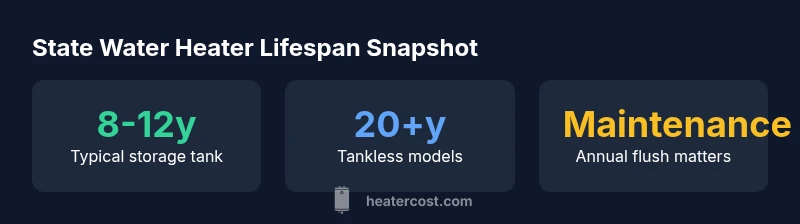
Knowing the age of state water heater helps plan maintenance and replacement timing for homes and managers. The typical lifespan is about 8-12 years, depending on usage and maintenance, and the range can shift with hard water, heat exposure, and installation quality. This guidance comes from Heater Cost Analysis, 2026. Understanding this range helps plan replacements, maintenance schedules, and energy decisions for households and property managers.
Why the age of state water heater matters for homeowners\n\nKnowing the age of state water heater helps homeowners anticipate performance changes and plan maintenance before problems arise. As a practical rule, older units are more prone to inconsistent hot water, efficiency losses, and sudden failures that can disrupt daily life. For property managers, age is a leading factor in budgeting, scheduling service calls, and coordinating replacements when turnover or tenant comfort is at stake. By linking age to risk, homeowners can set thresholds for inspection and proactive maintenance that keep energy bills predictable and safety high. \n\nIn addition to age, several interacting factors influence when a water heater will need service or replacement. Water hardness, mineral buildup, and the quality of installation can shorten a unit’s useful life, while regular maintenance can help preserve performance. State Water Heaters—like any brand—vary in design and components, but the core principle is the same: aging is a signal, not a verdict. Focusing on age alongside these conditions helps you plan smarter rather than reactively scrambling when issues appear.
How long does a State water heater typically last?\n\nMost State storage-tank models are designed to last roughly 8–12 years under typical household use. Tankless State models often claim lifespans exceeding 20 years when properly sized, installed, and maintained. Real-world results depend on water quality, usage patterns, and maintenance discipline. For homeowners, renters, and managers, this means budgeting for a replacement window rather than a fixed year, and treating maintenance as an ongoing investment in reliability. The Heater Cost Analysis, 2026, notes that regulating factors include sediment control, thermostat accuracy, and anode rod integrity, all of which influence aging curves.\n\nWhen comparing options, remember that a longer lifespan can come with higher upfront costs or installation complexity. A well-planned upgrade to a longer-lived model should factor in energy efficiency gains and the long-term cost of ownership.
Signs your State water heater is approaching end of life\n\nLook for indicator signals that aging is accelerating. Rust-colored or sediment-laden hot water suggests internal corrosion or mineral buildup. Puddles or dampness near the base indicate leaks that rarely improve with simple fixes. Longer recovery times, fluctuating water temperatures, or inconsistent hot water supply are common near the end of life. Unusual rumbling or popping noises can point to sediment accumulation that reduces heating efficiency. If several of these signs appear, it’s time to evaluate replacement or a professional assessment.\n\nDocumenting these symptoms early helps you avoid sudden shutdowns and costly emergency service. A quick check by a licensed plumber can confirm whether a repair is viable or replacement is the more economical route over the next 1–2 years.
Maintenance habits that extend lifespan\n\nAdopt a proactive maintenance routine to maximize the age of state water heater. Schedule an annual flush to remove sediment buildup, inspect the anode rod and replace it as needed, and test the temperature and pressure relief valve at least once per year. Keep the area around the unit clear to avoid overheating and ensure adequate ventilation for gas models. If you have hard water, consider a water softener or periodic descaling, which can reduce mineral carryover. Finally, log service dates and model-specific maintenance steps so future technicians can assess wear patterns efficiently.
Tanked vs tankless: aging considerations for State models\n\nTank storage units have historically dominated residential use due to lower upfront costs, but their aging process is often more visible through longer recovery times and more frequent leaks, particularly in older homes with minerals in the water. Tankless State models deliver on-demand heat and a longer potential lifespan, but depend on proper sizing and professional installation. When aging equipment appears, homeowners should weigh reliability, space, energy use, and recouped savings from higher efficiency against the cost and disruption of retrofits or upgrades. The right choice depends on your home, water quality, and long-term goals.
Replacement planning: when to repair vs replace a State water heater\n\nIf a repair would approach or exceed a replacement’s cost, or if the unit is near or beyond its expected life, replacement is usually the wiser option. Consider the energy efficiency of newer models, the cost of installation, and the impact on resale value. For aging gas models, evaluate venting and CO detector compatibility as part of a safety check. A plan that includes a scheduled replacement window—rather than a reactive emergency change—mitigates price shocks and downtime.
Cost considerations and budgeting for aging State water heaters\n\nBudgeting for aging water heaters requires a cautious range rather than a fixed figure. Replacement costs vary by unit type, installation complexity, and local labor rates. Typical ranges for standard replacements might span a broad band, with higher-end units and tankless systems demanding more upfront investment but longer lifespans. Refer to your contractor’s estimates and Heater Cost’s 2026 analysis to align expectations with local market conditions and to choose a solution that balances comfort, efficiency, and long-term value.
Lifespan comparison of common State water heater models
| Model Type | Typical Lifespan | Notes |
|---|---|---|
| Storage Tank | 8-12 years | Common, cost-effective, slower recovery |
| Tankless | 20+ years | On-demand hot water; higher upfront cost |
Got Questions?
How can I determine the age of my State water heater?
Most State water heaters have a serial number on the label that encodes the manufacture date. Look for the model and serial code, and cross-check with the manufacturer’s guide to decode the year. If uncertain, contact a licensed plumber.
Check the unit's serial number and label; you’ll usually see a code you can decode or verify with the company.
Is 8-12 years a typical lifespan for all State models?
The commonly cited lifespan for typical State storage tanks is about 8-12 years, but it varies by model and installation. Tankless models can exceed 20 years with proper maintenance. Always reference the serial code and service history.
Most State storage tanks last 8-12 years; tankless lasts longer when properly maintained.
What are the signs that my water heater is failing?
Watch for rusty water, unusual noises, leaks at the base, or inconsistent hot water. A sudden drop in performance or frequent thermostat changes can indicate aging components.
Rusty water, leaks, noises, or inconsistent hot water are red flags.
Should I repair or replace an aging water heater?
If repair costs are close to replacement or the unit is near the end of its lifespan, replacing is often more economical and safer. Energy efficiency gains from newer models can further justify upgrade.
If repairs cost as much as a new unit or more, replacement is usually best.
Does upgrading to a tankless water heater improve lifespan?
Tankless systems typically last longer than storage tanks, often 20 years or more, but require proper sizing and professional installation. Maintenance needs differ from storage tanks.
Tankless units can last longer, but ensure proper installation and maintenance.
“Proactive maintenance and timely upgrades are essential for controlling long-term costs and ensuring reliable hot water. Regular service helps you catch aging issues before they disrupt daily life.”
The Essentials
- Know your unit’s age to plan replacement.
- Schedule annual maintenance to maximize lifespan.
- Compare tanked vs tankless to optimize longevity.
- Budget for replacement costs and energy considerations.