Heating and Cooling Systems: A Comprehensive Guide
A comprehensive guide to heating and cooling systems, covering cost ranges, efficiency metrics, maintenance tips, and how to choose the right setup for comfort and energy savings.


Heating and cooling systems include the equipment, ducts, and controls that heat or cool a home. The best setup balances upfront costs with long-term energy bills by considering climate, home design, and maintenance. This guide explains sizing, efficiency ratings, and maintenance practices, helping homeowners choose the right HVAC solution for comfort and cost savings.
The Broad Landscape: Heating and Cooling Systems in Modern Homes
Heating and cooling systems encompass more than a single appliance. In most homes, the core is an integrated package that includes a heating unit, cooling equipment, air distribution, and control systems. The typical options include central HVAC with ducts, ductless mini-splits, boilers, furnaces, and hybrid configurations that combine heat pumps with fossil-fuel furnaces. Distribution might be traditional ductwork, radiant floors, or ductless wall units. The promise is year‑round comfort, but the costs, installation challenges, and ongoing energy use vary widely by climate, home design, and maintenance practices. According to Heater Cost, choosing wisely means balancing upfront purchase and installation costs with long-term energy bills and reliability.
Key drivers of performance include proper sizing, equipment efficiency ratings, and system integration. Oversized or undersized systems waste energy and shorten equipment life. Insulation, air sealing, and ventilation quality also shape how much you’ll spend to stay comfortable. When we evaluate heating and cooling systems, we consider not just the equipment price, but also the ductwork, ventilation, and smart controls that optimize daily operation. The Heater Cost team emphasizes that the best choice depends on your climate zone, home layout, and budget.
Core Types: Central HVAC, Ductless Heat Pumps, and More
Central HVAC systems use a furnace or heat pump to condition air that travels through ducts to every room. These setups are common in larger homes and in regions with stable climate patterns. Ductless mini-split systems offer targeted cooling and heating without ducts, ideal for renovations or homes lacking ductwork. Boilers provide hydronic heating, delivering comfort through hot water circulated by radiators or radiant floors. Heat pumps, including air-source and geothermal variants, deliver both heating and cooling and are often the most efficient option in moderate climates. Hybrid setups, which combine heat pumps with a furnace, can adapt to changing seasons to optimize efficiency.
In terms of efficiency, the main metrics to know are SEER for cooling performance, AFUE for heating efficiency, and HSPF for heat pump performance. Higher numbers indicate better efficiency, but the best choice depends on climate, energy prices, and how the system is sized and installed. For example, a heat pump with a higher SEER will compress energy use on hot days, while a gas furnace with a high AFUE reduces heat loss in cold weather. All told, the ideal system fits the home’s layout, insulation level, and occupant needs rather than chasing the top rating alone.
According to Heater Cost, homeowners should avoid “one-size-fits-all” selections. Sizing, duct design, refrigerant charge, and air distribution are as important as the brand or model. A well‑planned installation minimizes energy waste and extends equipment life, delivering comfort with predictable bills. When combined with smart controls, these systems can further optimize scheduling, occupancy patterns, and outdoor temperature swings.
How to Compare Total Cost of Ownership
Total cost of ownership includes upfront purchase and installation, ongoing energy usage, routine maintenance, and potential repair costs over the system’s life. To compare options, start with a core question: what is the expected lifetime cost, not just the sticker price? A central HVAC with a higher upfront cost but lower energy use can outperform a cheaper unit over 10–15 years. Installation complexity matters, particularly for homes with older ductwork, limited space for outdoor condensers, or retrofit needs. The local climate also matters; a cold climate will lean toward more robust heating, while a hot climate amplifies cooling loads.
A practical approach is to build a simple lifecycle model. Estimate upfront costs, annual energy bills (based on climate and electricity prices), and routine maintenance every year. Then apply a typical lifespan (15–25 years for central systems, 12–20 years for ductless units) to obtain an approximate total. Heavier use or more complex installations can push costs higher, while better insulation and tighter envelope reduce energy needs. Heater Cost Analysis, 2026 emphasizes that a holistic view—considering the home’s envelope, insulation, and air sealing—yields the most meaningful savings over time.
To illustrate, a homeowner upgrading from an aging central air system to a high-efficiency heat pump in a temperate climate might see higher upfront costs but lower annual energy use. In warmer months, the difference in SEER ratings can translate into substantial monthly savings. Conversely, in frigid locales, a backup heating option or hybrid setup can balance reliability with efficiency. The key is to evaluate each option against your specific climate, energy costs, and comfort goals.
Efficiency and Energy Costs: What Drives Bills
Efficiency ratings are central to understanding operating costs. SEER measures cooling efficiency, AFUE measures heating efficiency, and HSPF covers heat-pump performance in heating mode. Higher numbers typically reduce energy use, but the real savings come from aligning the system with the home’s load. A well‑insulated home reduces the load, so the same system can operate more efficiently. Climate also plays a critical role: milder regions benefit more from high-SEER cooling, while colder areas gain from higher AFUE heating systems.
Beyond the equipment, your bills depend on how you use the system. Programmable or smart thermostats optimize runtime by aligning heating and cooling with occupancy, weather forecasts, and routines. Zoning can prevent over-conditioning unoccupied spaces, further trimming waste. In many homes, improvements to insulation, windows, and air sealing yield immediate reductions, sometimes more than upgrading equipment alone. The Heater Cost team notes that protection against air leaks and moisture accumulation is essential for sustained efficiency gains.
Maintenance also matters. Regular filter changes, coil cleaning, refrigerant checks, and airflow verification keep systems running as designed. A neglected system can lose efficiency and shorten its life, even if the components themselves are relatively new.
Installing, Permits, and Maintenance Planning
Professional sizing and installation are critical for performance and longevity. Contractors typically perform load calculations, impedance tests, and duct inspections to ensure the system matches the home’s needs. Permits may be required for major upgrades, especially when changing fuel sources or expanding ductwork. Planning ahead avoids delays and ensures compliance with local codes. A practical installation plan includes a timeline, a clear scope of work, and a warranty framework that covers both equipment and workmanship. Regular maintenance is essential to preserving efficiency; schedule seasonal inspections and service visits to catch issues early and extend the life of the system.
The installation phase also offers an opportunity to improve the home’s envelope. Sealing leaks around windows and doors, adding insulation, and upgrading ventilation can dramatically reduce heating and cooling loads. In many cases, a modest upgrade to air sealing and insulation yields larger long-term savings than minor efficiency gains from equipment alone. The Heater Cost team highlights that the most cost-effective upgrades often involve a combination of new equipment and envelope improvements.
Future-Proofing Your System with Smart Controls and Zoning
Smart thermostats and zoning configurations can dramatically enhance comfort and efficiency. A smart thermostat learns occupancy patterns, communicates with weather data, and can be integrated into a broader home energy management system. Zoning uses dampers or separate supply lines to condition living spaces differently, avoiding the problem of over-conditioning empty rooms. These features work best when paired with properly sized systems and quality insulation. Expect the initial investment to be offset by lower energy costs and improved comfort over time. The Heater Cost team recommends prioritizing sizing accuracy and professional installation on any HVAC upgrade to maximize the benefits of smart controls and zoning.
Data Table: System Type Comparison
Comparison of common heating and cooling system types
| System Type | Typical Lifespan | Efficiency Metric | Estimated Installed Cost Range |
|---|---|---|---|
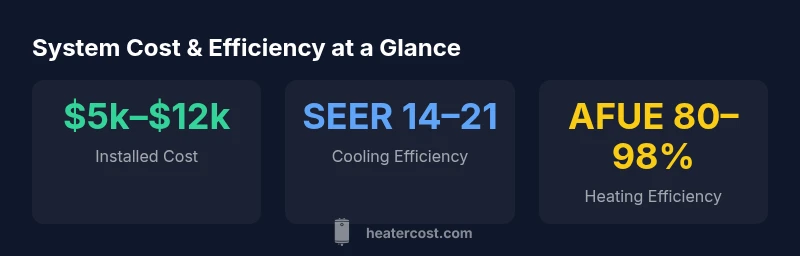
| Central HVAC (gas/electric/heat pump) | 15-25 years | AFUE 80-98%, SEER 14-21 | $5,000–$12,000 |
| Ductless Mini-Split (per zone) | 12-20 years | SEER 16-30 | $3,000–$9,000 per indoor unit + outdoor condenser |
| Boiler Systems (gas/oil) | 20-30 years | AFUE 80-92% | $6,000–$14,000 |
| Geothermal/Hybrid Systems | 20-30 years | COP 3–5, SEER 16-30 | $15,000–$30,000 |
Got Questions?
What is the difference between central HVAC and ductless systems?
Central HVAC uses a duct network to distribute conditioned air from a single outdoor unit into the entire home. Ductless systems rely on individual indoor units connected to a outdoor condenser, offering targeted heating and cooling without ducts. The choice depends on your home layout, retrofit feasibility, and comfort goals.
Central uses ducts, while ductless uses individual units; both have pros and cons depending on your space.
How long do heating and cooling systems typically last?
Lifespan varies by type and use. Central systems generally last 15–25 years, heat pumps 10–20 years, boilers and furnaces 15–30 years, and ductless units about 12–20 years with proper maintenance.
Most systems last a decade or two with good upkeep; some can go longer with proper care.
What do SEER and AFUE ratings mean, and why do they matter?
SEER measures cooling efficiency; AFUE measures heating efficiency. Higher values indicate lower energy use for the same load, which translates to lower energy bills over time. Both ratings guide your choices based on climate and usage patterns.
SEER and AFUE are efficiency scores that help you compare how much you’ll pay to run a system.
Is upgrading to a smart thermostat worth it?
Smart thermostats can cut energy use by optimizing runtime, especially when paired with zoning and weather data. They work best with compatible equipment and reliable installation. Expect a modest upfront cost with long-term savings.
Yes—smart thermostats help you tailor energy use to your schedule and climate.
What costs should I expect for installation and permits?
Costs vary by system type, home size, and existing infrastructure. Typical ranges reflect differences in labor, duct work, and fuel source changes. Permits depend on local codes and project scope. Always obtain a clear written estimate and confirm warranty terms.
Costs depend on your home and system choice; check with the installer for a detailed estimate.
“A well-sized, professionally installed system is the foundation of reliable comfort and lower operating costs. Efficiency gains come not from chasing the latest tech, but from correct sizing and quality installation.”
The Essentials
- Size and install for climate first, costs second
- Prioritize envelope improvements to boost efficiency
- Consider hybrid or zoning to balance comfort and costs
- Use smart controls to maximize savings
- Factor maintenance into long-term value