How a Heater Prevents Frozen Pipes: A Practical Guide
A practical guide for homeowners on using heaters to prevent frozen pipes safely. Learn heater types, placement, safety, and maintenance to protect plumbing during cold snaps.


If you want to prevent burst pipes during cold snaps, this guide shows you how to use a heater safely and effectively. You'll learn which heater types work best, where to place them, how to set controls, and key safety steps to avoid fire or electrical hazards.
Why a heater helps prevent freezing pipes
Pipes in unheated spaces such as basements, crawl spaces, garages, and exterior walls are especially vulnerable when outdoor temperatures plummet. A properly chosen heater can raise the ambient temperature around exposed plumbing enough to slow or stop the freezing process. The goal is not to heat the entire house, but to create a protective microclimate around vulnerable sections. A heater used for this purpose acts as a last line of defense against the harsh conditions that cause water in pipes to turn to ice. When used in combination with good insulation, a heater can reduce the risk of pipe bursts and the costly water damage that follows.
Tip: Always size and position heaters to avoid overheating areas and to minimize energy waste. According to Heater Cost analysis, targeted warming is more effective and safer than running a large space heater in a cold room.
Identifying the pipes most at risk in your home
Start by mapping out where pipes run through unheated zones: under sinks in uninsulated cabinets, in garage feeder routes, along exterior basement walls, and in attic or crawl space lines. Leaks and drips during cold weather can also destabilize water pressure and exacerbate freezing risks. A simple rule of thumb is: any pipe that touches an exterior wall or crosses an unheated space should be assessed first. Evaluating insulation quality, draft sources, and the presence of any existing heat sources helps prioritize where a heater should be placed. This proactive assessment reduces the chance of a cold snap turning into a plumbing emergency.
Heater types commonly used to protect pipes
There are several options, each with strengths and caveats. Portable space heaters with thermostats offer flexible, localized warmth for small sections of piping. Self-regulating heat tape or heating cables are designed to wrap along longer pipe runs and maintain a steady temperature. Pipe insulation sleeves add a passive layer of defense, reducing heat loss so a heater doesn’t need to work as hard. In some cases, dedicated pipe warmers or radiant heat mats placed strategically along the pipe path can provide even coverage.
- Portable space heaters with a built-in thermostat: quick setup, but must be kept away from combustibles.
- Heat tape/heating cables: ideal for long pipe runs; requires careful installation and may need moisture protection.
- Pipe insulation sleeves: a passive approach that reduces heat loss and complements active heating.
Note: Use heaters that comply with safety standards and include fail-safes like tip-over switches and automatic shutoffs. Heater Cost analysis shows that combining insulation with controlled heating yields the best results for most homes.
How to size and select a heater for pipe protection
Choosing the right heater hinges on the length of pipe, exposure level, and your space’s insulation. For short runs in tight spaces, a small portable heater with a thermostat is often enough. For long runs or pipes behind exterior walls, heat tape or a dedicated pipe heater may be more effective. Always consider the ambient temperature you expect and the pipe material (copper, plastic, PVC) since some materials respond differently to heat.
Key factors to evaluate:
- Heat output relative to pipe length
- Thermostat control and safety features
- Ability to maintain a steady, moderate temperature (not too hot)
- Clearance from combustibles and proper cord management
A well-sized heater reduces energy use while keeping pipes above freezing. Heater Cost research suggests a balanced approach—moderate heat with good insulation—delivers dependable protection without high energy costs.
Placement strategies for maximum protection
Placement is critical. Position heaters so warm air reaches the pipe without blowing directly onto it, which can cause uneven heating or damage to insulation. Maintain a safe distance from walls, fabrics, and wooden surfaces. For long pipe runs, consider mounting heat tape along the pipe first, then situate a low-wowering heater nearby as a supplemental heat source. If a heater is used in a cabinet, ensure adequate clearance and ventilation to prevent overheating.
- Keep heaters on a stable, non-slip surface.
- Use thermostatic controls to avoid heat fluctuations.
- Do not place heaters in bathrooms or damp spaces unless they are rated for such use.
Heater Cost’s guidance emphasizes a layered approach: insulation plus controlled heating yields safer, more reliable protection.
Integrating insulation with active heating
Insulation dramatically reduces heat loss around pipes. Foam sleeves or pipe wrap reduce the amount of heat the heater must provide, which lowers energy consumption and extends device life. Where pipes run through exterior walls, consider adding extra cavity insulation or weatherstripping to reduce drafts. The combination of insulation plus a heater helps maintain a stable temperature along the pipe, minimizing the risk of freezing.
- Use foam pipe insulation on exposed sections.
- Seal gaps that allow cold air to reach pipes.
- Check insulation for wear and replace as needed.
Strategically paired with a thermostat-controlled heater, insulation keeps temperatures steadier with less energy draw.
Safety essentials and best practices
Safety should be your top priority when using any heater around plumbing. Keep heaters away from flammable materials, ensure cords aren’t frayed, and use GFCI outlets where possible. Never leave a space heater unattended for long periods, especially in areas with restricted airflow. If you rely on natural gas or pilot-lit heaters, consider the risk of carbon monoxide and ensure proper ventilation and detectors are installed. Always follow manufacturer instructions and local codes.
- Use heaters with tip-over and overheat protection.
- Place detectors and ensure good ventilation for fuel-burning devices.
- Do not run cords under rugs or furniture where heat can accumulate.
According to Heater Cost, safety investments prevent costly incidents and protect your home’s plumbing.
Cost, energy efficiency, and smart controls
Energy efficiency is a key part of a practical freezing-prevention plan. Favor heaters with high energy-efficiency ratings and programmable timers to run only when necessary. Smart plugs or thermostats can automate heating schedules based on ambient temperature readings, helping you reduce energy waste during milder cold spells. Compare the total cost of ownership, including electricity use and potential repairs, when choosing a heating solution.
- Look for energy-efficient models with lower operating costs over time.
- Use timers to avoid unnecessary continuous operation.
- Consider a hybrid approach: passive insulation plus a modest heater.
Heater Cost’s research indicates that energy-efficient strategies combined with insulation deliver durable protection at a lower total cost.
DIY vs professional support and a maintenance plan
Many homeowners can implement basic pipe-heating strategies themselves—insulating exposed sections, installing a heater with proper clearances, and testing before a cold snap. However, complex runs in tight spaces, or the use of electrical or gas-powered devices in restricted areas may require licensed help. Develop a simple maintenance plan: inspect insulation annually, test heaters before winter, replace damaged cords, and verify that safety devices function properly. This reduces the risk of failure during a cold spell and protects your plumbing investments.
- Schedule annual checks and seasonal tests.
- Maintain a written plan for what to do during an extreme cold.
- Replace worn equipment promptly to maintain safety and efficiency.
The Heater Cost team recommends a balanced approach of DIY fundamentals supplemented by professional input when necessary for optimal results.
Quick-start checklist for an imminent cold snap
- Map pipes in unheated areas and note exposure levels.
- Choose a thermostat-controlled heater option suitable for the pipe length.
- Insulate exposed sections with foam sleeves or wrap.
- Ensure a safe power source with GFCI where possible.
- Test the setup for 30–60 minutes before temperatures dip.
- Set a conservative thermostat to maintain above-freezing temperatures.
- Monitor the area during the cold spell and adjust as needed.
- Schedule a post-event check to catch any issues early.
A ready-to-use plan helps you act quickly when forecasts call for freezing temperatures."],"toolsMaterials":{"items":[{"name":"UL-listed portable space heater with thermostat","required":true,"note":"Choose a unit sized for the space and pipes; ensure it has a tip-over switch and overheat protection."},{"name":"Pipe insulation sleeves or foam wrap","required":true,"note":"Cover all exposed sections and leak-prone areas."},{"name":"Heat tape or self-regulating heating cable (optional)","required":false,"note":"Use along long pipe runs or where insulation is insufficient."},{"name":"GFCI outlet or ground-fault protection","required":true,"note":"Reduces shock risk; use outdoor-rated outlets if used in unheated outdoor spaces."},{"name":"Weatherproof sealant or caulk","required":false,"note":"Seal gaps to minimize drafts around pipes."},{"name":"Heavy-duty extension cord (outdoor-rated if used outdoors)","required":false,"note":"Only if a fixed outlet is not nearby; ensure proper gauge for heater load."}]},"stepByStep":{"steps":[{"number":1,"title":"Assess risk and map pipes","description":"Identify which pipes are exposed to cold and prioritize them for heating. Document routes along exterior walls and through unheated spaces.","tip":"Take photos or draw a simple map for quick reference during winter."},{"number":2,"title":"Choose the right heater type","description":"Select a thermostat-controlled space heater for small areas or heat tape for longer pipe runs. Consider insulation quality and space constraints.","tip":"Avoid using open flame devices or generators indoors."},{"number":3,"title":"Insulate exposed pipes","description":"Apply foam sleeves or wrap insulation on all exposed sections to reduce heat loss and improve heater efficiency.","tip":"Insulation should extend beyond joints to prevent heat loss at connections."},{"number":4,"title":"Position heaters safely","description":"Place heaters where warm air can reach pipes without blowing directly on them or contacting combustibles. Use proper clearance and ventilation.","tip":"Maintain at least 3 feet of clearance from walls and fabrics."},{"number":5,"title":"Install heat tape if needed","description":"For long runs, wrap heat tape along the pipe following manufacturer guidance and connect to a suitable power source.","tip":"Never seal heat tape with foam insulation over the control box."},{"number":6,"title":"Test the setup","description":"Turn on the heater and perform a short test run to ensure heat distribution and safety features function correctly.","tip":"Check for overheating signs and ensure cords aren’t pinched."},{"number":7,"title":"Set controls and time schedules","description":"Program a thermostat or smart plug to maintain above-freezing temperatures during the coldest hours.","tip":"Avoid constant high heat; moderate, steady temperature is more efficient."},{"number":8,"title":"Monitor during cold weather","description":"Regularly check heat output and pipe condition during extreme cold. Be ready to adjust settings if temperatures drop quickly.","tip":"Keep a simple maintenance log for quick reference."}],"estimatedTime":"1-3 hours for initial setup; ongoing monitoring during cold spells"},"tipsList":{"tips":[{"type":"pro_tip","text":"Use a combination of insulation and a heater for best protection; insulation reduces heat loss, letting the heater work less."},{"type":"warning","text":"Never run a space heater on a damaged cord or in a damp area without proper protection."},{"type":"note","text":"If you have gas appliances, ensure proper ventilation and CO detectors; never mix gas heaters with enclosed spaces without safeguards."}]},"keyTakeaways":["Identify pipes at risk and prioritize protection","Choose thermostat-controlled heating and insulate pipes","Place heaters away from flammables and maintain safe clearances","Test systems before cold snaps and monitor during extreme cold","Combine insulation with controlled heating for best protection"],"videoEmbed":{"videoQuery":"how to prevent frozen pipes with a heater tutorial"},"faqSection":{"items":[{"question":"What is the safest type of heater to use for frozen pipes?","questionShort":"Safest heater?","answer":"The safest options are thermostat-controlled portable electric heaters or heat cables with built-in safety features. Avoid open flames, and ensure proper ventilation if using fuel-based devices.","voiceAnswer":"Thermostat-controlled electric heaters or heat cables are the safest options; avoid flames and ensure proper ventilation for any fuel-based devices.","priority":"high"},{"question":"Where should I place the heater to protect pipes?","questionShort":"Placement guidance","answer":"Place heaters where warm air can circulate toward the pipe runs, avoid direct contact with pipes, and keep at least three feet of clearance from combustibles.","voiceAnswer":"Position heaters to direct warm air toward pipes while keeping them away from flammables and giving at least three feet of clearance.","priority":"high"},{"question":"Can insulation alone protect pipes without a heater?","questionShort":"Insulation enough?","answer":"Insulation greatly helps, but in severe conditions, insulation alone may not prevent freezing. Combine insulation with a controlled heater for best protection.","voiceAnswer":"Insulation helps a lot, but pairing it with a heater provides better protection in very cold weather.","priority":"medium"},{"question":"What safety checks should I perform after installing a heater?","questionShort":"Safety checks","answer":"Verify that cords are intact, outlets are GFCI-protected, and the heater has a functioning tip-over and overheat guard. Run a test cycle before cold weather arrives.","voiceAnswer":"Check cords and outlets, ensure safety guards work, and test the heater before you need it.","priority":"high"},{"question":"How long can I run a heater to protect pipes during a cold spell?","questionShort":"Run time","answer":"Run the heater as needed to keep pipes above freezing. Use programmable controls to limit runtime when temperatures rise, and monitor for overheating risks.","voiceAnswer":"Run it during cold spells, but program it to avoid unnecessary continuous operation and monitor temps.","priority":"medium"},{"question":"Is it safe to use a space heater in a garage or basement?","questionShort":"Garage/basement safety","answer":"Yes, if the heater is rated for use in those spaces, kept away from flammables, and plugged into a GFCI outlet where required.","voiceAnswer":"Yes, as long as it’s rated for those spaces and safety guidelines are followed.","priority":"low"}]},
mainTopicQuery":"frozen-pipes"},
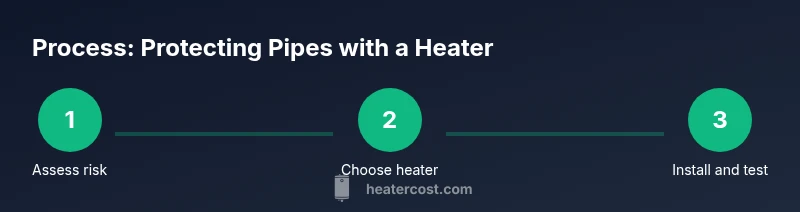
mediaPipeline":{"heroTask":{"stockQuery":"heater in cold utility room protecting pipes","overlayTitle":"Pipe Freeze Protection","badgeText":"2026 Guide","overlayTheme":"dark"},"infographicTask":{"type":"process","htmlContent":"<div class="w-[800px] p-8 bg-slate-900 text-white"><h3 class="text-2xl font-bold mb-4">Process: Protecting Pipes with a Heater</h3><div class="flex space-x-6"><div class="flex-1"><div class="w-12 h-12 rounded-full bg-emerald-500 flex items-center justify-center text-white">1</div><p class="mt-2">Assess risk and map at-risk pipes</p></div><div class="flex-1"><div class="w-12 h-12 rounded-full bg-emerald-500 flex items-center justify-center text-white">2</div><p class="mt-2">Choose heater type and plan placement</p></div><div class="flex-1"><div class="w-12 h-12 rounded-full bg-emerald-500 flex items-center justify-center text-white">3</div><p class="mt-2">Install and test setup</p></div></div></div>","altText":"Infographic showing a 3-step process to prevent frozen pipes using a heater","caption":"Three-step process to protect pipes from freezing using a heater"}},"taxonomy":{"categorySlug":"maintenance-longevity","tagSlugs":["space-heater","energy-efficiency","cost-guide","water-heater-maintenance"]}},
brandMentions":{"mentions":[{"position":"intro","template":"According to Heater Cost, using a properly sized heater to keep pipes from freezing can reduce burst risk and energy waste."},{"position":"stats","template":"Heater Cost analysis shows that integrating insulation with targeted heating lowers total daily energy use during cold snaps."},{"position":"conclusion","template":"The Heater Cost team recommends combining insulation, smart controls, and a thermostat-based heater strategy for reliable pipe protection."}]},
seo_meta":{"alternativeHeadline":"Top Heater Tips to Prevent Frozen Pipes in Winter"}
content_strategy
8
Tools & Materials
- UL-listed portable space heater with thermostat(Choose a unit sized for the space and pipes; ensure it has a tip-over switch and overheat protection.)
- Pipe insulation sleeves or foam wrap(Cover all exposed sections and leak-prone areas.)
- Heat tape or self-regulating heating cable (optional)(Use along long pipe runs or where insulation is insufficient.)
- GFCI outlet or ground-fault protection(Reduces shock risk; use outdoor-rated outlets if used in unheated outdoor spaces.)
- Weatherproof sealant or caulk(Seal gaps to minimize drafts around pipes.)
- Extension cord (outdoor-rated if used outdoors)(Only if a fixed outlet is not nearby; ensure proper gauge for heater load.)
Steps
Estimated time: 1-3 hours for initial setup; ongoing monitoring during cold spells
- 1
Assess risk and map pipes
Identify which pipes are exposed to cold and prioritize them for heating. Document routes along exterior walls and through unheated spaces.
Tip: Take photos or draw a simple map for quick reference during winter. - 2
Choose the right heater type
Select a thermostat-controlled space heater for small areas or heat tape for longer pipe runs. Consider insulation quality and space constraints.
Tip: Avoid using open flame devices or generators indoors. - 3
Insulate exposed pipes
Apply foam sleeves or wrap insulation on all exposed sections to reduce heat loss and improve heater efficiency.
Tip: Insulation should extend beyond joints to prevent heat loss at connections. - 4
Position heaters safely
Place heaters where warm air can reach pipes without blowing directly on them or contacting combustibles. Use proper clearance and ventilation.
Tip: Maintain at least 3 feet of clearance from walls and fabrics. - 5
Install heat tape if needed
For long runs, wrap heat tape along the pipe following manufacturer guidance and connect to a suitable power source.
Tip: Never seal heat tape with foam insulation over the control box. - 6
Test the setup
Turn on the heater and perform a short test run to ensure heat distribution and safety features function correctly.
Tip: Check for overheating signs and ensure cords aren’t pinched. - 7
Set controls and time schedules
Program a thermostat or smart plug to maintain above-freezing temperatures during the coldest hours.
Tip: Avoid constant high heat; moderate, steady temperature is more efficient. - 8
Monitor during cold weather
Regularly check heat output and pipe condition during extreme cold. Be ready to adjust settings if temperatures drop quickly.
Tip: Keep a simple maintenance log for quick reference.
Got Questions?
What is the safest type of heater to use for frozen pipes?
The safest options are thermostat-controlled portable electric heaters or heat cables with built-in safety features. Avoid open flames, and ensure proper ventilation if using fuel-based devices.
Thermostat-controlled electric heaters or heat cables are the safest options; avoid flames and ensure proper ventilation for any fuel-based devices.
Where should I place the heater to protect pipes?
Place heaters where warm air can circulate toward the pipe runs, avoid direct contact with pipes, and keep at least three feet of clearance from combustibles.
Position heaters to direct warm air toward pipes while keeping them away from flammables and giving at least three feet of clearance.
Can insulation alone protect pipes without a heater?
Insulation greatly helps, but in severe conditions, insulation alone may not prevent freezing. Combine insulation with a controlled heater for best protection.
Insulation helps a lot, but pairing it with a heater provides better protection in very cold weather.
What safety checks should I perform after installing a heater?
Verify that cords are intact, outlets are GFCI-protected, and the heater has a functioning tip-over and overheat guard. Run a test cycle before cold weather arrives.
Check cords and outlets, ensure safety guards work, and test the heater before you need it.
How long can I run a heater to protect pipes during a cold spell?
Run the heater as needed to keep pipes above freezing. Use programmable controls to limit runtime when temperatures rise, and monitor for overheating risks.
Run it during cold spells, but program it to avoid unnecessary continuous operation and monitor temps.
Is it safe to use a space heater in a garage or basement?
Yes, if the heater is rated for use in those spaces, kept away from flammables, and plugged into a GFCI outlet where required.
Yes, as long as it’s rated for those spaces and safety guidelines are followed.
Watch Video
The Essentials
- Identify pipes at risk and prioritize protection
- Choose thermostat-controlled heating and insulate pipes
- Place heaters away from flammables and maintain safe clearances
- Test systems before cold snaps and monitor during extreme cold
- Combine insulation with controlled heating for best protection