Gas Heater Indoor: Safety, Costs, and Performance
A practical guide to using a gas heater indoors, covering safety, ventilation, installation, and cost considerations. Learn best practices from Heater Cost for homeowners, renters, and property managers.


Gas heater indoor solutions can provide quick warmth in smaller spaces, but they carry safety responsibilities. Indoor gas heaters require proper ventilation, CO detectors, and professional installation to minimize risk. According to Heater Cost, homeowners should budget for safe operation, including venting requirements and ongoing maintenance, and compare options based on efficiency, capacity, and running costs.
What is an indoor gas heater, and when is it appropriate?
A gas heater indoors is a heating appliance that uses natural gas or propane to deliver heat within a limited area. These devices are commonly used in apartments, sunrooms, basements, or older homes where central systems don’t perfectly warm every corner. When selecting a model, homeowners should consider space size, insulation, and heat needs. Gas heater indoor options can complement existing systems by providing rapid heat when outdoor temperatures plummet. According to Heater Cost, safety, sizing, and proper installation are non-negotiable, and buyers should compare units by efficiency, venting needs, and maintenance requirements. Properly matched capacity reduces oversizing and energy waste, ensuring comfort without overpaying.
In practice, measure the space you intend to heat and choose a unit that can maintain a comfortable temperature without running continuously. Remember that gas heaters produce combustion byproducts that must be vented correctly; a wrong setup can lead to safety hazards. The right unit will heat the space quickly, maintain even temperatures, and provide a clear path for venting and service. This decision should balance initial cost, running costs, safety features, and the flexibility to reallocate heat as rooms change usage over time.
Safety essentials for indoor gas heaters
Indoor gas heaters come with safety requirements that go beyond simply turning a switch. A licensed technician should handle connections to the gas line, venting, and clearance from combustibles. Maintain clearances of at least the manufacturer's specified distance from walls, furniture, and curtains, and keep the area around the unit uncluttered. Carbon monoxide detectors should be installed on every level where the heater operates and tested monthly. Regular maintenance—at least once per year—includes burner inspection, vent cleaning, and leak checks. If you smell gas, leave the area and call emergency services. The Heater Cost team emphasizes that proactive maintenance reduces the risk of dangerous malfunctions and extends the life of the appliance.
Ventilation, CO monitoring, and code compliance
Ventilation is the cornerstone of safe indoor heating with gas. Most jurisdictions require proper venting and combustion air for gas heaters installed indoors. A dedicated vent or direct-vent system helps prevent back-drafting, which can push exhaust gases into living spaces. CO detectors are not optional; they are essential safety devices that should be placed on every habitable level and tested regularly. Keep manufacturer instructions and local permit requirements handy, as some regions mandate inspections after installation. Heater Cost analysis shows that following code not only protects occupants but can influence insurance eligibility and compliance status.
Efficiency, heat output, and operating costs
Gas heaters indoors vary widely in efficiency and heat output. Newer models with direct-venting and higher efficiency ratings typically offer better fuel economy and lower long-term costs, though upfront prices may be higher. Compare nominal heat output (BTU), efficiency ratings (AFUE when applicable), and standby losses. Real-world costs depend on gas prices, usage patterns, and how well the space is insulated. A well-insulated space requires less heat, which translates into lower monthly operating costs even if the heater is sized for peak winter demand. The goal is to balance comfort with predictable costs and to avoid over- or under-heating.
Installation, permits, and maintenance
Safe operation starts with professional installation that covers gas line connections, venting, clearance, and leak testing. Some jurisdictions require installation permits, inspections, and labeled safety devices. After installation, schedule annual servicing to verify burner efficiency, vent integrity, and CO detector function. Keeping a maintenance log helps plan future service and health of the system. The Heater Cost team finds that routine upkeep reduces unplanned downtime and preserves efficiency, resulting in more consistent costs and safer operation.
Alternatives and a decision checklist
If safety concerns, budget constraints, or space limitations arise, consider alternatives such as electric space heaters, heat pumps, or ductless mini-splits. Use a decision checklist: space size, budget, venting capability, insulation quality, and climate. For mild winters or supplemental heat, an efficient electric option may outperform a gas heater indoors in terms of ease of installation and safety. By evaluating these factors, homeowners can determine whether an indoor gas heater is the right fit or if an alternative provides better long-term value.
Indoor gas heater setup considerations
| Aspect | Guidance | Notes |
|---|---|---|
| Installation Cost | $1,000-$3,000 | Depends on unit type and venting requirements |
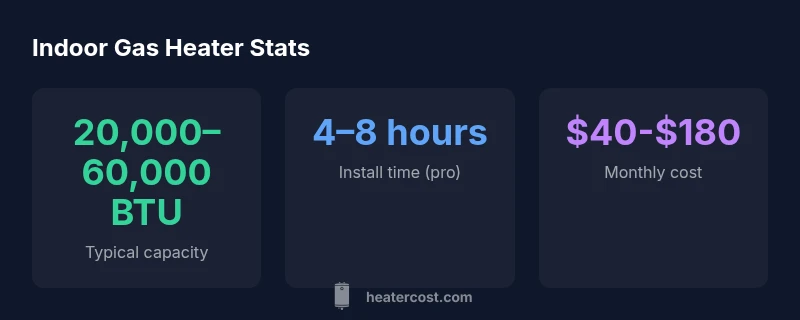
| Operating Cost (monthly) | $40-$180 | Depends on usage and local gas prices |
| Ventilation Requirements | High | Needs proper venting and CO detectors |
Got Questions?
Is it safe to use a gas heater indoors?
Yes, but only when installed by a licensed professional, vented correctly, and equipped with CO detectors. Regular maintenance and prompt action on any detected issues are essential for safe operation.
Yes, indoor gas heaters can be safe if properly installed, vented, and monitored with CO detectors, with regular maintenance.
Do I need a permit to install an indoor gas heater?
Permitting requirements vary by locality, but many areas require a permit and inspection for gas appliance installations. Check with your local building department and hire a licensed professional.
Permits vary by location; check with your local building department and hire a licensed installer.
What maintenance does a gas heater indoors require?
Annual servicing by a qualified technician is recommended, including burner inspection, vent inspection, and CO detector testing. Keep a maintenance log for easy reference.
Annual professional service, vent checks, and CO detector tests keep you safe and efficient.
Are indoor gas heaters energy efficient?
Efficiency varies by model and venting options. Newer units with direct-vent designs are generally more efficient, but it’s important to compare AFUE-like ratings, heat output, and insulation in your space.
Efficiency varies; newer direct-vent models tend to be better, compare ratings and space insulation.
What are alternatives to indoor gas heaters?
Electric space heaters or heat pumps can provide safe, efficient heating with less ventilation concern, especially in milder climates or for primary heating.
Electric heaters or heat pumps are viable alternatives, particularly in milder climates.
What ventilation setup is ideal for safety?
A dedicated venting path and proper combustion air supply are ideal. Ensure CO detectors are installed and functional on each living level.
Dedicated venting and CO detectors on every level keep indoor air safe.
“Indoor gas heaters can be a practical solution for supplemental heat when used with proper ventilation and regular maintenance.”
The Essentials
- Assess space size and ventilation before choosing a unit
- Prioritize professional installation and CO monitoring
- Understand operating costs depend on gas prices and usage
- Compare models by efficiency and safety features
- Consider alternatives like heat pumps if possible