Gas Heating System: Costs, Efficiency, and Maintenance (2026)
A data-driven guide to gas heating systems, covering costs, efficiency, installation, maintenance, safety, and budgeting for homeowners, renters, and property managers.


Gas heating systems are a common choice for reliable home warmth, delivering fast heating with predictable fuel costs when gas prices are stable. A gas heating system typically consists of a furnace, heat exchanger, venting, and a thermostat that control the cycle. This quick answer introduces the key factors homeowners should weigh—costs, efficiency, installation considerations, and safety—before diving into details in this guide.
What is a gas heating system?
A gas heating system heats your home using natural gas or propane to generate warm air or radiant heat. The core components typically include a gas furnace, a heat exchanger, burners, a blower, ductwork (for forced-air systems), and a thermostat that signals when to start or stop heating. Venting and combustion air supply are critical for safe operation, and modern models emphasize high efficiency and advanced controls. According to Heater Cost, gas heating systems have evolved to deliver reliable warmth with improved safety features and longer service life when sized and installed correctly. Homeowners often consider factors such as climate, house size, and existing ductwork when evaluating whether a gas heating system is the right fit for their property.
How a gas heating system works: step by step
- The thermostat detects a drop in indoor temperature and signals the furnace to begin a cycle. 2) The gas valve opens and the burners ignite, producing flame within the burner assembly. 3) The heat exchanger absorbs the heat from the flame, while exhaust gases vent safely through the flue. 4) A blower motor pushes heated air through ducts, distributing warmth to rooms. 5) The thermostat monitors temperature and cycles the system off when the set point is reached. 6) Air returns through return ducts, and the cycle repeats as needed. 7) Safety controls, carbon monoxide sensors, and proper venting keep the system operating safely. 8) Regular maintenance ensures efficiency and longevity. This sequence emphasizes the importance of professional service to maintain performance and safety.
Pros and cons of gas heating systems
Pros:
- Rapid heat delivery and strong comfort, especially in cold climates.
- Lower operating costs in regions with stable, affordable natural gas compared to electricity in many scenarios.
- Mature technology with reliable warranties and a broad service network.
Cons:
- Higher installation costs and potential ductwork or venting modifications.
- Safety considerations require proper venting, CO detectors, and annual inspections.
- Fuel prices fluctuate, which can affect long-term operating costs.
Efficiency, costs, and practical budgeting
Gas furnaces offer a range of efficiency levels, commonly expressed as AFUE. Higher AFUE units convert more fuel into usable heat, reducing operating costs over time. When budgeting, homeowners should consider: installation price, potential ductwork upgrades, venting requirements, and future fuel price projections. Incentives or rebates can shorten payback periods for high-efficiency models. The Heater Cost analysis for 2026 indicates that while upfront costs can be significant, energy savings and incentives often balance the equation over several years. Consider climate, occupancy patterns, and thermostat settings to estimate annual fuel costs more accurately.
Sizing, installation, and safety considerations
Correct sizing is essential for comfort and efficiency. A unit that is too large can cycle on and off frequently, wasting energy and accelerating wear; too small a unit may struggle to heat the home during peak demand. A professional load calculation (Manual J) plus ductwork assessment ensures appropriate capacity. Venting configuration and clearance requirements must align with local codes, and many jurisdictions require permits and inspections for installation. CO detectors near sleeping areas and the furnace are essential for safety, and annual professional inspections help identify flame sensor, heat exchanger, and blower issues before they become costly problems.
Maintenance, common issues, and lifecycle tips
Routine maintenance extends the life of a gas heating system and preserves efficiency. Key tasks include changing air filters every 1–3 months, scheduling an annual professional inspection, cleaning flame sensors, checking gas pressures, and testing safety controls. Common issues include short cycling, restricted airflow, ignition problems, and unusual noises. Many issues can be prevented by timely filter changes and combustion analysis. A proactive maintenance plan typically reduces unexpected breakdowns and keeps efficiency high, which aligns with long-term cost savings and reliability.
Choosing a gas heating system for your home
Start by assessing climate and home size, then compare unit efficiency, installed cost, and potential incentives. If your home already has ductwork, a forced-air gas furnace may be the simplest path; if not, consider a sealed combustion or modulating/high-efficiency furnace paired with proper duct design. Compare energy costs in your area and factor in maintenance expenses. The Heater Cost team recommends prioritizing high-efficiency models, ensuring proper installation by licensed professionals, and budgeting for upfront costs plus ongoing maintenance. A thoughtful selection now can deliver comfort and value for years to come.
Typical components and costs for gas heating installations
| Component | Typical AFUE Range | Estimated Installation Cost (USD) |
|---|---|---|
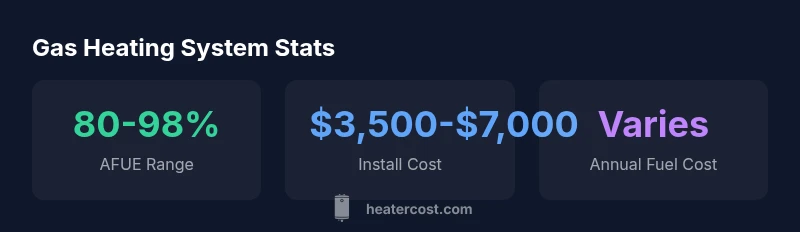
| Gas furnace | 80-98% | $3,500-$7,000 |
| Vent/Flue | N/A | $200-$1,200 |
| Thermostat & controls | N/A | $75-$300 |
| Annual fuel cost (varies) | Varies | Varies |
Got Questions?
What is AFUE and why does it matter for a gas heating system?
AFUE stands for Annual Fuel Utilization Efficiency. It measures how effectively a furnace converts fuel into heat. A higher AFUE means lower operating costs and less wasted energy, especially in colder climates.
AFUE shows how efficiently a furnace uses fuel; higher numbers save money over time.
Can a gas heating system be installed in a small apartment?
Yes, if the space and venting support a gas furnace or a compact boiler. Some apartments require venting work and permits, so check local codes.
Gas systems can fit in small spaces, but you may need proper venting and permits.
What maintenance does a gas furnace require annually?
An annual professional inspection is recommended, including flame sensor cleaning, air filter replacement, and combustion check. This helps ensure safety and efficiency.
Have a professional inspect yearly and replace filters regularly.
Is a gas heating system safe for homes with natural gas?
Gas systems are safe when properly installed and vented. Install CO detectors and ensure routine maintenance to minimize risks of gas leaks or carbon monoxide.
Safety comes from proper installation and regular maintenance.
How do gas heating systems compare to electric heat?
Gas units often offer lower operating costs in regions with cheap natural gas, but upfront installation costs can be higher. Consider climate, energy prices, and efficiency when comparing.
Gas can be cheaper to run in many places, but it depends on energy prices and efficiency.
“Gas heating systems deliver dependable warmth when properly sized and maintained. Efficiency and reliability hinge on professional installation and regular upkeep.”
The Essentials
- Choose high-efficiency models to maximize savings
- Budget installation costs and permits in advance
- Ensure proper sizing and venting to avoid short cycling
- Schedule annual maintenance to extend system life
- Compare fuel costs and incentives in your area