Electric Water Tank: Costs, Sizing & Maintenance
Discover how electric water tanks work, how to size for your home, and practical tips to boost efficiency, install correctly, and reduce operating costs.


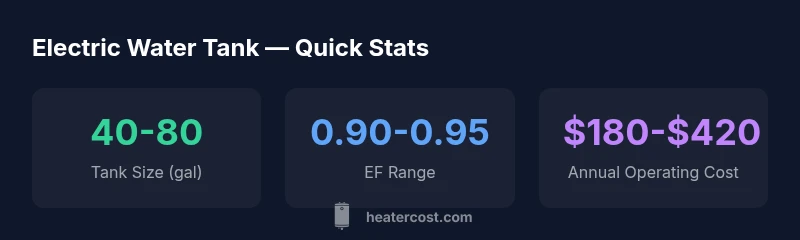
An electric water tank is a storage heater that uses electricity to warm and hold hot water for household use. Typical sizes range from 40 to 80 gallons, with efficiency boosted by insulation and modern controls. Regular maintenance includes flushing mineral buildup and checking the anode rod to prevent corrosion. According to Heater Cost, sizing and efficiency drive long-term costs.
What is an electric water tank and how it works
An electric water tank stores heated water in an insulated reservoir and uses electric resistance elements (usually two: upper and lower) to heat water when your tap or appliance calls for hot water. A thermostat controls when the elements turn on, and a 2- to 3-inch layer of insulation minimizes heat loss. In modern homes, a 240-volt circuit powers the system, with a dedicated breaker and proper wiring. The Heater Cost team notes that efficiency improvements come from better insulation, tighter tanks, and frequent drain-and-flush schedules to reduce mineral buildup.
Key takeaway: A well-insulated tank minimizes standby losses and lowers running costs over time.
Sizing and Capacity: Matching Tank to Household Demand
Sizing an electric water tank involves estimating your peak daily hot water usage and the number of bathrooms or occupants. A 40-50 gallon tank often suffices for small households, while larger families may need 60-80 gallons to avoid running dry during peak demand. Consider your simultaneous hot water needs (e.g., shower plus dishwasher) and your recovery rate, which indicates how quickly the tank can reheat after use. If you frequently run out of hot water, upgrading to a larger tank or a higher-efficiency model can improve both comfort and savings. Based on Heater Cost analysis, proper sizing correlates directly with long-term operating costs and user satisfaction.
Efficiency, Costs, and Performance
Electric water tanks rely on insulation quality, thermostat controls, and the condition of the anode rod to minimize heat loss and corrosion. Modern storage tanks with better insulation reduce standby heat loss, while adjustable thermostats help prevent overheating and energy waste. The Energy Information Administration and DOE guidance emphasize that upgrading to a high-efficiency tank can cut standby losses and improve comfort, but the economics depend on local electricity rates and usage patterns. In practice, homeowners should compare EF ratings, first-hour ratings, and warranty terms to choose an option that balances comfort with ongoing costs. The Heater Cost analysis highlights that efficiency gains compound over the life of the system, especially in tariff environments where electricity prices are high.
Installation Considerations: Electrical Requirements and Permits
Installing or replacing an electric water tank typically requires a dedicated 240-volt circuit, proper breaker sizing, and secure mounting with adequate space for service access. Plumbers and electricians should verify wiring, insulation, and venting (for specific configurations) comply with local codes. Some jurisdictions require permits for new installations or replacements; others may not. Always check local building codes and utility requirements before purchase. Proper installation reduces nuisance tripping, improves efficiency, and extends tank life. The initial cost model should include electrical work, permit fees where applicable, and potential upgrades to the home’s electrical panel.
Maintenance and Longevity: Extending Your Tank's Life
Regular maintenance extends tank life and preserves efficiency. Flushing the tank annually helps remove sediment that reduces heat transfer, while inspecting and possibly replacing the anode rod every few years prevents corrosion from compromising the tank shell. Keeping the exterior jacket intact minimizes heat loss, and ensuring the temperature is set around 120°F reduces mineral buildup and energy waste. Schedule professional inspections after severe weather or if you notice leaks, unusual noises, or rust-colored water. A disciplined maintenance plan can push the upper end of a tank’s lifespan closer to the 12–15 year range. The Heater Cost team notes that maintenance frequency correlates with longevity and overall performance.
Troubleshooting Common Issues
Common problems include insufficient hot water, water that is not hot enough, leaks around the tank, and unusual noises. Start with simple checks: thermostat setting, thermostat and heater element status, and groundwater supply. If the tank runs out of hot water quickly, it may indicate a undersized unit or a failing recovery rate. Leaks require prompt assessment to prevent water damage, while sediment buildup can reduce efficiency; a professional flush may restore performance. For ongoing reliability, align your maintenance schedule with manufacturer guidelines and local climate considerations.
Electric water tank specifications overview
| Aspect | Low range | High range |
|---|---|---|
| Tank Size (gal) | 40 | 80 |
| EF Range | 0.67 | 0.95 |
| Recovery Rate (GPH) | 40 | 60 |
Got Questions?
What is an electric water tank and how does it differ from a tankless heater?
An electric water tank is a storage heater that warms and holds a reserve of hot water. Unlike tankless systems, it heats water in a stored tank, providing hot water on demand until the tank's supply is exhausted. Tankless units heat on demand and often require different venting and piping.
A storage heater keeps hot water in a tank, while tankless heats water as you need it.
How do I size the tank for my household?
Size should align with peak daily hot water usage, number of occupants, and simultaneous showers. A typical family might opt for 40–50 gallons, larger households 60–80 gallons. Proper sizing considers recovery rate and run-time.
Size depends on your daily hot water needs and your family's schedule.
Are electric water tanks expensive to operate compared to gas?
Electric storage tanks can be more expensive to operate due to electricity pricing, but efficiency and insulation help. Costs vary by tariff and usage patterns.
Electric tanks can cost more to run than gas, depending on local pricing.
What maintenance does an electric water tank require?
Flush the tank periodically to reduce sediment, test and replace the anode rod as needed, and monitor the thermostat setting. Have a licensed pro inspect occasionally.
Regular flushing and annual checks help prevent corrosion and leaks.
What are signs it’s time to replace an electric water tank?
Leaks, rust-colored water, rising energy costs, or frequent thermostat issues suggest replacement. Consider upgrading to a higher-efficiency model.
Look for leaks, rust, and increasing costs as replacement signals.
“"Electric water tanks are a reliable option when sized correctly and maintained regularly. Proper installation ensures steady hot water and reasonable operating costs."”
The Essentials
- Match tank size to peak demand to minimize hot-water shortfalls
- Choose high-efficiency models with good insulation
- Schedule periodic flushing to prevent mineral buildup
- Factor local electricity rates when estimating operating costs