Ceiling Heater Guide: Costs, Sizing, Installation, and Maintenance
A data-driven guide from Heater Cost on ceiling heater costs, sizing, installation, and maintenance for homeowners and property managers.


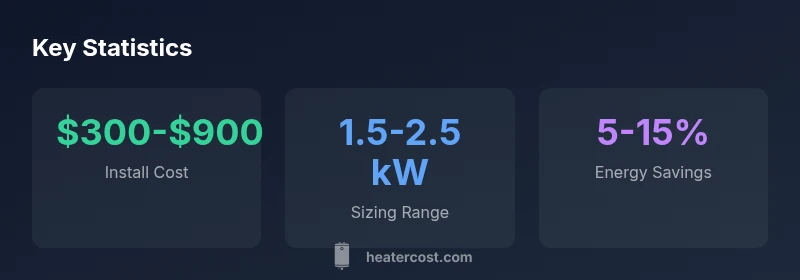
Typical installation costs for a ceiling heater range from $300 to $900, depending on unit type and mounting height. Operating costs depend on room size, insulation, and usage patterns. This guide, based on Heater Cost Analysis, 2026, covers sizing, installation, and maintenance for ceiling heaters to help homeowners decide if this approach fits their space.
Overview and use cases
A ceiling heater delivers focused warmth from above, freeing floor space and reducing clutter. For many homes, this approach is ideal for living rooms, bedrooms, and home offices where space is tight or traditional radiators create cold spots. The Heater Cost team has observed that ceiling-mounted units can heat zones quickly and target specific areas without heating unused spaces. According to Heater Cost analysis, ceiling heaters are most effective when used to supplement central heating in well-insulated rooms or to extend heat during shoulder seasons. In moderate climates, a ceiling heater can provide comfort during cool mornings and evenings with minimal air movement, which is appreciated by occupants sensitive to drafts. When selecting a model, consider room dimensions, ceiling height, and insulation quality. For example, a standard 8 to 9-foot ceiling in a well-insulated living space may need a smaller wattage than a room with high ceilings or drafty walls. Always follow manufacturer guidelines for mounting height and clearances to maintain safety. In addition, ensure a ceiling heater is installed in a location that minimizes obstruction and maximizes heat distribution.
How ceiling heaters work
Ceiling heaters primarily use radiant heat to warm objects and people directly, with some models also contributing a gentle convection current to circulate warm air. Electric ceiling heaters typically rely on heating elements encased in a reflective panel that directs infrared warmth downward. The result is rapid comfort in occupied zones without heating the entire room. When paired with a thermostat or smart controller, these units can maintain consistent comfort with precise timing. For bathrooms and kitchens, choose models rated for damp or high-moisture environments to avoid corrosion and safety concerns. Ceiling mount design minimizes drafts and cold spots that often occur with forced-air systems.
Sizing and placement considerations
Sizing is critical for ceiling heaters to work efficiently. Start by calculating the heat load for the target space, taking into account room area, ceiling height, insulation level, and window exposure. Manufacturers commonly provide wattage guidelines per square foot and per ceiling height, and a professional installer can run a load calculation to confirm the right size. Placement matters too: locate the unit away from direct contact with water sources in damp spaces, and ensure there is adequate clearance from furniture and ceilings to prevent overheating. Ceiling mounting height affects heat distribution; too low can feel hot and uncomfortable, too high may reduce perceived warmth. If possible, install two smaller units instead of one large unit to create even coverage and reduce shadowed zones.
Pros and cons of ceiling heaters
Pros include: space-saving design that preserves floor area; quick warm-up for occupied zones; targeted heating that reduces energy waste when used properly; discreet appearance that blends with ceiling lines. Cons include: potential higher upfront costs for installation vs portable heaters; fixed location limits heat distribution to other zones; some models require professional electrical work and building code compliance. In damp rooms, only use units with appropriate IP ratings. For best results, pair ceiling heaters with proper insulation and a programmable thermostat to maximize efficiency.
Installation steps and safety checks
In most cases, installation should be performed by a licensed electrician or qualified HVAC technician. Typical steps include: 1) Verify electrical capacity and circuit availability; 2) Select an appropriate mounting location with adequate clearance; 3) Install mounting hardware and run electrical connections; 4) Mount the heater and connect to the power supply; 5) Test operation and verify thermostat control. Safety checks should confirm that wiring is secure, there is no exposed conduit, clearances meet code requirements, and the unit operates within its rated temperature range. If you are renting or in a rental property, obtain approval from the landlord and ensure compliance with local codes. Regular inspections and a yearly safety check are recommended to identify loose connections or dust buildup that may affect performance.
Energy costs, efficiency, and climate considerations
Ceiling heaters can be a cost-effective option for zone heating when used to heat small, occupied spaces rather than entire homes. The efficiency benefits come from delivering heat directly to people and objects rather than warming air quickly throughout a large volume. To maximize efficiency, use programmable thermostats or smart controls, schedule heat during occupancy, and pair with good insulation. In colder climates, ceiling heaters are best used as a supplementary method alongside central heating; in milder climates, they can replace portable heaters in certain rooms to avoid heat loss through drafts. Always compare heat loss estimates and energy prices in your region to determine expected operating costs.
Maintenance, lifespan, and common issues
Maintenance is relatively straightforward: keep air vents and grills clean, check for signs of wear or corrosion on electrical connections, and ensure mounting hardware remains tight. Schedule a yearly inspection to verify electrical connections, insulation around the unit, and heat element integrity. Common issues include uneven heating due to improper mounting height, wiring faults, or dust buildup on radiant panels. If you notice failure to heat, odd noises, or tripping breakers, stop using the unit and consult a professional. Proper maintenance can extend lifespan and maintain efficiency.
Buying guide: what to look for in a ceiling heater
When shopping, look for models with appropriate damp or wet location ratings for kitchens or bathrooms, a robust warranty, and a control system that suits your routine (thermostat, smart app, or remote). Consider mounting height recommendations, noise levels, and ease of installation. Check energy efficiency labels and ensure compatibility with existing electrical panels. Compare operating costs using energy calculators and request load calculations from the installer. Finally, review safety certifications and manufacturer guidance to ensure a long service life and safe operation.
Comparison of ceiling heater types vs portable and wall-mounted radiant options
| Aspect | Ceiling Heater | Portable Space Heater | Wall-mounted Radiant |
|---|---|---|---|
| Installation ease | Moderate – requires ceiling mounting, may require professional install | Low – portable, plug-in | Moderate – wall mounting or ceiling coordination |
| Energy efficiency | High for zone heating when sized correctly | Medium to high depending on insulation | Variable – depends on coverage |
| Space requirements | No floor space used | Requires floor space | No floor space, wall-mounted |
| Lifespan | 10-15 years | 2-5 years (portable) | 10-15 years |
Got Questions?
What rooms are best suited for a ceiling heater?
Ceiling heaters work well in bedrooms, living rooms, and home offices where floor space is precious. They provide targeted warmth without creating clutter and are most effective in well-insulated spaces.
Best rooms for ceiling heaters include bedrooms, living rooms, and offices where you want targeted warmth without occupying floor space.
Do ceiling heaters require professional installation?
Most ceiling heaters require electrical wiring and proper mounting. A licensed electrician or HVAC professional ensures safety and code compliance.
Most ceiling heaters need a licensed installer to ensure safe wiring and proper mounting.
How do you size a ceiling heater for a room?
Sizing depends on room size, ceiling height, insulation, and desired comfort. Use manufacturer guidelines and consider a professional heat-load calculation for accuracy.
To size a ceiling heater, measure the room, check insulation, and follow the manufacturer’s wattage guidelines or consult an installer.
Are ceiling heaters safe in damp or humid spaces?
Only select models rated for damp or wet locations. Avoid non-rated units in bathrooms or shower areas to prevent corrosion and safety risks.
Yes, but choose models with damp or wet-location ratings for bathrooms or kitchens.
What maintenance does a ceiling heater require?
Keep vents clean, inspect electrical connections, and schedule yearly checks. Address dust buildup and loose mounting screws promptly to maintain performance.
Clean the grille, check connections, and schedule annual inspections to keep it running safely.
What is the typical payback period for ceiling heaters?
Payback depends on energy costs, usage, and installation. Local energy data and a load calculation help estimate when savings offset upfront costs.
Payback varies; estimate with local energy data and your usage pattern.
Are ceiling heaters energy efficient compared with central heating?
When used to heat only occupied spaces, ceiling heaters can be energy-efficient. They are most effective when integrated with insulation and smart controls.
They can be energy-efficient for zone heating when properly sized and controlled.
“Ceiling heaters excel as zone heating when sized and installed correctly; mis-sizing or improper mounting undermines efficiency.”
The Essentials
- Size ceiling heater based on room area and insulation
- Install professionally for safety and code compliance
- Use programmable controls to maximize efficiency
- Mount with adequate clearance to avoid overheating
- Maintain with annual inspections and clean vents