Bath Heater Guide: Costs, Types, and Safety
Learn bath heater options, installation costs, safety guidelines, and energy considerations to heat your bathroom efficiently and safely for homes, rentals, and property managers.


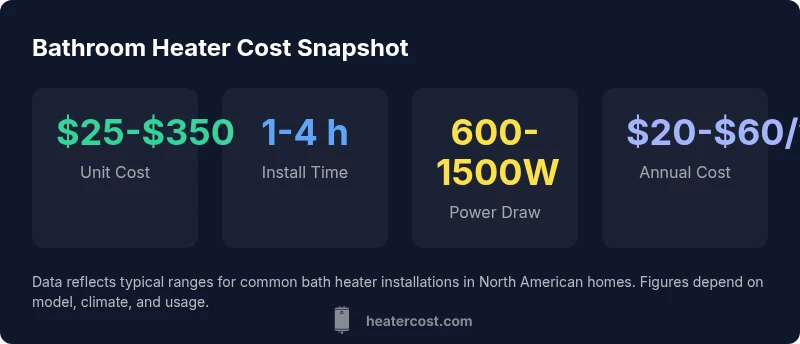
According to Heater Cost, bath heater costs vary by type and installation. Unit prices typically range from $25-$350 for a plug-in or wall-mounted model, while professional installation adds roughly $100-$800 depending on electrical work and room layout. For renters, plug-in models offer quick, affordable heat; for longer-term homes, a hardwired unit provides steadier warmth.
What is a bath heater and why heat matters in bathrooms
A bath heater is a device designed to raise and maintain a comfortable air temperature in a bathroom. It can come in several forms, including plug-in portable units, wall-mounted electric heaters, towel warmers, or radiant ceiling panels. Bathrooms present unique challenges for heating because of high humidity, limited space, and ventilation considerations, which is why a purpose-built bath heater matters: it provides targeted warmth without overheating adjacent living spaces. According to Heater Cost, the practical goal is warmth without overheating, while minimizing electricity use and ensuring electrical safety in damp environments. In most homes, a bath heater is used intermittently—before and during showers—to raise the perceived temperature and reduce shivers after stepping out of the bath. For renters, plug-in options can be an affordable, reversible solution that requires no permanent wiring or permits. For homeowners, longer-term installations offer steadier comfort and can contribute to energy savings when paired with proper insulation and a well-placed venting strategy. The key is to balance heat output with safety features and the layout of the bathroom.
How bathroom heaters work: heat transfer and comfort
Bathroom heaters primarily deliver heat through convection, radiant panels, or a combination of both. Convection models warm the air, then circulate it with a fan for quick comfort. Radiant options emit infrared heat that lightly warms the person and objects in the room without heating every surface. In damp spaces, radiant and ceiling-mounted panels can feel gentler and more consistent than a space heater that blows warm air directly. Humidity and moisture, as well as bathroom size and ceiling height, influence how much heat you need to feel comfortable. Heater Cost analysis indicates that the most effective setups combine a thermostat-controlled unit with an appropriate heat output for the space, along with proper ventilation and a non-slip floor environment. When selecting a heater, consider where you’ll place it (on a wall, ceiling, or near a towel warmer) and whether you prefer a quiet operation or a quick heat-up time. Always ensure the device is rated for bathroom use and installed according to local electrical codes and manufacturer instructions.
Types of bath heaters: plug-in, hardwired, and specialty options
-
Plug-in electric heaters: Inexpensive to buy and easy to install, these units are ideal for small bathrooms or renters. They heat quickly and can be moved between rooms, but their output is limited, and you should only use models rated for bathroom use.
-
Hardwired wall or ceiling heaters: These provide more consistent heat and are a better long-term solution for larger bathrooms or spaces with frequent use. They require electrical work, potential permits, and a professional installation to meet code requirements.
-
Towel warmers with built-in heat: These add a touch of luxury and can help distribute gentle warmth, especially in colder climates. They typically offer lower heat output compared to dedicated space heaters.
-
Hydronic radiant panels: Using hot water from a boiler, these panels provide even, quiet heat with low noise. They’re more involved to install but can be energy-efficient over time.
Professional installation and a bathroom-safe rating (IP rating and GFCI protection) are essential for any of these options. The best choice depends on your bathroom size, climate, budget, and how you prioritize safety and comfort.
Safety, electrical codes, and installation considerations
Bathrooms require careful attention to safety: electrical devices must be rated for damp environments, and outlets should be protected with GFCI protection. Look for IP ratings (IPX4 or higher for splash zones) on heaters intended for bathrooms. Maintain clearances from bathtubs, showers, mirrors, and towels to prevent heat damage and fire hazards. Local codes may require a licensed electrician and a permit for certain hardwired installations, especially if wiring is added or upgraded. Ensure wiring is sized for the heater’s load, and never run a heater on extension cords in a bathroom. Install placement should avoid direct contact with water spray and be accessible for operation and maintenance. If you rent, consider temporary plug-in models that meet bathroom-safety standards. For homeowners, a dedicated circuit and proper venting can improve safety and performance while reducing the risk of nuisance tripping. In all cases, follow the manufacturer’s instructions and check that the unit is appropriate for your climate and bathroom volume.
Energy efficiency, operating costs, and climate considerations
Energy efficiency matters because the warmth you feel often depends on how well the space is insulated and how you control heat. Choose a model with a thermostat, timer, or an auto-shutoff feature to prevent wasteful running. In colder climates or larger bathrooms, higher-output units can be more cost-effective in the long run than running multiple smaller heaters. Conversely, in compact baths or milder climates, smaller plug-in units may offer sufficient comfort without paying for unused capacity. Look for energy-saving features like thermal cutouts, efficient motors, and soft-start functions that reduce peak electricity use. While upfront unit costs vary, total ownership costs are what matter most. Heater Cost analysis suggests evaluating the heater’s rated wattage against your bathroom’s size and the climate to estimate how many months per year you’ll actually use the unit and how much you’ll spend on electricity. Always pair heating with moisture management—adequate ventilation and a well-sealed bathroom reduces heat loss and keeps surfaces from getting damp, which can affect both comfort and equipment longevity.
Maintenance and longevity: keeping a bath heater safe and effective
Regular maintenance extends the life of a bath heater. Wipe down exterior surfaces to remove dust and moisture that can corrode metal parts, especially around vent openings and grills. For towel warmers and radiant panels, inspect the mounting hardware every season to ensure the unit remains secure. Check the power cord and plug (for plug-in models) for signs of wear, and replace damaged parts promptly. If your heater includes an air intake filter, remove and clean it per the manufacturer’s instructions. Have hardwired units periodically inspected by a licensed electrician, especially if you notice erratic heating, tripping breakers, or unusual noises. Keep the bathroom well-ventilated to minimize humidity exposure, which can shorten the life of electrical components. With regular care, most bath heaters will maintain performance over several years, and some models offer extended warranties that cover parts and labor. The benefit of a well-maintained heater is steadier warmth and reduced risk of electrical problems during humid seasons.
How to size and select a bath heater for your space
To size a bath heater, start by measuring the room dimensions and ceiling height to estimate volume. Consider climate: colder regions require higher heat output for the same bathroom size. Typical bathroom heater wattage ranges from about 600W for small bathrooms to 1500W or more for larger spaces, with 1000-2000W options for very large baths or homes with poor insulation. Check the heater’s bathroom rating, safety features, and the presence of a thermostat or timer that matches your schedule. If you expect frequent use or winter conditions, prefer a higher output unit with a quick heat-up time. Compare models that offer auto shutoff, frost protection, and anti-tip or child-safe features if you have children. Finally, weigh installation requirements and long-term costs to identify the best balance of upfront price and ongoing energy expenses. The right bath heater should deliver comfortable warmth without overheating and should integrate with your bathroom’s ventilation and design.
Quick-start decision checklist
- Determine bathroom size and climate to estimate heat needs.
- Choose between plug-in, hardwired, or towel-warmers based on permanence and heat goals.
- Verify bathroom-rated safety features (GFCI, IP rating, clearances) before purchase.
- Compare total cost of ownership: unit price, install, and annual energy use.
- Consider energy-saving features like thermostats and timers; review warranties.
Bathroom heater type comparison
| Type | Typical wattage range | Pros | Cons |
|---|---|---|---|
| Plug-in electric heater | 600-1500 | Affordable, portable heat; easy to move | Limited heat; must be bathroom-rated |
| Hardwired wall heater | 1000-2000 | Stable, even heat; permanent solution | Requires wiring, permits, professional install |
| Towel warmer with heat | 200-600 | Dual function; gentle warmth | Lower heat output; not primary heater |
| Hydronic radiant panel | 1000-2000 | Even heat; quiet operation | Plumbing required; installation complexity |
Got Questions?
What is the best bath heater for a small bathroom?
For small bathrooms, start with a compact plug-in model rated for bathroom use. It’s affordable, easy to install, and provides quick warmth without overwhelming the space. If heat needs persist, consider a wall-mounted unit with a modest wattage rating suitable for the room size.
For tiny bathrooms, a compact plug-in heater is usually best. It’s safe, simple to install, and can be upgraded if you need more warmth.
Are bath heaters safe to use in bathrooms?
Yes, when you choose units rated for bathroom use and with ground fault protection. Look for IP ratings appropriate for splash zones and ensure professional installation for hardwired options.
Yes. Always pick bathroom-rated heaters with GFCI protection and appropriate IP ratings, and follow local codes.
How much does it cost to install a bath heater?
Installation costs vary by model and electrical work. Expect a range that accounts for wiring, permits, and labor, with plug-in options typically cheaper than hardwired installs.
Installation costs vary a lot. Plug-ins are cheaper to install; hardwired work is more expensive due to wiring and permits.
Can I install a bath heater myself?
DIY is generally not recommended for bathroom heaters that require electrical work. For safety and code compliance, hire a licensed electrician for hardwired installations.
DIY in bathrooms can be risky. Hire a licensed electrician for hardwired units to meet safety codes.
Do bath heaters save energy?
Yes, especially when paired with thermostats, timers, and proper insulation. High-efficiency models and correct sizing reduce unnecessary use.
Yes, if you use them with thermostats and timers and ensure proper sizing.
“Heat in a bathroom should be safe, predictable, and affordable over time. When selecting a bath heater, prioritize total cost of ownership and appropriate humidity ratings.”
The Essentials
- Assess bathroom size and climate before selecting a heater
- Plug-in models suit renters; hardwired units fit larger spaces
- Safety first: bathroom-rated, GFCI protected, proper clearances
- Total cost of ownership matters more than unit price
- Choose energy-saving features to reduce long-term costs