Bathtub Heater Costs: Buying, Installing & Maintaining
Practical, data-driven guidance on bathtub heater costs, installation, and upkeep. Compare price ranges, evaluate safety features, and plan an efficient bath-heater setup for any bathroom.


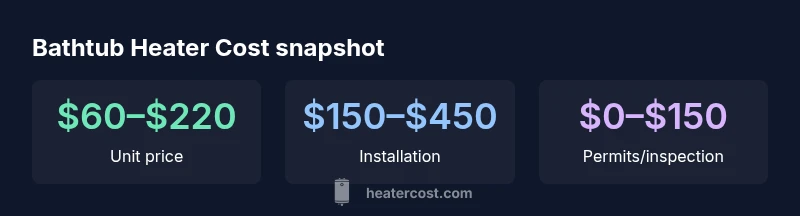
A bathtub heater typically costs between $60 and $220 for a basic immersion unit, with installation and wiring upgrades bringing the total to roughly $150–$500. Operating costs depend on heater wattage and local electricity rates, but a single bath may add about $20–$60 per use, depending on temperature and duration. Always prioritize safety and code compliance when choosing and installing a bathtub heater.
What is a bathtub heater and when would you use one?
A bathtub heater is a device designed to warm bathwater on demand, typically in one of three forms: a portable immersion unit dropped into the tub, an inline heater installed in the hot-water line, or a compact side-mounted unit connected to the tub’s plumbing. These devices are popular when quick temperature boosts are desired, when the home’s primary water heater is slow to respond, or when renters want a temporary solution without reconfiguring the entire bathroom. When selecting a model, consider tub size, desired temperature range, and how you plan to power the unit. Safety features such as thermal cutoffs, splash guards, and sealed enclosures are essential, and installation should follow local electrical codes for bathrooms.
Cost considerations: buying vs. renting, and upfront vs. ongoing costs
Pricing for bathtub heaters varies widely by type and wattage. A basic immersion heater can be inexpensive upfront, but installation and wiring improvements can significantly increase total cost. For many households, a compact inline heater paired with a dedicated circuit represents a middle ground between efficiency and ease of use. In rental situations, consider the cost of temporary devices and potential restrictions in lease agreements. When planning, also factor in ongoing electricity costs, which fluctuate with rates and how often you heat bathwater.
Sizing, wattage, and energy use: how to pick the right heater
Wattage determines how quickly water heats and how much energy is consumed per hour. Common ranges for tub heaters span from a few hundred watts up to around 1500 watts. Sizing should reflect tub volume, desired temperature rise, and how frequently you bathe. Use simple energy math: watts × hours ÷ 1000 × local electricity rate to estimate cost per bath. Remember that higher wattage delivers faster heating but increases energy use and potential wear on electrical circuits.
Safety first: code compliance, grounding, and installation tips
Bath spaces demand careful attention to electrical safety. Install heaters with a dedicated, properly grounded circuit, use GFCI protection, and ensure all connections are moisture-sealed. Keep cords away from water, and use manufacturers’ mounting guidelines. If a unit is rated for bathroom use, confirm it complies with local codes and that any necessary permits are obtained before installation.
DIY vs professional installation: weighing the options
Some immersion heaters are DIY-friendly for seasoned enthusiasts, but bathroom electrical work carries risk. For inline or fixed-wall installations, hiring a licensed electrician is often wiser to ensure wiring, circuit protection, and enclosure integrity meet code requirements. Weigh labor costs against the peace of mind that comes with professional installation, especially in homes with older electrical systems.
Code, permits, and regional considerations
Code requirements differ by jurisdiction, but many regions mandate GFCI protection, a dedicated circuit, and proper weatherproofing in bathrooms. Check local building codes and permit requirements before purchasing or installing a bathtub heater. Failing to obtain permits or bypassing safety features can create liability issues and void warranties.
Maintenance and longevity tips
Regular inspection of electrical connections, seals, and thermal cutoffs helps prevent failures. Dry-draw corrosion, mineral buildup, and loose fittings can shorten a heater’s life. Follow manufacturer maintenance guidelines, replace worn parts promptly, and schedule periodic checks to ensure continued safety and efficiency.
Alternatives and complementary options
If a bathtub heater doesn’t fit your home, consider alternatives such as improving your water heater’s recovery rate, adding a thermostatic mixing valve, or using a portable sauna-style setup for certain baths. A combination of insulative bathtub materials and water-saving practices can also reduce overall energy use while maintaining comfort.
Cost ranges and considerations for bathtub heater setups
| Category | Cost range | Notes |
|---|---|---|
| Immersion heater unit (basic) | $60–$120 | Low-cost option for temporary baths |
| Water heater inline heater | $120–$220 | Requires plumbing work and proper enclosure |
| Professional installation | $150–$450 | Code-compliant wiring recommended |
| Permit & inspection | $0–$150 | Depends on jurisdiction |
Got Questions?
What is a bathtub heater and how does it work?
A bathtub heater warms bathwater using either a portable immersion element or an inline device connected to the hot water supply. It heats water quickly and can be sized to match tub volume and desired temperature.
A bathtub heater warms bathwater with a portable or inline device, tailored to your tub size and preferred temperature.
Are bathtub heaters safe to use in standard bathrooms?
Yes, when installed with proper electrical protection, such as GFCI outlets and sealed connections. Follow manufacturers’ safety guidelines and keep devices away from standing water.
They’re safe if installed with proper protection and following the manufacturer’s safety rules.
Can I install a bathtub heater myself?
DIY installation is possible for some immersion units, but electrical work in bathrooms carries risk. If unsure, hire a licensed electrician to ensure code compliance and safety.
DIY is possible for some units, but professional installation is advised for safety and code compliance.
What codes or permits apply to bathtub heater installs?
Codes vary by jurisdiction, but many require GFCI protection and dedicated circuits. Check local building codes and permits before starting.
Local codes usually require GFCI protection and proper circuits; check before you begin.
How should I maintain a bathtub heater?
Regularly inspect for corrosion, ensure dry connections, and follow manufacturer maintenance guidelines. Replace damaged parts promptly to preserve safety.
Inspect and follow manufacturer maintenance to keep it safe and efficient.
“A bathtub heater can be a cost-effective upgrade when paired with correct wattage, safety features, and a code-compliant installation.”
The Essentials
- Compare upfront costs with long-term energy use
- Prioritize safety features and code-compliant installation
- Choose wattage to balance speed and efficiency
- Expect installation to affect electrical circuits and permits
- Maintenance protects longevity and performance