Water Heater for Bathroom: Costs, Sizing, and Installation Guide
Explore practical guidance on selecting, sizing, and installing a water heater for bathroom needs. Learn about costs, efficiency, and maintenance to plan smartly.


Choosing a water heater for a bathroom hinges on two main options: a compact tank and an on‑demand unit. The ideal pick balances space, cost, and reliability, sized to meet peak bathroom demand with proper venting and permits. Heater Cost analysis, 2026, notes that most homes benefit from a compact storage heater or a high‑efficiency tankless model, depending on usage.
Why Bathroom Water Heaters Matter
A well-matched water heater for bathroom needs is more than comfort; it's safety, efficiency, and long-term cost management. For most households, the bathroom is a high-demand point where hot water is expected on demand without long waits. Choosing the wrong size or type can lead to cold showers, wasted energy, or costly retrofits later. The Heater Cost team notes that many homeowners underestimate how much hot water is consumed by a single bathroom during morning routines. Beyond comfort, a correctly selected unit reduces standby heat loss and minimizes nuisance noises from aging tanks. When evaluating options, homeowners should consider space constraints, fuel type, venting requirements, and available warranties. In this guide, we’ll walk through sizing, energy efficiency, and installation considerations to help you make an informed decision that aligns with your budget and climate. This overview follows the Heater Cost framework for consistent, practical advice.
Sizing and Capacity for Bathrooms
Sizing a water heater for a bathroom hinges on expected usage, fixture count, and peak demand. Start by listing when hot water is needed most: shower length, baths, and sinks. In practice, a single bathroom typically does well with a storage tank in the 30–50 gallon range or a compact 40–60 gallon equivalent where space is tight. For homes with two baths or high simultaneous demand, larger storage or an on‑demand system may be warranted. Tankless models offer flexibility but require sufficient flow capacity to meet peak draw; undersized units may produce lukewarm water during showers. Always account for climate, water pressure, and upgrade needs such as expansion tanks. Heater Cost analyses emphasize matching size to usage to maximize energy savings and minimize recovery time. A correct size supports comfort and efficiency without overpaying for unused capacity.
Tanked vs Tankless: Pros and Cons for Bathrooms
Two main routes exist for bathroom water heaters: storage tanks and on‑demand (tankless) units. Storage tanks are simple, familiar, and often the most budget-friendly upfront. They excel at delivering steady hot water during short, consecutive showers and can be economical when paired with good insulation, but standby losses mean heat leaks when not actively drawing water. Tankless systems save space and can be more energy efficient because they heat water only when needed, which can translate to lower operating costs in homes with modest demand. However, tankless models may have higher upfront costs, require precise bore sizes for gas or electrical supply, and demand adequately sized venting or heat exchangers. For bathrooms in colder climates, tankless units must keep up with higher inlet water temperatures, or users may experience slower recovery. Ultimately, the choice comes down to space, budget, and how hot-water is used in your routine. The Heater Cost framework favors matching capacity to demand and ensuring proper venting, installation, and long-term maintenance.
Fuel Types and Efficiency Considerations
Electric vs gas: Electric storage tanks are common in apartments and offer simple installation; gas models can reduce running costs in colder climates but require venting and gas lines. Efficiency is measured by energy factor (EF) or uniform energy factor (UEF) for newer models; higher EF indicates less heat lost in transit and more efficient operation. ENERGY STAR-rated models can offer improved performance. Gas heaters may incur higher insurance risk and venting requirements. Electric tankless units rely on high amperage circuits; upgrading panels may be needed. Climate and utility rates strongly influence cost of ownership; milder climates may favor electric storage, whereas cold climates can tilt toward gas or propane options. Heater Cost recommendations emphasize selecting a model with good insulation, certified energy efficiency, and compatibility with your home’s electrical service or gas supply. Always compare total life-cycle costs rather than upfront price alone.
Installation Considerations and Permits
Installation includes adherence to local codes, venting requirements, pipe sizing, and permitting. A bathroom water heater near a tub or shower must meet clearance rules and be installed with appropriate GFCI protection and proper seismic or anti-tip devices if needed. Tankless units may require vent runs, gas line upgrades, or electrical service improvements. A licensed professional should evaluate venting routes, gas supply, and drilling clearances to ensure safe operation. Permitting processes vary by municipality, and some upgrades may trigger inspections for safety and compliance. Heater Cost's guidance underscores obtaining multiple quotes and confirming that installers are certified to work with your fuel source and local code requirements. Investing in appropriate venting and a quality installation reduces the risk of leaks, carbon monoxide, or fire hazards down the line.
Cost Ranges, Financing, and Payback
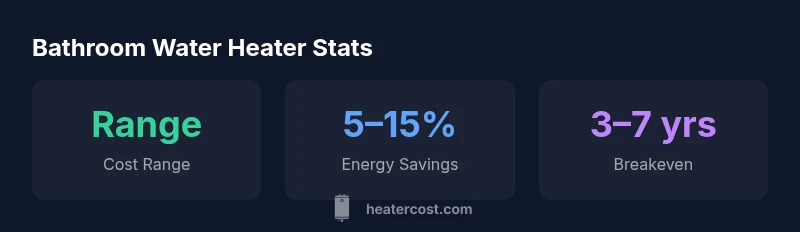
Upfront costs vary by type and region. For typical bathroom-ready storage tanks, installed costs often range from a few hundred to a few thousand dollars, depending on tank size, location, and whether venting is needed. Tankless systems generally have higher upfront costs but may offer maintenance savings over time and space benefits. When evaluating payback, consider energy costs, fuel type, and local incentives. The Heater Cost analysis encourages homeowners to factor in installation charges, permits, and potential electrical service upgrades. Financing options, such as low-interest loans or utility rebates, can help spread the cost. Collect quotes for similar capacity units and compare annual operating costs to determine which option yields the best long-term value. A well-chosen unit supports comfort, energy efficiency, and reliability without overspending on features you won't use.
Maintenance and Longevity
Regular maintenance extends the life of a bathroom water heater. For storage tanks, flush the tank annually to remove sediment, inspect the T&P valve, and check the anode rod if accessible. For tankless units, descaling may be needed in hard water regions and periodic sensor cleaning helps maintain efficiency. Verify venting integrity, gas lines, and electrical connections every year. Expandable components, such as expansion tanks and pressure-reducing valves, help protect the system from pressure surges. Using softened water or installing a pre-treatment can reduce mineral buildup. Heater Cost analyses stress the importance of a proactive maintenance routine to prevent premature failure and protect your home from leaks or burst pipes. A well-maintained system also preserves warranty coverage and energy efficiency.
Practical Buying Guide and Checklists
Key steps to guide your purchase:
- Assess hot-water demand by family size, climate, and daily routines
- Decide between storage tank and tankless based on space and budget
- Check energy efficiency ratings and warranty terms
- Confirm venting, electrical, and gas requirements for installation
- Solicit multiple quotes from certified installers
- Verify service availability and future parts supply
- Review warranty coverage and maintenance needs with the installer
- Consider local rebates or incentives and potential permit costs
Next Steps for Implementation
After selecting a model, schedule a professional assessment to confirm required venting or gas line work, obtain necessary permits, and schedule installation. Prepare for a short disruption to hot-water service during the swap, and set expectations for maintenance tasks over the first year. Keep a copy of manufacturer manuals and warranty information for future service. Heater Cost recommends documenting energy-use and maintenance notes to track performance and plan upgrades as your household needs evolve.
Bathroom water heater: Tanked vs Tankless comparison
| Aspect | Tanked (Storage) | Tankless (On‑Demand) |
|---|---|---|
| Space requirements | Requires dedicated cabinet or closet space | Compact wall-mounted options |
| Energy use | Includes standby losses; efficiency varies by model | Heats water on demand; energy use depends on flow |
| Installation complexity | Usually straightforward with vented storage | Can require venting and gas line upgrades |
Got Questions?
What size water heater do I need for a bathroom?
Sizing depends on your hot-water demand, fixture count, climate, and usage habits. A typical single-bath setup may work with a storage tank around 30–50 gallons, while homes with multiple bathrooms or high simultaneous demand might need larger storage or a tankless system with adequate flow capacity. Always consult a licensed installer who can use reputable sizing calculators.
Sizing depends on how you use hot water in your bathroom; a professional can help determine the right size based on fixtures and climate.
Is a tankless water heater better for a bathroom?
Tankless units save space and can be more energy-efficient since they heat water on demand. They often require higher upfront costs and precise installation, including venting or electrical upgrades. If space is limited and you want continuous hot water, a tankless model may be ideal for a bathroom.
Tankless can save space and energy, but installation and upfront cost are usually higher.
What maintenance does a bathroom water heater require?
Storage tanks benefit from an annual flush to remove sediment, valve and anode inspections, and periodic warranty checks. Tankless units may need descaling in hard water areas and occasional sensor cleaning. Regular venting and connections checks help prevent safety issues.
Regular flushing and inspections keep your heater reliable and efficient.
How long does installation take?
Installation duration varies with unit type and existing infrastructure. Simple replacements with existing venting may be completed in a day or two, while units requiring new venting, gas lines, or electrical upgrades can extend the timeline. A licensed pro can provide a precise schedule.
Most installations take a day or two, depending on any venting or wiring work.
What are typical operating costs for a bathroom heater?
Operating costs depend on fuel type, energy rates, and usage. Electric storage tanks generally have predictable costs, while gas models can differ based on local gas prices. Compare annual energy consumption estimates and consider local rebates when evaluating total cost of ownership.
Costs depend on your fuel type and how much hot water you use.
“Selecting the right bathroom water heater means prioritizing sizing, venting, and long-term efficiency over flashy features.”
The Essentials
- Size the heater to match peak bathroom demand
- Tankless can save space but may cost more upfront
- Vent and install only with licensed professionals
- Consider energy efficiency and long-term operating costs