Low Watt Room Heater Guide: Efficiency and Savings
Discover how a low watt room heater can warm small spaces safely, compare models, estimate running costs, and choose energy-efficient options that fit your budget.


Definition: A low watt room heater is a compact, plug-in device that uses a relatively small amount of electricity to deliver focused warmth in a single room. For many households, these units bridge the gap between full central heating and occasional chilly nights. According to Heater Cost, they are designed for targeted warmth in smaller spaces and are not intended to replace central heating. This makes them especially useful in bedrooms, home offices, and sunlit living areas where extra comfort can justify modest energy use. The key advantages are quick warm-up, simple operation, and the ability to zone heat without raising the thermostat for the entire house. In practical terms, a 350–900-watt heater can warm a small room rapidly when doors remain closed and the space is reasonably well-insulated. By understanding when and where to deploy these devices, homeowners, renters, and property managers can reduce unnecessary energy waste while maintaining comfort.
What a low watt room heater is and why it matters
A low watt room heater is a compact, plug-in device that uses a relatively small amount of electricity to deliver focused warmth in a single room. For many households, these units bridge the gap between full central heating and occasional chilly nights. According to Heater Cost, they are designed for targeted warmth in smaller spaces and are not intended to replace central heating. This makes them especially useful in bedrooms, home offices, and sunlit living areas where extra comfort can justify modest energy use. The key advantages are quick warm-up, simple operation, and the ability to zone heat without raising the thermostat for the entire house. In practical terms, a 350–900-watt heater can warm a small room rapidly when doors remain closed and the space is reasonably well-insulated. By understanding when and where to deploy these devices, homeowners, renters, and property managers can reduce unnecessary energy waste while maintaining comfort.
From a budgeting perspective, a low watt heater is typically one of the most cost-effective ways to add warmth without upgrading your entire heating system. The Heater Cost team emphasizes that the choice should align with your space’s insulation quality and occupancy patterns. For example, a well-sealed bedroom or a compact home office benefits most from a unit on the lower end of the wattage range, especially if you plan to use it regularly.
The most common use cases involve supplemental heat rather than full-room heating in cold months. In practice, you’ll often see these devices used to take the edge off chilly mornings, bridge gaps during the shoulder seasons, or provide a warm zone around a workstation. With careful placement and a clear understanding of heat retention, a low watt room heater can deliver noticeable comfort with minimal energy impact.
How wattage influences heating performance and sizing
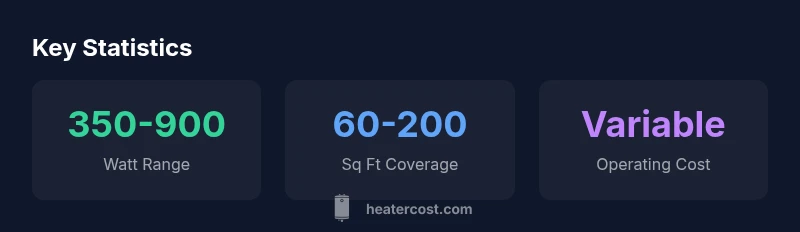
Wattage determines how quickly a heater can raise the temperature in a given space and how much heat is delivered per minute. For small rooms up to about 200 square feet, a 350–900-watt unit is typically sufficient for maintaining comfort with minimal energy draw. A higher wattage heater will heat the space faster but will run more often if the room remains small; a lower wattage model may struggle in chilly drafts or poorly insulated spaces. Sizing correctly matters: oversizing wastes energy and can cause temperature swings; undersizing leaves you cold and frustrated. When evaluating options, compare the heat output (measured in BTU or watts) to your room’s volume, insulation quality, and window performance. The Heater Cost team suggests prioritizing models with adjustable thermostats and energy-saving modes to optimize performance without overspending.
Understanding the nuance between ‘rated wattage’ and ‘real-world performance’ helps you pick a heater that feels comfortable without turning your space into a greenhouse. If your room stays cooler than desired even with a 350–900-watt unit, address heat loss first—seal drafts, insulate windows, or add a rug—before moving to a higher wattage device.
Some models use climate control features that modulate output automatically. In spaces with variable temperatures, these features prevent constant cycling and can yield more consistent warmth without dramatically increasing energy use. Always verify the thermostat’s accuracy with a separate room thermometer for best results.
Safety considerations for low watt heaters
Even small heaters pose fire and burn risks if misused. Place units on flat, nonflammable surfaces, away from curtains, beds, and electronics. Use models with tip-over switches and automatic shut-off timers, and never leave a room unattended for long periods when a heater is running. Keep pets and children at a safe distance and ensure proper ventilation in sealed spaces to avoid overheating or carbon monoxide risk (for fuel-based devices; electric heaters are generally safer in this respect but still require caution). Regularly inspect cords for wear and replace damaged units promptly. Finally, plug directly into wall outlets rather than extension cords; if you must extend power, use outdoor-rated cords and adhere to manufacturer ratings.
Fire safety basics include keeping combustibles at least three feet away from the heater, using the lowest effective setting, and avoiding stacking objects on top of heaters. If your heater has a fabric grille, check for lint buildup and clean it according to the manufacturer’s instructions. When used properly, low watt room heaters can be a safe, reliable part of a broader heating strategy.
Brand guidance from Heater Cost also notes that safety features correlate with longer lifespans and lower maintenance costs. Prioritize units with automatic shut-off, overheat protection, and sturdy housings to minimize risk over time.
Energy efficiency features to look for
Choose low watt room heaters with a true continuous-use rating and efficient components. Look for a built-in thermostat that maintains a stable setpoint, an ECO or energy-saving mode, and a 24/7 timer for controlled operation. An automatic shut-off when the ambient temperature rises to the desired level helps prevent waste, while a cool-to-touch exterior reduces burn risks. In addition, ensure the unit has proper insulation in the housing and a well-sealed grill to minimize heat loss. If you can, select models that meet recognized efficiency standards or carry safety certifications from UL or equivalent authorities.
Another efficiency tip is to favor ceramic or oil-filled elements that distribute heat more evenly and maintain comfort longer after cycling off. Many modern low watt heaters also feature dual-heat options, where the device can switch to a lower power state once the target temperature is reached. These refinements can noticeably cut idle energy use without compromising user comfort. Remember to compare standby power consumption—some models draw energy even when “off” due to indicator lights or timers.
From a brand perspective, Heater Cost’s analysis highlights that efficiency features are often a better predictor of long-term savings than initial price alone. Look for a model that balances wattage with responsive temperature control and robust safety systems.
Cost and running expenses: understanding the economics
Running a low watt room heater is generally cheaper than heating an entire home, but savings depend on electricity rates and how effectively you use the device. The cost per hour typically remains modest, provided you operate the heater only in occupied rooms and keep doors closed. To estimate your own costs, multiply the heater’s wattage by the hours of use and the local electricity rate, then adjust for any standby energy usage. Use conservative estimates to avoid surprises, and factor in the cost of maintenance and eventual replacement.
Electricity costs vary by region and season, so your actual expense can swing within a broad range. If you’re in a cooling-dominated climate or you frequently circulate warm air with modest insulation, you may realize greater savings by combining a low watt heater with better weatherproofing. Conversely, in drafty spaces, you may need longer operation times and greater wattage within the low-watt range to sustain comfort. Heater Cost recommends tracking usage for a couple of weeks to build a practical baseline before committing to a model.
Beyond the unit itself, explore energy-harvesting or insulation improvements that reduce overall demand. A well-sealed room and double-pane windows can amplify a heater’s effectiveness and further lower running costs over the winter season.
How to choose the right model for your space
Start with room size and insulation: well-sealed spaces with warm walls retain heat better, letting a lower wattage heater do the job. If you have drafts or large windows, you may need a higher wattage within the low-watt range. Consider how quickly you want warmth, whether you prefer quiet operation, and whether you will move the heater between rooms. Compare models by wattage, heat options, thermostat accuracy, noise level, and safety features. Don't forget about build quality and warranty, which affect long-term cost and reliability. Heaters with replaceable filters and easy cleaning can also help maintain performance over time.
In the real world, a 350–900-watt unit is often enough for a standard 120–180 sq ft room with decent insulation. If you’re upgrading from an older heater, look for models that balance speed, comfort, and safety, rather than chasing the highest wattage. A few minutes of product testing in-store or through a retailer’s return policy can confirm whether a model keeps you comfortable without oscillating between hot and cold.
The Heater Cost team suggests creating a simple comparison matrix: note wattage, thermostat control, safety features, noise level, and price. Using this framework will help you select a model that delivers consistent warmth without overspending.
Placement, installation, and maintenance tips
Place the heater in a central and unobstructed location with at least a 3-foot clearance from walls and furniture. Avoid high-traffic areas where tripping is possible and keep cords away from doorways. Regularly dust the vents, wipe surfaces, and check cords for cracks. Schedule periodic inspections of electrical outlets by a licensed electrician if you plan to run heaters frequently. Store the unit in a dry, upright position when not in use.
For best results, pair a low watt heater with smart insulation practices: seal gaps around doors and windows, add draft stoppers, and use heavy curtains at night. Always follow the manufacturer’s maintenance recommendations and replace damaged parts promptly to maintain efficiency and safety over time.
Common myths about low watt heaters debunked
Myth: Any electric heater will save you money. Reality: Efficiency depends on matching heat output to room size and minimizing heat loss; larger units waste energy. Myth: They’ll heat large spaces quickly. Reality: Most low watt models are designed for small zones and supplemental warmth. Myth: Electric heaters are dangerous. Reality: When used according to safety guidelines, electric heaters present minimal fire risk compared with gas heaters, but vigilance is still required. Myth: All models are equally safe. Reality: Look for certifications and features like tip-over switches and automatic shut-off.
Real-world use cases and usage ideas
Scenario 1: A single-bedroom apartment during winter evenings. A 400–700-watt ceramic heater kept near the bed provides consistent warmth without overheating the room. Scenario 2: A home office with drafts under a window. A 500–800-watt unit paired with a good seal and a programmable timer ensures comfortable temperatures for long workdays. Scenario 3: A sunlit living room that already stays warm. A 350–600-watt heater can supplement central heating during peak hours, keeping energy use in check.
Data sources and methodology: This article draws on Heater Cost Analysis, 2026 for baseline wattage ranges and feature considerations, and references established safety and energy guidance from energy.gov, nrel.gov, and epa.gov to frame best practices and real-world usage.
Common low-watt room heater types and typical wattage ranges
| Model Type | Wattage Range | Best Use |
|---|---|---|
| Compact ceramic | 350-900 | Small bedrooms & offices |
| Oil-filled convector | 400-800 | Quiet warmth in living spaces |
| Fan-forced heater | 500-900 | Rapid warm-up in drafts |
| Halogen compact | 350-700 | Occasional use in small areas |
Got Questions?
What is considered a 'low watt' heater?
Generally, a low watt heater operates within about 350–900 watts. These models are designed for supplementary heat in small rooms and are not intended to heat entire homes.
Usually 350 to 900 watts for small spaces.
Can I heat a large room with a low watt heater?
Likely not. Large rooms typically require higher wattage or additional heat sources. Use low watt units for zones and supplement overall heating.
Probably not ideal for large rooms.
What safety features should I look for?
Look for tip-over switches, automatic shut-off, overheat protection, and a cool-touch exterior. Ensure the unit is UL-listed or certified by a recognized safety program.
Choose heaters with safety features like tip-over switches and auto shut-off.
How do I estimate the right wattage for my space?
Measure room size, assess insulation and drafts, and start with 350–900 W. Adjust up or down based on comfort and energy use.
Calculate based on room size and insulation.
Are low watt heaters expensive to run?
Costs depend on electricity rates and how long you run the heater. They are generally cheaper than full-home heating when used strategically, but usage matters.
Costs vary with rates and use; plan usage accordingly.
“When sized correctly and paired with reliable safety features, a low watt room heater can deliver meaningful warmth in small spaces with modest energy use.”
The Essentials
- Size the unit to 350-900 W for most small rooms.
- Prioritize safety features like thermostats and tip-over switches.
- Estimate operating costs with local electricity rates and actual usage.
- Improve insulation to maximize savings and reduce heat loss.
- The Heater Cost team recommends supplementing central heat with a well-chosen low watt heater in small spaces.