How Much Is a Water Heater Installed? A Practical Cost Guide
Learn what drives installation costs, typical price ranges by type, and money-saving tips. A data-driven guide from Heater Cost helps homeowners budget accurately.


How much is a water heater installed? According to Heater Cost, installation costs vary widely by unit type, energy source, and home setup, but planning with a professional estimate gives you a reliable range. This quick guide breaks down typical installed ranges for electric storage, gas storage, and tankless models, plus hidden fees, permits, and financing options to help homeowners budget confidently.
Why installation costs vary
For homeowners, the price tag to install a water heater is rarely a single number. The installed cost depends on equipment choice, existing plumbing and electrical capacity, venting needs, and whether the old unit must be removed. Regional labor rates, permit requirements, and disposal fees also play a major role. In practice, even two homes with the same model can see different totals because one location may require additional venting work or electrical upgrades. If you are replacing an old unit, installers can often reuse some components, which reduces labor time but not always; if changes are needed, expect higher labor charges. And if you’re moving from electric to gas or from tank to tankless, expect a bigger jump in installation complexity and price. A careful plan helps you compare quotes accurately. According to Heater Cost, the most reliable estimates come from on-site assessments that check venting, clearance, and accessibility. If you are replacing an old unit, installers can often reuse some components, which reduces labor time but not always; if changes are needed, expect higher labor charges. A careful plan helps you compare quotes accurately. A clear plan also ensures you can evaluate whether permits, venting, or electrical upgrades are required, which often drives the final price.
Cost by type: electric storage, gas storage, tankless
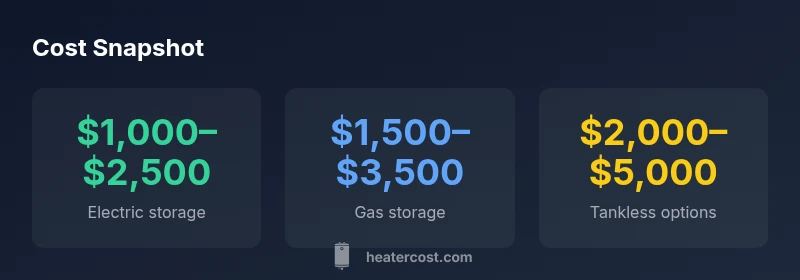
Electric storage water heaters are typically the most affordable to install because they rely on existing electrical circuits and basic venting. Gas storage models require gas line work and venting, which adds cost. Tankless models, whether electric or gas, involve more complex installation, often including upgraded gas lines, increased electrical capacity, and recirculation pumps. Here are typical installed cost ranges to set expectations: Electric storage: $1,000–$2,500; Gas storage: $1,500–$3,500; Tankless: $2,000–$5,000. Note that these ranges reflect national averages and can vary by region, home size, and existing infrastructure. The Heater Cost Analysis, 2026 finds that the biggest cost drivers are labor and any required upgrades to electrical panels, gas lines, or venting. Always request a fully itemized quote to distinguish parts, labor, and permits. Depending on locale, some jurisdictions may require energy efficiency upgrades that affect price.
Hidden costs to budget
Beyond the unit price and basic install, several hidden costs frequently surprise homeowners. Permits can add hundreds of dollars and time to the project. If the existing electrical panel is undersized or the gas line is insufficient, upgrades are needed—this means additional labor and material charges. Venting work, drainage systems, pans, expansion tanks, new shut-off valves, and disposal of an old heater all contribute to the total. If the installation involves moving the unit to a new location or increasing attic or crawlspace access, you may see higher labor costs. A reputable installer will provide a line-item breakdown so you can see what portion covers equipment, labor, and permits, and what portion covers contingency costs. Guidance from Heater Cost suggests planning for a 10–15% contingency to cover unexpected early-stage discoveries in retrofit jobs.
How to estimate for your home (step-by-step)
- Define your energy source preference (electric vs. gas) and decide if you want storage or tankless models. 2) Gather on-site quotes from at least three licensed electricians or plumbers with experience in water heater installs. 3) Ask for a fully itemized quote that lists parts, labor, permits, disposal, and any required upgrades. 4) Measure the available space and identify venting, gas lines, electrical capacity, and access for removal of the old unit. 5) Check local permit requirements and expected lead times. 6) Compare quotes not only on price but also on warranty, service availability, and expected efficiency. 7) Consider long-term operating costs and potential rebates or tax credits. 8) Confirm whether the quote assumes reusing existing components or replacing the entire system. 9) Schedule a post-install inspection to verify safety and compliance. Real-world planning reduces surprises when the electrician or plumber arrives.
Financing, incentives, and warranties
Many homeowners can finance water heater installations and spread the cost over time. Look for options that offer low or zero-interest introductory periods, as well as warranties that cover both parts and labor. Federal and state incentives for energy efficiency vary by year and program, so check现 local programs and energy.gov resources for up-to-date information. Some manufacturers include extended warranties when you register the product and schedule annual maintenance. If your existing system is older, ask about bundled maintenance contracts that can reduce long-term costs and improve reliability.
Seasonal considerations and regional differences
Climate and building codes influence installation complexity and price. In wetter, colder regions, extra insulation, venting, and drainage considerations can raise costs. Urban areas may have higher labor rates and permit fees, while rural locations could incur longer travel times and higher logistics costs. Additionally, some regions require more stringent venting or gas line upgrades that add to the total. Your local contractor should be aware of applicable codes and permit timelines, which can affect both price and project duration.
Energy efficiency and payback
Higher-efficiency models often cost more upfront but can reduce energy bills over time. Tankless or high-efficiency gas or electric units may offer payback periods of several years, depending on usage and energy prices in your area. When evaluating quotes, compare energy factors (EF) or uniform energy factor (UEF) ratings, standby heat losses, and standby losses. If you plan to stay in the home for more than a few years, the energy savings can make the higher upfront cost worthwhile. The Heater Cost team notes that efficiency incentives can tilt the balance toward a more expensive but more efficient model.
Maintenance costs and longevity
Regular maintenance helps extend the life of a water heater and prevent costly breakdowns. Electric storage and gas storage units typically require annual inspections, anode rod checks, and occasional flushing to remove sediment. Tankless units may require descaling in hard-water areas. Budget for periodic maintenance visits, replacement parts (valves, sensors), and possible mineral buildup remediation. A well-maintained system often lasts longer and performs more efficiently, which lowers operating costs over time.
Reading installation quotes: what to look for
When reviewing quotes, read each line item carefully. Ensure the quote includes equipment cost, labor hours, permits, venting, electrical work, fittings, and disposal. Ask the installer to explain any line item that seems unclear and request a written warranty for both parts and labor. A good quote also notes whether any needed upgrades (electrical panel, gas line, vent stack) are included or priced separately. Finally, compare the estimated lead times and the expected date of final inspection to avoid project delays.
Installed water heater cost ranges by type
| Type | Typical Installed Cost Range | Notes |
|---|---|---|
| Electric storage | 1,000–2,500 | Most common; varies by tank size and venting |
| Gas storage | 1,500–3,500 | Includes gas line work and venting |
| Tankless (gas or electric) | 2,000–5,000 | Higher upfront; potential energy savings |
Got Questions?
What factors affect water heater installation cost?
Key factors include unit type (electric vs gas, storage vs tankless), existing plumbing and electrical capacity, venting needs, and whether an old unit must be removed. Labor rates and permit requirements also play major roles.
Costs depend on unit type and existing setup. Expect labor, permits, and any upgrades to influence the total.
Are permits required for installation?
In many jurisdictions, permits are required for water heater installs, especially when gas lines, venting, or electrical work is involved. Your installer should handle permit applications and include them in the quote.
Permits are often required; your installer will typically manage the process.
Is it cheaper to replace with the same type?
Replacing with the same type can be cheaper because it often leverages existing connections and venting. Changes to a different energy source or model may require upgrades.
Sticking to the same type can save on labor and parts.
Should I upgrade electrical or gas lines?
If the current lines or panel aren’t up to code for the new unit, upgrades may be necessary. Your quote should clearly state whether upgrades are included or priced separately.
Upgrades may be needed if the system can’t support the new unit.
Do tankless heaters save money over time?
Tankless heaters often have higher upfront costs but can reduce operating costs over time with energy efficiency and space savings. Payback depends on usage patterns and local energy prices.
Tankless units can pay off over time, depending on use and energy prices.
Can I finance installation?
Yes. Many manufacturers and lenders offer financing options for water heater installations. Look for low-interest terms and warranties that cover labor.
Financing options are commonly available.
“Installation costs reflect more than the unit price; labor, venting, and permits often determine the final bill. A careful plan and a clear quote help homeowners compare options and avoid surprises.”
The Essentials
- Budget for permits and disposal fees
- Electric storage is usually cheapest to install
- Tankless offers space savings but higher upfront costs
- Ask for an itemized quote including labor and parts
- Check local incentives and warranty terms