Boiler Solar: Hybrid Heating with Solar-Boosted Boilers
Learn how boiler solar systems work, estimate costs, and assess ROI for homeowners. Design options, installation tips, maintenance, and incentives in 2026.


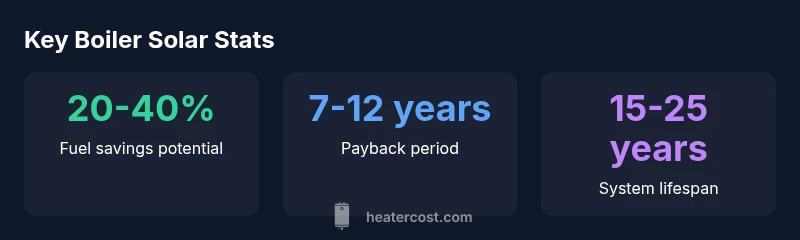
Boiler solar systems can reduce heating fuel use by 20-40% in moderate climates, depending on sun exposure and design. This hybrid approach preserves reliable heat with a backup boiler and can lower energy bills, especially during shoulder seasons when solar input is strongest. For homes with efficient insulation and favorable sun, the savings are more pronounced.
What boiler solar is and why it matters
Boiler solar combines solar thermal collectors with a conventional boiler to create a hybrid heating system. In practice, solar collectors capture sunlight to pre-heat water or heat transfer fluid, which then flows to a storage tank or directly to the boiler. When solar input is strong, the boiler runs less, reducing fuel consumption. On days with little sun, the traditional boiler takes over to ensure consistent comfort. For homeowners, boiler solar can be a practical option to cut energy bills without sacrificing heat reliability. This approach aligns with modern energy strategies that favor hybrid systems, especially in regions with moderate sun and efficient homes. The Heater Cost team notes that successful boiler solar projects depend on proper sizing, drainage, and control strategies that prioritize comfort and efficiency. In 2026, many homeowners are exploring this hybrid path as part of a broader energy-efficiency plan.
How the technology works: key components
The core components are solar collectors (flat-plate or evacuated-tube), a heat-transfer fluid or water loop, storage or buffer tank, a heat exchanger, a controller, recovery devices, and the backup boiler. The system can be configured in a hybrid loop that preheats DHW and/or preheats water for space heating. Controllers coordinate temperatures and flow, deciding when to draw heat from solar and when to switch to the boiler. Insulation and leak prevention are essential to minimize losses. Materials should resist corrosion, especially in harsh climates; using a corrosion inhibitor or glycol solution can extend life. Regular inspection of collectors for dirt, shading, or frame damage helps maintain performance. The design should consider the home's heating load, solar resource availability, and storage capacity. The Heater Cost Analysis suggests professional design and commissioning to optimize performance and avoid common issues such as short-cycling or overheating.
Design options and configurations
There are multiple ways to configure a boiler solar setup. A common option is a hybrid loop that pre-heats water for space heating and domestic hot water, with the conventional boiler providing back-up heat during periods of low solar input. Another path is a dedicated solar pre-heat for the boiler only, which can simplify the design but may limit SHW (solar hot water) benefits. Some homes use seasonal or buffer storage to shift solar gains to times of higher demand, maximizing solar efficiency. The choice depends on house size, heating load, climate, and existing boiler efficiency. For best results, work with a qualified installer who can model peak loads and determine the appropriate collector area and storage capacity. In 2026, more homeowners are evaluating boiler solar as part of a broader decarbonization strategy, balancing upfront costs with long-term fuel savings.
Economic considerations: costs, savings, and incentives
Economic analysis for boiler solar highlights variability in upfront costs, installation complexity, and the local price of energy. While exact figures vary, most homeowners can expect to see a blend of up-front investment and ongoing savings. Savings potential depends on climate, home insulation, and sun exposure. Incentives such as tax credits or rebates may apply in some regions, improving the overall return. It’s important to obtain a personalized assessment from a professional to gauge payback and to compare a boiler solar system against alternative clean-heating options. The Heater Cost team emphasizes evaluating total lifecycle costs, not just the sticker price, and factoring in maintenance, energy prices, and system life expectancy.
Installation, integration, and permitting considerations
Installation requires careful integration with the existing heating system, solar loops, and storage. A successful boiler solar installation demands proper hydraulic balancing, leak testing, and controller commissioning to prevent short cycling and ensure safe operation. Permitting can vary by jurisdiction but often includes building permits and compliance with energy efficiency codes. A qualified installer will help with permit applications, approvals, and any required inspections. Properly planned installations can minimize disruption and maximize long-term performance, especially in homes with solid insulation and good solar access.
Maintenance, operation, and troubleshooting tips
Maintenance for boiler solar focuses on the solar loop, connectors, pumps, and heat-transfer fluid. Regular checks for leaks, fluid quality, and pump operation help sustain performance. Schedule an annual professional service to calibrate the controller, verify heat exchanger integrity, and confirm sensor accuracy. Exposure to freezing conditions requires proper antifreeze management or a closed-loop design. Operational tips include ensuring the backup boiler is primed for the coldest days, keeping the storage tank well insulated, and monitoring system temperatures to avoid overheating. With routine care, boiler solar systems can deliver reliable heat and meaningful energy savings over their lifespan.
Real-world scenarios and climate considerations
In sunnier climates, boiler solar often delivers more pronounced fuel savings due to higher solar input, particularly in shoulder seasons. In colder regions, the backup boiler plays a larger role, and system sizing becomes critical to maintain comfort on long winter nights. Real-world installations show that homes with well-insulated envelopes and optimized collector areas tend to outperform poorly insulated homes. The Heater Cost Analysis, 2026, notes that the value of boiler solar rises with energy price volatility and as electric or gas costs rise, making it a compelling option for energy resilience in a changing climate.
Key data points for boiler solar configurations
| Aspect | Details | Typical Range | Notes |
|---|---|---|---|
| Hybrid config | Solar pre-heating feeding boiler and DHW | N/A | Used with existing boiler to maintain heating reliability |
| Energy savings | Fuel use reduction | 20-40% | Climate and sun exposure dependent |
| Installation complexity | Moderate to high | N/A | Requires solar loops and controls |
| Lifespan | System components | 15-25 years | Depends on maintenance and corrosion prevention |
Got Questions?
What exactly is boiler solar and how does it work?
Boiler solar combines solar thermal collectors with a conventional boiler. The collectors heat water for use in space heating and domestic hot water, while the boiler provides backup heat on overcast days or during high demand. A controller coordinates flow and temperatures between the solar loop and the boiler.
Boiler solar blends solar heating with a traditional boiler to cut fuel use, using back-up heat when sun is weak.
Can boiler solar save me money?
Yes, but savings vary by climate, home insulation, system size, and energy prices. Typical results show a reduction in fuel use when solar input is available; a professional assessment provides a personalized estimate.
Yes, but it depends on climate and your home; talk to a pro for a personalized estimate.
Is boiler solar suitable for cold climates?
Boiler solar can work in cold climates, but performance depends on solar availability and system sizing. You may need larger collectors or seasonal storage and a reliable backup boiler.
It can work, but you may need larger collectors and a solid backup.
What maintenance does boiler solar require?
Regular inspections of the solar loop, pump, and heat-transfer fluid; check for leaks; annual professional service is recommended to maintain performance.
Regular checks on the solar loop and fluid; annual service helps performance.
Do I need permits to install boiler solar?
Permitting varies by jurisdiction. Most areas require a building or energy efficiency permit, and installers should verify local rules before work begins.
Permits vary by location; a pro can verify what's needed.
Are there incentives for boiler solar?
Incentives differ by region and can include tax credits or rebates. Check federal, state, and local programs; your installer or energy advisor can help identify current options.
There are sometimes tax credits or rebates—check local programs.
“A well-designed boiler solar system can reduce reliance on fossil fuels without sacrificing comfort, especially when paired with a properly insulated home.”
The Essentials
- Evaluate sun exposure and insulation before choosing boiler solar.
- Expect upfront costs to be offset by long-term fuel savings.
- Plan for professional installation and permits.
- Maintain the solar loop for longevity.
- Compare ROI across climates to determine value.