Sun Heater: A Practical Guide to Solar Heating Costs in 2026
A comprehensive, data-driven look at sun heaters (solar thermal systems), covering how they work, costs, installation, climate suitability, maintenance, and ROI for homeowners in 2026.


A sun heater, also known as a solar thermal system, uses sunlight to heat water or air for domestic use and space heating. It can lower utility bills in sunny regions and reduce fossil-fuel reliance. Costs vary widely by system type, storage needs, and roof constraints, but typical installed ranges reflect ongoing savings potential and climate suitability. This definition frames solar thermal options for homeowners evaluating long-term affordability.
What is a sun heater?
A sun heater is a broad term used for solar thermal systems that capture sunlight to generate heat for domestic hot water or space heating. For homeowners, a sun heater represents a strategic investment that can lower reliance on natural gas, oil, or electric resistance heaters. According to Heater Cost, the sun heater family includes both solar water heating systems and solar space heating solutions. The core idea is simple: sunlight is converted into heat with components that store energy for use when the sun isn’t shining. For many households, a sun heater aligns with long-term affordability and resilience against rising fuel costs.
How solar thermal systems work
A sun heater typically uses collectors (flat-plate or evacuated-tube) mounted on a roof or in a sunny yard. In solar water heating, collectors warm a heat-transfer fluid that circulates to a storage tank, delivering hot water on demand. In solar space heating, collectors heat the air or a liquid that feeds a radiant or forced-air system. A well-designed sun heater includes a controller, an expansion tank, and freeze or anti-freeze protection where needed. The Heater Cost team emphasizes that proper sizing, insulation, and storage determine performance—especially in shoulder seasons when sun exposure is variable.
Types of sun heaters
There are several configurations to fit different homes and budgets. First, solar water heaters come in two main forms: passive and active. Active systems use pumps to move the heat-transfer fluid, offering flexibility but adding complexity. Passive systems rely on gravity and natural convection, with fewer moving parts and potentially lower maintenance. For space heating, you’ll encounter solar air collectors and solar hydronic systems. Flat-plate collectors are rugged and economical for moderate climates, while evacuated-tube collectors excel in colder or cloudier locales. Integrated storage can minimize standing heat loss, but it requires careful placement and ventilation. When evaluating sun heaters, consider roof orientation, shading, and storage needs. The Solar Heating approach should integrate with your existing water heater or furnace to maximize savings, and Heater Cost highlights that even modest sun exposure can reduce daytime heating loads.
Costs and cost ranges
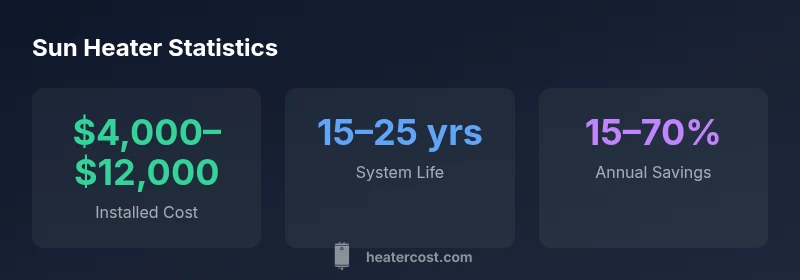
Costs for sun heaters vary by type, climate, and installation specifics. Equipment costs are influenced by collector type, storage capacity, and whether you choose a passive or active system. Installation costs depend on roof penetration, plumbing or ductwork adjustments, and electrical work if pumps or controllers are added. The Heater Cost Analysis, 2026 indicates typical installed ranges from a few thousand to over ten thousand dollars, with higher upfront costs usually offset by longer-term energy savings. Guidance from Heater Cost suggests factoring in weather patterns, available incentives, and potential increases in home value when calculating ROI. In practice, a detailed site assessment is essential to determine the most cost-effective sun heater configuration for your home.
Installation considerations
Installing a sun heater is not a DIY-only task; it requires licensed professionals for plumbing, electrical work, and building permits where applicable. Roof integrity, mounting hardware, structural load, and wind exposure must be evaluated. A well-executed installation includes proper insulation around pipes, a compatible storage tank, and a control system that integrates with existing hot-water or heating systems. Permitting and inspections vary by jurisdiction, so plan for potential delays. The installation timeline can range from a few days for smaller, simpler setups to several weeks for larger, integrated systems. Budgeting for design, permits, and contingency is essential when planning a sun heater project.
Climate and regional suitability
Sun heaters deliver the best value in regions with abundant sun hours and strong seasonal sun patterns. In milder, sunnier climates, payback tends to be shorter, while in northern or cloudier areas performance hinges on storage capacity and insulation. Heater Cost notes that even in less sunny regions, solar thermal can supplement conventional heating and reduce peak loads. To gauge suitability, homeowners should analyze sun hours, seasonal temperature fluctuations, and roof orientation. Local utility programs or incentives can tilt the economics toward a favorable ROI, making a sun heater a smart consideration in many climates.
Maintenance and longevity
Sun heaters generally require less maintenance than many mechanical alternatives, but periodic checks are important. Inspect solar collectors for dirt, debris, and shading; clean as needed to maximize heat absorption. Check pumps, controllers, and valves for proper operation, and ensure antifreeze in closed-loop systems remains at the right concentration. A well-maintained sun heater can operate effectively for 15–25 years, with seasonal tune-ups contributing to longer service life. Heater Cost emphasizes that proactive maintenance helps sustain performance, particularly in areas with hard water or extreme temperatures that may affect efficiency and storage.
Comparing sun heaters to other heating options
Compared to traditional electric or gas water heaters, sun heaters offer significant long-term savings if sun exposure is favorable and storage is adequate. When stacked against heat pumps, solar thermal can complement HVAC systems by offsetting hot water or space heating demand rather than replacing them entirely. In cold climates, the effectiveness of a sun heater depends on storage and backup heating. The decision often hinges on local energy prices, incentives, and roof orientation. For many homeowners, a hybrid approach—solar thermal paired with a conventional backup—delivers consistent comfort while moderating energy costs, as Heater Cost analyses consistently show in 2026 data.
Steps to evaluate your home for a sun heater
- Assess sun exposure: map winter and summer sun angles on your property. 2) Check roof suitability: assess orientation, pitch, and shading from trees or structures. 3) Estimate storage needs: determine daily hot-water or heat-demand requirements. 4) Review incentives: identify federal, state, or utility programs that offset upfront costs. 5) Get quotes from licensed installers: compare equipment quality, warranties, and projected payback. 6) Run a simple ROI calculation: weigh upfront costs against expected energy savings over 15–25 years. This approach, recommended by Heater Cost, helps homeowners decide whether a sun heater is right for their home.
Comparison of solar heating options
| System Type | Pros | Cons | Typical Cost Range | Typical Payback (years) |
|---|---|---|---|---|
| Solar water heater (active) | High hot-water supply; faster heat delivery | Requires installation of storage and plumbing; electricity for pump | 4,000–12,000 | 5–12 |
| Solar space heater (air-based) | Cuts space heating demand; flexible placement | Requires space and ductwork; climate-dependent | 6,000–15,000 | 6–12 |
| Passive solar water heating | Low maintenance; simple design | Limited control over heat delivery | 3,000–10,000 | 8–15 |
Got Questions?
Is a sun heater worth it for a small home?
For small homes with decent sun exposure and modest hot-water or space-heating needs, a sun heater can offer meaningful energy cost reductions over time. The upfront cost is a consideration, but ROI improves with incentives and efficient storage. Always run a site-specific cost-benefit analysis.
Yes, if you have good sun and modest needs; a quick home assessment helps confirm ROI.
Do sun heaters work in cold or cloudy climates?
Sun heaters can operate in colder or cloudier climates, but performance hinges on storage, insulation, and system design. Evacuated tubes perform better in cold weather, and larger storage reduces reliance on continuous sun. Pairing with a backup heater improves reliability.
They can work in less sunny places with proper storage and backup.
What maintenance does a sun heater require?
Routine checks focus on collector cleanliness, pump operation, and coolant or antifreeze levels. Inspect for leaks, ensure controllers function, and keep shade minimal. Annual or biannual professional servicing keeps efficiency high and components lasting longer.
Keep it clean, check pumps, and get a yearly service.
How long does installation take?
Installation typically ranges from a few days to a few weeks, depending on system type, storage size, and whether permits are required. Complex hybrid systems with integration to existing heating add time, so plan for scheduling and inspections.
Most projects wrap up in a few days to a few weeks, depending on scope.
Are there government incentives for solar thermal systems?
Many regions offer rebates, tax credits, or performance-based incentives for solar thermal installations. Availability varies by location and program year, so consult local energy offices or utility programs to maximize benefits.
Yes, check local programs for rebates and credits.
“Solar thermal systems offer reliable, long-term savings when designed for the home’s sun profile and backed by proper maintenance.”
The Essentials
- Identify sun exposure before selecting a sun heater
- Expect wide cost ranges based on system type and storage
- Factor incentives to shorten the payback period
- Maintenance is typically lighter than conventional systems
- Hybrid configurations can optimize performance in mixed climates