Solar Heater for House: Costs, Benefits, and Setup
Explore solar heater for house options, costs, and setup. Learn how solar thermal systems can cut heating bills, storage needs, backup requirements, and which incentives boost ROI.


A solar heater for house refers to a solar thermal heating system that captures sunlight with collectors to heat water for domestic use or air for space heating. It reduces dependence on fossil fuels, lowers energy bills, and requires solar collectors, a storage tank, and an auxiliary backup heater for cloudy days.
What a solar heater for house is
A solar heater for house refers to a solar thermal heating system that captures sunlight with collectors to heat water for domestic use or air for space heating. It can reduce reliance on fossil fuels, trim seasonal energy costs, and provide a more resilient heat supply during power outages. According to Heater Cost, such systems combine collectors, a storage tank, a heat exchanger, and a control that manages the flow of heat. A typical setup includes an auxiliary backup heater for periods of limited sun, ensuring comfort even on overcast days. Before you commit, assess your sunny days per year and your heating load to determine if solar heating is a good fit for your home. When evaluating options for a solar heater for house, consider climate, household demand, and available space for equipment.
How solar thermal systems work
Solar heaters for house operate by circulating a heat transfer fluid (often water or glycol) through solar collectors mounted on a roof or ground array. In sunny weather, the collectors heat the fluid, which then travels to a storage tank where the heat is transferred to water or used to warm air via a heat exchanger. A pumping and control system schedules heat delivery to meet demand, while a back-up heater kicks in during cloudy days or peak loads. The beauty of a solar heater for house is that it stores energy for later use, reducing peak solar reliance and spreading out energy costs over time. Proper insulation, leak checks, and regular controller calibration are essential to maintain efficiency year-round.
Types of collectors and systems
There are several configurations of solar heaters for house, each with pros and cons. Flat-plate collectors are common for domestic hot water and modest space heating, offering durability and straightforward maintenance. Evacuated-tube collectors perform better in cold or low-sun conditions and can be more efficient in winter, which matters for a solar heater for house in colder climates. For space heating scenarios, solar air collectors heat room air directly or preheat the air that enters a conventional system. When selecting a system, consider climate, roof orientation, shading, and available storage space. A well-matched system minimizes auxiliary energy use while delivering reliable performance through the shoulder seasons and winter months.
Sizing and climate considerations
Sizing a solar heater for house requires matching system output to anticipated demand and local solar resources. A larger system captures more sun but can be expensive; a smaller system may underperform in winter. Climate determines the economic viability: sunnier regions with long heating seasons typically see faster payback. Pay attention to collector area, storage capacity, and the angle of installation. Location matters: southern exposures with minimal shading perform best in the northern hemisphere. In colder, cloudier regions, pairing with an efficient backup system ensures reliability. A precise load calculation helps avoid oversizing and ensures the system meets comfort targets without excessive upfront costs.
Storage, backup, and integration with existing heating
Storage is a critical feature of a solar heater for house. A well-sized tank preserves heat for early morning or evening use and reduces cycling on the backup heater. In many setups, the solar loop preheats domestic hot water, which then feeds a conventional boiler or heat pump for space heating. Integrating a solar heater for house with radiant floor systems or forced-air zones expands the benefits. Consider buffer tanks, heat exchangers, and anti-freeze solutions for glycol loops in colder climates. A properly integrated system minimizes standby losses and improves overall efficiency.
Costs, incentives, and financing
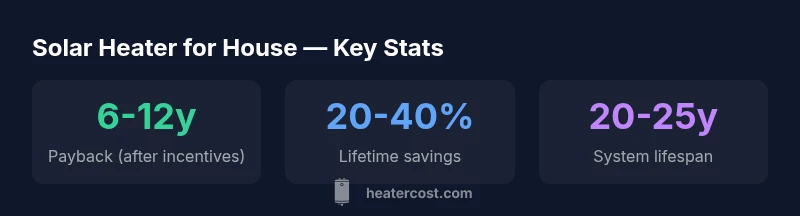
Costs for a solar heater for house vary widely based on system type, storage, and installation complexity. Typical installed ranges can be substantial but are offset by long-term savings on energy bills. Incentives, rebates, and tax credits can dramatically shorten the payback period. When evaluating options, compare equipment quality, warranties, and expected performance rather than just the upfront price. Financing options, solar leases, or PPA arrangements may reduce upfront burden, but interest and contract terms should be weighed against total lifetime savings. Remember that incentives and utility programs change by location, so consult local program details before committing.
Installation, permits, and maintenance
Installing a solar heater for house involves planning, permits, and system integration with your current plumbing or HVAC. Homeowners typically need building permits, code-compliant storage and risk mitigation, and professional certification for safe operation. After installation, routine maintenance includes inspecting collectors for debris, testing insulation, flushing tanks or glycol loops, and calibrating controllers. A well-maintained system maintains performance and helps preserve warranties. Consider a maintenance plan that includes annual inspections and periodic efficiency testing to keep your solar heater for house operating at peak levels.
Real-world scenarios and case studies
In a sunny coastal climate, a solar heater for house paired with a small buffer tank and a high-efficiency boiler can deliver significant hot-water and space-heating savings, with a payback period that often falls within the lower end of the range due to favorable incentives. In a colder inland climate, evacuated-tube collectors paired with larger storage can maintain performance through winter, though backup usage will be higher. Real-world performance hinges on local sun exposure, household energy habits, and how well the system is integrated with existing heating appliances. The Heater Cost team emphasizes modeling these scenarios to avoid over-investing in components that yield marginal gains.
Steps to prepare for installation
- Conduct a professional site assessment to determine sun exposure and roof suitability.
- Evaluate storage needs based on daily heating load and user habits.
- Compare at least two reputable installers, focusing on system type, warranties, and service plans.
- Review available incentives and calculate net ROI after credits.
- Plan for future expansion by leaving space for additional collectors or tank upgrades.
- Confirm permitting requirements and inspection schedules with your local authority.
Comparison of solar heating system types
| System Type | Avg Lifespan | Typical Efficiency |
|---|---|---|
| Solar water heater (flat-plate) | 15-20 years | 40-60% (collector efficiency) |
| Solar water heater (evacuated-tube) | 20-25 years | 50-70% |
| Solar space heating (air-based) | 15-25 years | 40-70% |
Got Questions?
Do solar heaters work in winter or during cloudy days?
Solar heaters for house still collect sun on clear days in winter and can provide meaningful heat. In low-sun periods, a backup heater maintains comfort. Performance depends on collector type, storage, and system sizing.
Yes. They work best with clear, sunny days but a well-sized system with storage and backup keeps you comfortable even when clouds roll in.
Is storage required for most solar heating systems?
Storage is typically desirable for solar heaters for house to balance daily heat production with demand. A storage tank or thermal battery smooths supply, reduces backup use, and improves convenience.
Storage helps you use heat when the sun isn’t shining, reducing reliance on backups.
What is the typical upfront cost range for a home installation?
Costs vary by system type, size, and installation specifics. A common range for residential solar heaters for house falls roughly within several thousand dollars before incentives.
Costs depend on system size and type, but incentives can improve payback dramatically.
How long does installation take?
Most residential installations take a few days to implement, plus permitting time. Final timelines depend on equipment chosen, roof accessibility, and any existing plumbing or electrical work.
Expect a few days on-site, plus permitting.
Are there incentives or tax credits for solar heaters for house?
Yes, many regions offer incentives, rebates, or tax credits that offset upfront costs. Availability and amounts vary by location and program year.
Incentives can significantly shorten payback; check local programs.
“A well-designed solar heater for house can significantly cut winter heating costs when sized for your climate and combined with proper storage.”
The Essentials
- Assess climate and sun exposure before choosing a system
- Pair solar heating with storage and backup for reliability
- Incentives can shorten payback and improve ROI
- Hire a qualified installer for safe, code-compliant setup