When to Use a Heater at Home: A Practical Guide
Learn when to use a heater at home, how to choose the right type, safety practices, and cost considerations with guidance from Heater Cost.


When to use a heater at home means identifying moments when supplemental warmth is necessary beyond standard insulation and passive heating. According to Heater Cost, you should deploy a heater when indoor temperatures fall below your comfort threshold and energy costs from heat pumps or central systems are impractical. Choose the right heater type and follow safe operation practices.
Understanding when to use a heater at home
A heater at home should be considered when outdoor temperatures and drafts make rooms uncomfortable even after closing blinds and using weatherstripping. The key is to distinguish between short-term spikes in cold weather and prolonged cold seasons that justify investment in supplemental warmth. According to Heater Cost, evaluating insulation quality, room size, and occupant comfort thresholds matters as much as choosing the right heater. If you notice cold spots in living areas, bathrooms, or bedrooms that central systems cannot efficiently reach, a localized heater may be appropriate. For renters, a portable heater offers flexibility without a major system upgrade, while homeowners may rely on a mix of strategies: improve insulation, seal leaks, and selectively heat only occupied spaces. Remember that heaters should not be the sole source of warmth in an inadequately insulated home. The goal is to bridge gaps safely and efficiently until more comprehensive heating options are practical.
Types of heaters and their ideal use cases
There are several heater types, each suited to different spaces and usage patterns. Electric space heaters are portable and respond quickly, making them a good choice for a single cool room or a temporary draft fix. Oil-filled radiators provide steady warmth and are comfortable for longer periods in bedrooms or living areas, while remaining relatively quiet and low-maintenance. Gas heaters or propane units can deliver strong warmth in well-ventilated spaces but require proper venting and CO detectors. Whole-home solutions like heat pumps or central furnaces remain the most efficient for continuous, house-wide heating, but they come with higher upfront costs. When deciding, consider room size, how often the space is used, and whether you need targeted warmth or whole-home coverage. The Heater Cost team suggests matching the heater type to the space; a small, well-insulated room often benefits most from a compact electric heater, while larger zones may justify a more powerful or centralized approach.
Cost effectiveness and energy use: comparing options
Energy costs rise when heating is used inefficiently or in spaces that do not require it. For homeowners and renters, the key is to heat only where people are present and to use equipment with strong safety and efficiency features. Electric space heaters can be surprisingly cost-effective for occasional, localized warming, especially when running on a timer or smart switch. On the other hand, fuel-based heaters require careful venting and regular maintenance to avoid waste and safety risks. In evaluating options, look for sealed designs with good insulation around heat sources and easy-to-read energy indicators. Based on Heater Cost research, pairing localized heating with improved insulation often yields better overall comfort and lower energy use than keeping large spaces heated constantly. Remember that seasonality matters: warming a space efficiently in shoulder months can reduce bills while maintaining comfort.
Safety, placement, and safety features
Safety should drive every heating decision. Place heaters on stable, non-flammable surfaces away from curtains, papers, and furniture, and ensure there is adequate clearance around the unit. Look for automatic shutoff features, tip-over protection, and overheating protection; these are essential for homes with children or pets. If you’re using a fuel-burning heater, install carbon monoxide detectors and ensure proper ventilation; never operate such devices in enclosed, poorly ventilated rooms. Regularly inspect cords for damage, keep outlets dry, and never run cords under rugs. A small investment in safe operation pays off in fewer accidents and less energy waste. The Heater Cost guidance emphasizes safety as the foundation of cost-effective warmth.
Seasonal planning: sizing, scheduling, and maintenance
Successful seasonal heating starts with proactive preparation. Before you switch on heat, assess the season’s expected temperatures, drafts, and occupancy patterns. Size your heating approach to the space you actually use—avoid oversizing a unit, which wastes energy and creates discomfort. Create a simple schedule that heats occupied rooms during peak hours and lowers output when spaces are empty. Regular maintenance keeps efficiency high: clean vents, check filters, and test safety features. If you rely on gas or fuel-based heaters, schedule professional checks to verify venting and combustion efficiency. By planning ahead, you can maintain comfort while keeping energy costs reasonable throughout the season.
Quick-start planning checklist
Use this starter checklist to begin safely and efficiently. First, identify rooms that are cold most often and verify they are used regularly. Next, select a heater type that matches the space—compact electric units for small rooms or a more capable option for larger zones. Ensure safety equipment is in place: carbon monoxide detectors near fuel-burning heaters, smoke detectors on every level, and a fire extinguisher in an accessible location. Place heaters on stable, non-flammable surfaces and maintain clearances from walls, furniture, and drapes; never run cords under rugs. Test all safety features before regular use and keep a log of checks. Create a simple heating schedule that targets occupied spaces during peak hours and avoids heating empty rooms. Finally, perform a lightweight seasonal maintenance check before heavy use.”],
Tools & Materials
- Electric space heater (certified with safety features)(Choose models with tip-over switch and overheat protection)
- Carbon monoxide detector(Place on every level when using fuel-based heaters)
- Smoke detector(Ensure working before heater use)
- Non-slip mat or heat-resistant base(Place heater on stable, level surface)
- Fire extinguisher (class ABC)(Keep within reach on same level)
- Thermometer or smart thermostat(For monitoring temperature in occupied spaces)
- Ventilation accessories (gas/fuel heaters)(Ensure proper venting and airflow)
- Manuals/safety documentation(Keep handy for reference)
Steps
Estimated time: 25-40 minutes
- 1
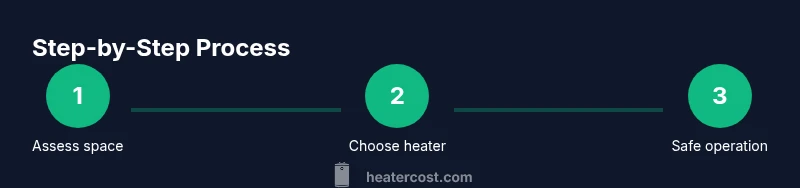
Assess space and warming needs
Identify which rooms are consistently cold and used regularly. Check insulation, drafts, and whether weatherstripping could improve comfort before adding warmth.
Tip: Document room size and occupancy to tailor heater size and placement. - 2
Choose the right heater type for the space
Match heater type to room size and usage: compact electric units for small rooms, larger units or central heating for larger zones. Consider safety features and venting needs if using gas or fuel-based heaters.
Tip: Avoid oversized units in small rooms to prevent overheating and discomfort. - 3
Check safety prerequisites and clearances
Ensure a clear area around the heater and confirm the unit is plugged into a dedicated, appropriate outlet. Verify CO detectors if using fuel-based devices and inspect cords for wear.
Tip: Never conceal cords under rugs or furniture; keep outlets dry. - 4
Position the heater for optimal warmth
Place the heater in a location with good air circulation, away from curtains, furniture, and water sources. Use a stable surface and avoid high-traffic areas to prevent tipping.
Tip: Angle heaters toward the main occupied zone for efficient warming. - 5
Power on and test safety features
Turn on the heater and confirm automatic shutoff, tip-over protection, and overheating protection engage during startup. Listen for unusual noises and monitor for any heat smells.
Tip: Run a short test cycle before extended use. - 6
Monitor usage and adjust settings
Use timers or smart switches to limit run time, and adjust heat output based on occupancy. Reassess insulation and draft sources if you find irregular temperature fluctuations.
Tip: Set a reasonable schedule to heat only when spaces are occupied. - 7
Shut down and perform basic maintenance
When not in use, unplug and store the heater properly. Clean vents and inspect cords, then schedule seasonal checks for fuel-based units.
Tip: Keep a simple maintenance log to track cleanliness and safety checks.
Got Questions?
When is it safe to use a space heater at home?
Space heaters are best for localized warmth in rooms that lack adequate central heating. Use them when you need quick, targeted heat and can supervise usage, especially around children or pets. Always follow safety guidelines and turn off when leaving the space.
Use a space heater for targeted warmth in a room that isn’t well covered by central heat, and always supervise while it’s on.
Can I replace central heating with multiple space heaters?
Replacing central heating with many space heaters is generally impractical for entire-home comfort, energy efficiency, and safety. Space heaters work best as a supplement to central heating or for heating small, infrequently used spaces.
Usually not practical to replace central heating with many space heaters; they’re better as a supplement.
What should I consider before buying a heater?
Important factors include room size, heater type, safety features (tip-over, overheat protection), energy efficiency, and ventilation needs if using fuel-based units. Consider occupancy patterns and insulation quality to choose the right model.
Think about room size, safety features, energy efficiency, and whether you need fuel-based ventilation.
Are gas heaters safe for indoor use?
Gas heaters require proper venting and CO detectors. They should only be used in well-ventilated spaces and installed following local codes. Never block vents and ensure professional setup when needed.
Gas heaters must be vented and monitored with CO detectors; use caution and follow safety codes.
How can I reduce energy costs when using a heater?
Heat only occupied spaces, use programmable schedules, and pair heating with better insulation. Avoid keeping large areas warmed constantly and consider upgrading insulation for long-term savings.
Heat what you use, set a schedule, and improve insulation for savings.
What maintenance does a heater require?
Regularly clean vents, inspect cords and plugs for damage, test safety features, and schedule annual checks for fuel-based units. Keeping up with maintenance helps safety and efficiency.
Keep vents clean, check wiring, and test safety features; annual service helps safe operation.
Watch Video
The Essentials
- Assess insulation and drafts before heating.
- Match heater type to space for efficiency.
- Prioritize safety features and proper placement.
- Plan maintenance to preserve efficiency and safety.