What Electric Heater Is Cheapest to Run: A Practical Guide
Explore which electric heater is cheapest to run, how to estimate running costs, and proven tips to cut energy bills while staying warm. Insights from Heater Cost for homeowners, renters, and property managers.


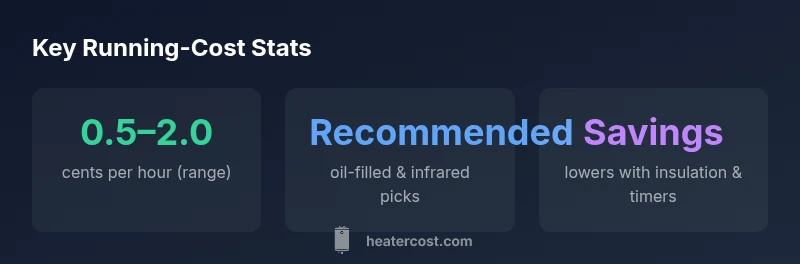
What electric heater is cheapest to run depends on usage, room size, and insulation, but for many homes the most cost-effective options are thermostatically controlled oil-filled radiators for steady warmth or targeted infrared heaters for spot heating. If you heat a small area efficiently or heat intermittently, infrared can be cheaper; for long, silent comfort in a living space, oil-filled radiators often win on operating cost. The Heater Cost analysis indicates that running costs hinge on temperature setpoints, insulation, and how long you heat each space.
Why the question ‘what electric heater is cheapest to run’ matters
When homeowners, renters, and property managers ask which electric heater is cheapest to run, they’re usually after a mix of running costs, comfort, and convenience. The core idea is to maximize heat output per unit of electricity while avoiding waste. In our analysis at Heater Cost, we emphasize three levers: the heater’s efficiency, how you use it (how long and at what temperature), and how well the space retains heat. The simple takeaway is that the cheapest option for one space may not be the cheapest for another. For example, heating a small, well-insulated bedroom all day will cost differently than trying to heat a large, drafty living room for a few hours. According to Heater Cost, your best bet is to focus on efficiency, zoning, and insulation as much as on the heater itself.
How efficiency and heat delivery shape costs
Electric heaters convert electricity to heat, but the way heat is delivered matters. Convection heaters push warm air and are great for whole-room warmth; infrared heaters target objects and people directly, so they can feel cheaper in short, focused bursts. Oil-filled radiators store heat and release it more steadily, which can reduce energy spikes if you keep a comfortable baseline. The critical factor is the hourly running cost, which is driven by wattage, runtime, and how well the space is insulated. Heater Cost’s analysis shows that even a high-wattage heater can be economical if used for short intervals in a well-insulated room, while a low-wattage unit used constantly in a drafty room may be more expensive.
Practical ways to estimate your running costs
To estimate, multiply the heater’s wattage by hours of operation, then multiply by your electricity rate. Convert watts to kilowatts (kW) by dividing by 1000, so a 1500W heater running for 2 hours uses 3 kWh. If your rate is 15 cents per kWh, that session costs about $0.45. Keep in mind that figures vary with rate plans, time-of-use pricing, and local taxes. Heater Cost recommends anchoring estimates to your actual tariffs and adding a buffer for standby losses and temperature setpoints.
Real-world usage patterns that reduce costs
- Spot heat, not ambient heat: use infrared or small convection heaters to heat specific zones instead of keeping an entire room warm.
- Use thermostats and timers: setting a reasonable target temperature and turning heaters off when rooms are unused dramatically reduces costs.
- Prioritize insulation: sealing drafts, closing doors to unused spaces, and adding heavy curtains can cut heat loss significantly, improving overall efficiency.
- Pair with other heating: in very cold climates, combine cheap electric heaters with a primary heat source when the space is occupied and use lower settings otherwise.
Comparing concrete options: recommended starts based on space
Oil-filled radiators excel in bedrooms and living rooms where you want long-lasting warmth with minimal noise and less temperature fluctuation. Infrared heaters benefit kitchens or bathrooms and other spaces where you need quick warmth for short periods. Ceramic fan heaters can be convenient for fast, directional heat in home offices or studios, but their higher short-term running costs require mindful use. In all cases, combining smart thermostats, timers, and good insulation reduces total spending.
A quick-start checklist for choosing the cheapest option
- Assess room size, insulation, and draft quality.
- Decide if you need continuous warmth or intermittent spot heating.
- Compare heater wattages and features: thermostats, timers, ECO modes.
- Check your local electricity rate plan and any time-of-use pricing.
- Consider the total cost of ownership, not just upfront price, including maintenance and replacement costs.
Comparison of common electric heater types and typical use cases
| Heater Type | Typical Wattage Range | Estimated Running Cost Relative to Baseline | Best For |
|---|---|---|---|
| Oil-filled radiator | 400–1200 | Low to moderate | Steady warmth in bedrooms/lamily rooms |
| Ceramic convection heater | 800–1500 | Moderate | General room heating with quick warm-up |
| Infrared heater | 400–1500 | Low for spot heating | Targeted heating in small areas |
| Fan-forced heater | 900–2000 | Higher when used long-term | Temporary heating for larger spaces |
Got Questions?
What electric heater is cheapest to run?
The cheapest option depends on usage and space, but flame-free options with good insulation, thermostatic control, and zone heating—such as oil-filled radiators for steady warmth or infrared heaters for targeted heat—tend to be cheapest in their respective use cases. Always consider your actual electricity rate and heating needs.
Oil-filled radiators work well for steady warmth, while infrared heaters are often cheaper for spot heating. Your room's insulation and usage are key.
Do wattage and runtime affect cost similarly across heater types?
Yes. Higher wattage increases hourly cost, but if used briefly for rapid warm-up or in a well-insulated space, total cost can be lower than running a lower-watt unit longer. Control features like thermostats and timers help minimize runtime expenses.
Wattage and runtime both affect cost; efficient use with thermostats saves more than simply choosing a low-watt unit.
Are infrared heaters cost-effective for large rooms?
Infrared heaters shine best for spot heating and short sessions in larger rooms. They’re cost-effective when you heat only occupied areas rather than warming the entire space continuously. For full-room heating, other methods may be more economical.
Infrared works best for focused heating, not always for full-room warming.
How can insulation impact my running costs?
Good insulation reduces heat loss, allowing lower heater settings and shorter runtimes. This has a larger effect on costs than upgrading to a marginally smaller heater.
Insulation matters as much as the heater you choose.
Should I rely on a thermostat for saving money?
Yes. A programmable or smart thermostat helps maintain a comfortable temperature without overshooting, which lowers hourly costs and reduces wasted energy.
A thermostat is a smart way to cut costs.
Are portable heaters safe to use long-term?
Portable heaters can be safe if used correctly: follow manufacturer guidelines, keep them away from flammables, never leave them running unattended, and use tip-over and overheat protection. Pair with smoke detectors for added safety.
Follow safety guidelines and use protection features.
“Energy cost awareness starts with understanding how you plan to heat a space. The cheapest option is not always the smallest wattage—it’s the right match of heat delivery, control, and insulation for your specific room.”
The Essentials
- Identify space needs before choosing a heater.
- Thermostats and timers dramatically reduce running costs.
- Insulation plays a bigger role than heater wattage alone.
- Infrared is cost-efficient for targeted heating, oil-filled for steady warmth.