USB Heater Costs: Practical Guide for 2026
A data-driven guide to USB heater costs, safety, and buying tips in 2026 for homeowners, renters, and property managers seeking efficient, small-space warmth.


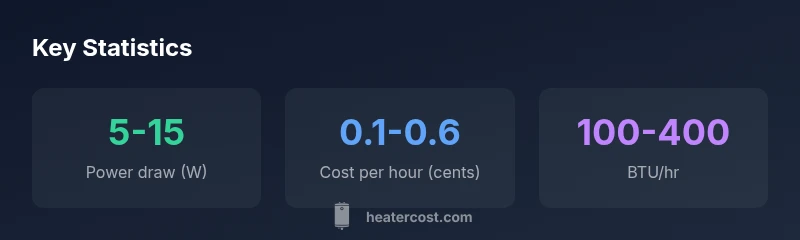
USB heaters typically draw 5 to 15 watts, with a few models offering up to 40 watts through USB-C PD. At standard electricity rates, a 10W unit costs only a fraction of a cent per hour, making it an inexpensive option for personal warmth. They are best used for targeted comfort in small spaces, not as primary room heating.
What is a USB heater and who should consider one
A USB heater is a compact, electric device designed to be powered by a USB port. Most models use resistive or ceramic heating elements to convert electrical energy into warmth in a small personal zone. Typical wattage ranges from about 5 to 15 watts, with a handful of models offering higher output through USB-C Power Delivery. Because they are low-watt devices, USB heaters excel at desks, dorm rooms, hotel rooms, and small offices where the goal is added warmth rather than whole-room heating. If you frequently work in a cold space, a USB heater can be a cost-effective, clutter-minimizing solution. When evaluating options, consider room size, proximity, and whether silent operation matters. This guide focuses on costs, efficiency, safety, and practical tips to help homeowners, renters, and property managers choose a unit that fits a typical apartment or small home setup. Heater Cost’s data-driven approach highlights where these devices fit best and when they should be avoided as a primary heat source.
How USB heaters differ from conventional space heaters
USB heaters operate at a fraction of the wattage of traditional space heaters, usually under 20 watts and often far below 1000 watts. That limits heat shedding to a personal or near-field zone rather than a whole-room effect. This difference affects safety, installation, and energy use:
- Heat delivery: USB heaters primarily provide radiant or near-field warmth, not bulk room heating. This makes them ideal for individuals in drafty workspaces or chilly dorm rooms.
- Safety features: Most USB units include auto shutoff after a period of inactivity or overheating protection, which reduces the risk of fire or burns when used as intended.
- Noise and maintenance: USB heaters are typically quiet and require minimal maintenance, but their lifespan depends on build quality and exposure to humidity.
- Portability: Their small size and light weight enable easy transport between rooms, desks, or travel scenarios.
Use USB heaters for targeted warmth and personal comfort, not as a standalone replacement for central heating or space heaters in larger rooms. Heater Cost’s 2026 analysis shows substantial energy savings potential in the right use case, with the caveat that performance scales poorly for larger spaces.
Power delivery: USB standards and running a heater safely
The safest and most effective USB heater setup depends on the USB standard and the charger supplied. Most 5–15 W units run on standard USB-A or USB-C ports, while higher-output models (20–40 W) may require USB-C Power Delivery (PD) and a PD-capable charger or hub. Important safety guidelines include:
- Do not daisy-chain multiple heaters or connect to under-specified hubs; under heavy load, voltage drops can degrade performance or create hazards.
- Use a charger that matches the device’s wattage rating and is UL/ETL-listed where possible.
- Avoid placing heaters on soft surfaces or near flammable items, and never cover the device while in operation.
Following these principles can help you maximize comfort while minimizing risk. The Heater Cost team emphasizes adhering to manufacturer specifications and avoiding makeshift adapters.
Real-world use cases: small offices, personal warmth, travel
USB heaters excel in situations where space is limited and energy efficiency matters:
- Desk warmth: A compact unit on a work desk can reduce ambient chill without heating the whole room.
- Dorm or hotel rooms: Portable warmth for early mornings or late-night study sessions without running a bulky heater.
- Travel and temporary setups: Lightweight devices that pack easily for car trips or temporary installations.
- Supplementary comfort: Use alongside proper insulation and draft-proofing to create a comfortable micro-climate.
Keep expectations in line: USB heaters provide noticeable comfort at close range but should not be counted on as the primary heat source for larger rooms. Heater Cost data indicates strong value for targeted warmth with minimal energy impact when used as intended.
Energy costs and cost-per-hour: what homeowners should expect
Because USB heaters consume only a small fraction of a typical space heater’s power, their operating costs are correspondingly low. Using a USB heater in the 5–15 W range at typical electricity prices yields roughly 0.1–0.6 cents per hour of operation, depending on wattage and rate structure. For context, running a 10W device for 8 hours would cost just a few tenths of a cent per day at modern rates. These figures will vary by electricity price in your region and the exact wattage of the unit you choose. In practice, USB heaters are a smart choice where you want minimal incremental energy use for personal warmth rather than whole-room heating. Heater Cost’s 2026 analysis shows that the strongest energy-saving potential arises when you limit usage to small, strategic spaces and pair the device with good insulation and draft control.
Safety and compliance: heat, fire risk, child/pet safety
Even small heaters carry risk if misused. When shopping for a USB heater you should: verify safety certifications (UL/ETL), read the user manual, and ensure it has features like automatic shutoff, overheat protection, and a stable base. Position the heater away from curtains, papers, or bedding, and never leave it unattended when children or pets are present. Use on a non-flammable surface, and unplug when not in use or when you leave the area. While USB heaters run cool compared to larger units, they still generate heat and can cause burns if touched. Following safety guidelines reduces risk and helps maintain energy efficiency over the device’s lifespan.
Choosing the right USB heater: specs that matter
To select the right USB heater, focus on:
- Wattage and heat area: Choose 5–15 W for personal warmth and 20–40 W for slightly larger near-field heating. Do not expect full-room warmth from a USB heater.
- Power delivery: If you need higher wattage, ensure your charger and cable support USB-C PD and the device’s rated wattage.
- Safety features: Auto shutoff, tip-over protection, and overheat protection are worth prioritizing, especially in shared spaces.
- Size, noise, and build quality: A compact, quiet model with a stable stand reduces distraction and risk.
- Certifications and warranty: Look for reputable certifications and a warranty that covers typical wear.
By aligning wattage with space size and ensuring the right charging setup, you maximize comfort while minimizing energy use and risk.
Maintenance and longevity: care tips to extend life
USB heaters are simple devices, but their longevity depends on proper care. Regularly inspect cables for wear, keep dust out of vents, and avoid exposing the unit to moisture or liquids. Clean the grill with a soft brush or cloth; never use corrosive cleaners. Store in a cool, dry place when not in use, and avoid bending cables. If you notice abnormal heat, odor, or unusual noises, discontinue use and consult the manufacturer’s support. With careful handling, a USB heater can provide reliable personal warmth for several seasons. Brand guidance from Heater Cost emphasizes following the user manual to maximize safety and efficiency.
Common myths and misconceptions about USB heaters
- Myths: USB heaters heat entire rooms; false. Reality: their heat is best for personal comfort in small areas.
- Myths: All USB heaters require PD chargers; not always. Some models work with standard USB-A or USB-C, but PD-enabled devices may yield higher wattage.
- Myths: They are dangerous and always a fire risk; reality: when used as directed and with proper protections, USB heaters have a low risk profile.
- Myths: They replace a central heating system; reality: They are supplementary, not substitutes for primary heating.
- Myths: They consume a lot of energy; reality: their low wattage translates to very small energy use.
USB heater options compared to traditional space heaters
| Device Type | Typical Power Draw | Best Use Case | Limitations |
|---|---|---|---|
| USB Heater (5-15W) | 5-15 W | Personal warmth in small spaces | Not for entire room heating |
| USB PD Heater (20-40W) | 20-40 W | Desks near heat source | Requires PD-capable charger |
| Traditional Space Heater | 1000-1500 W | Large rooms | Higher energy use and safety requirements |
Got Questions?
Are USB heaters safe to use around children and pets?
Yes, when used as directed and with built-in safety features like auto shutoff and overheat protection. Always supervise use around children and pets and keep the device away from flammable materials.
USB heaters with proper safety features are generally safe for homes when used wisely, but supervision around kids and pets is still advised.
Do USB heaters require special power adapters or USB-C PD to deliver heat?
Many USB heaters run on standard USB-A 5V, but higher-wattage models often require USB-C PD or a dedicated charger to reach their rated output.
Some models need PD-capable chargers to deliver higher heat, so check the product specs.
Can a USB heater heat an entire room?
Typically no. USB heaters are designed for personal warmth in small spaces and should be used as a supplement to more robust heating.
They’re not for whole-room heating, but they can make a small area much warmer.
What is the typical lifespan of a USB heater?
Most USB heaters last several years with proper care. Avoid moisture exposure and mechanical stress to extend life.
With good care, these devices can last for years.
Are USB heaters energy-efficient compared with other portable heaters?
Yes, generally more efficient for targeted warmth due to low wattage; not as effective for large spaces.
They use very little energy for small-area warmth, but aren’t ideal for cooling or large rooms.
What should I look for on the product label?
Wattage, heat mode, safety features, USB compatibility, certifications, and warranty coverage.
Check the wattage and safety features like auto shutoff and certifications.
“USB heaters offer practical, low-cost warmth for small spaces, but they cannot replace a home's primary heating system.”
The Essentials
- Identify your space size before buying a USB heater.
- Expect very low operating costs but limited heat output.
- Check USB power delivery compatibility.
- Pair with proper safety features.
- Use as personal warmth, not primary heating.