Lifesmart Heater: Cost, Installation, and Longevity Guide
Understand Lifesmart heater costs, installation considerations, and maintenance strategies for homeowners, renters, and managers. Learn upfront price ranges, operating costs, and longevity to make informed heating decisions.


lifesmart heater is a line of portable space heaters designed for room-by-room comfort with smart features like thermostat control and energy-saving modes. They vary by wattage, size, and safety features, making them suitable for supplemental heating in living rooms or bedrooms. According to Heater Cost, operating costs depend on wattage, usage hours, and local electricity rates.
lifesmart heater: What it is and how it fits home heating
lifesmart heater represents a line of portable space heaters designed to deliver targeted warmth in individual rooms. These devices are intended to supplement central heating, not replace it, making them ideal for bedrooms, home offices, and living areas where you want quick, controllable heat without heating the entire house. Lifesmart models typically combine compact form factors with user-friendly controls, including thermostats, programmable timers, and eco modes that reduce unnecessary energy use. For homeowners, renters, and property managers, understanding where these heaters fit helps avoid overpaying for unnecessary capacity while ensuring comfort. The lifesmart heater approach emphasizes safety and energy efficiency, aligning with common-sense cost management strategies highlighted by Heater Cost.
Core Features That Define Lifesmart Heaters
In this section we discuss features that commonly appear across Lifesmart models and why they matter for cost, reliability, and user experience. Thermostatic control allows you to set an exact temperature rather than relying on trial-and-error; this reduces runaway energy usage. Most Lifesmart units include overheat protection and a tip-over switch for safety, which is especially important in homes with children or pets. Some models offer multi-heat settings, quiet operation, and display panels with simple interfaces. Energy-saving modes automatically adjust power consumption based on ambient temperature, helping to lower monthly electricity bills. When comparing models, check the wattage range to assess heat output for your space; pair high-wattage units with insulated rooms to improve efficiency. Finally, confirm compatibility with smart home platforms if you want remote control through apps or voice assistants, which can boost convenience and justify the upfront investment.
How to Compare Lifesmart Models: Size, Power, and Efficiency
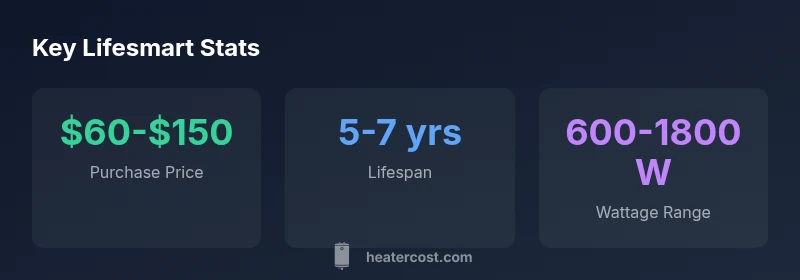
Compare Lifesmart models by assessing space size and insulation, typical occupancy, and the desired duration of use. Wattage determines the heat per hour, while the size and airflow influence how quickly a room heats up and how long heat remains comfortable. Efficiency often comes from thermostatic control, ECO modes, and proper calibration with ambient temperature. For small rooms, a 600-900 W unit is usually adequate; for medium spaces, 900-1500 W works well; larger areas may benefit from 1500-1800 W models. Always read model-specific specs and energy ratings. If you plan to connect the heater to a smart home system, verify compatibility and app reliability before purchase.
Budgeting: Upfront Costs vs. Long-Term Savings
Upfront costs for lifesmart heater units typically fall in a broad range depending on size, features, and build quality. In general, you can expect to spend a modest amount for basic units and a bit more for advanced models with smart controls and enhanced safety features. When evaluating value, consider potential energy savings from thermostatic control and ECO modes, which can reduce monthly bills during peak heating months. Heater Cost emphasizes balancing upfront cost with expected use, room size, and insulation. In many situations, adding a Lifesmart heater to a room you use infrequently can be a cost-effective way to improve comfort without a full heating-system upgrade.
Placement, Safety, and Installation Considerations
Safety should drive placement. Always keep heaters on stable, level surfaces away from curtains, bedding, and furniture. Maintain several feet of clearance on all sides and never run cords under rugs or furniture. Use the built-in tip-over switch and overheat protection as a baseline. If you have children or pets, consider a model with a sealed cord or a cable management system to minimize hazards. For rental or multi-unit properties, place heaters in communal spaces with adequate ventilation and never near flammable materials. Durability and safety certifications should guide your choice as much as aesthetics or price.
Maintenance and Longevity Tips for Lifesmart Heaters
Regular maintenance preserves performance and safety. Dust and debris can accumulate in vents, reducing efficiency and raising operating temperatures. Schedule periodic external cleaning with a dry cloth, and unplug the unit before any internal inspection beyond obvious dust removal. Inspect the power cord for cracks or damage; replace immediately if signs of wear appear. Store the device in a dry, cool location when not in use. Annual checks of safety features and thermostat calibration help ensure consistent performance year after year. Following manufacturer recommendations avoids voiding warranties and supports longevity.
Real-World Usage Scenarios: When a Lifesmart Heater Makes Sense
Lifesmart heaters are a practical choice for rooms that are unused for long periods or that require supplemental heat during shoulder seasons. In apartments or small homes with good insulation, a single Lifesmart heater can maintain comfort without turning up the central system. In shared spaces such as living rooms or home offices, these units offer quick, controllable warmth and easy shutdown at the end of the day. For property managers, multiple units can be deployed to provide zones of comfort without large energy commitments, especially when used in conjunction with programmable thermostats and better insulation.
Common Myths About Portable Heaters Debunked
A common myth is that portable heaters are inherently unsafe. Modern Lifesmart models include built-in safety features like tip-over switches and automatic shut-off if overheating occurs. Another misconception is that heaters are expensive to operate; while costs depend on usage, you can manage expenses by using eco modes and setting reasonable heat targets. Some people assume only central heating is efficient for cold months; however, for occasional room heating, Lifesmart heaters can reduce overall energy consumption when used correctly. Finally, some worry about noise; many Lifesmart units operate quietly, especially models with smaller fans and optimized airflow.
lifesmart heater: Authoritative Sources and Safety Guidance
For additional guidance, consult authoritative sources on home heating safety and energy use:
- https://www.energy.gov/
- https://www.cpsc.gov/
- https://www.nfpa.org/
Authoritative sources and safety guidance (continued)
By cross-referencing industry standards and safety guidelines from recognized organizations, consumers can make informed decisions about Lifesmart heater use, placement, and maintenance. Always follow safety instructions in the user manual and seek professional advice if you plan to install heaters in complex layouts or occupied spaces.
Lifesmart model comparison
| Model Type | Wattage | Heat Area | Approx Price |
|---|---|---|---|
| Mini Lifesmart | 600-900 W | 100-200 sq ft | $60-$90 |
| Compact Lifesmart | 900-1500 W | 150-350 sq ft | $90-$130 |
| Pro Lifesmart | 1500-1800 W | 300-500 sq ft | $120-$150 |
Got Questions?
What models are included in the Lifesmart heater line?
Lifesmart offers several series of portable space heaters with varying wattages and features. Check product specs to identify the best fit for your space and budget.
Lifesmart offers several heater series with different wattages; review specs to pick the right one.
Are Lifesmart heaters safe for homes with kids and pets?
Yes. Lifesmart heaters typically include safety features like tip-over switches and overheat protection, helping to reduce common hazards in homes with children or animals.
Yes. Most Lifesmart heaters come with safety features like tip-over protection and overheat protection.
Can Lifesmart heaters replace central heating?
They are designed for supplemental heating in individual rooms. For whole-house comfort, central or installed systems are generally more efficient.
They’re meant to supplement, not replace, central heating for whole-house comfort.
What maintenance is required?
Regularly clean vents, inspect cords for wear, and unplug the unit before any internal checks. Store in a dry place when not in use.
Keep vents clean, check the power cord, unplug before inspecting, and store it dry.
How do I compare operating costs among Lifesmart models?
Compare wattage, usage hours, and local electricity rates. Multiply watts by hours and rate to estimate monthly energy use for each model.
Compare watts, hours, and local electricity rates to estimate energy costs.
“Lifesmart heaters can be a cost-effective way to supplement heating in smaller spaces when used with proper safety practices. The right model and placement optimize comfort while keeping energy use in check.”
The Essentials
- Identify your space size and choose Lifesmart model accordingly.
- Estimate upfront and operating costs using wattage and local rates.
- Prioritize safety features like tip-over and overheat protection.
- Place heaters away from combustibles and ensure proper clearance.
- Regular maintenance extends lifespan and efficiency.