Small Outdoor Heater: A Practical Guide for Compact Outdoor Warmth
Explore small outdoor heater options for compact spaces, compare propane, electric, and gas models, estimate costs, and maximize safety and comfort. Learn sizing, placement, and maintenance with guidance from Heater Cost.


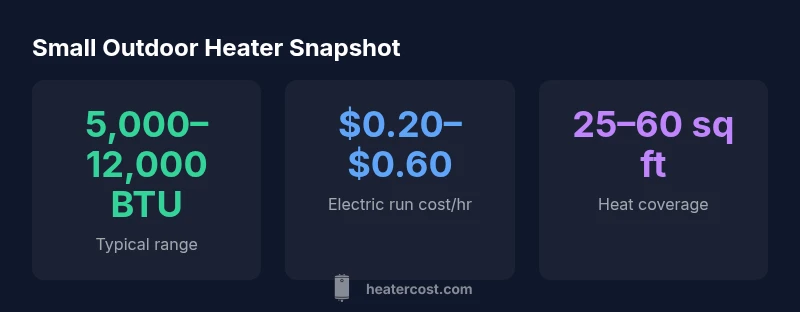
A small outdoor heater is a compact device designed to warm tight outdoor spaces such as patios, balconies, or corners of decks. Most models use propane (patio heaters), electric infrared, or compact gas fired elements, offering roughly 5,000–12,000 BTU for targeted warmth. For very small areas, portable electric options are often the most affordable and easiest to install.
Understanding the role of a small outdoor heater
A small outdoor heater is a compact device designed to provide targeted warmth to balconies, patios, or corner decks. According to Heater Cost the best options balance heat output, energy costs, and safety for limited areas. These devices come in three main fuel types: propane patio heaters, electric infrared heaters, and small gas fired units. Each option trades off heat distribution, running costs, and convenience.
When choosing, start by evaluating your space and wind exposure. Electric infrared heaters offer quick warmth with minimal ventilation needs and are generally easiest to install — just plug in if you have a weatherproof outlet. Propane patio heaters produce broad radiant heat and are excellent for social seating areas but require gas canisters and refills. Small gas fired heaters can deliver consistent warmth with a gas or propane fuel source but may require connections. Note that wind can dramatically reduce perceived warmth; a windbreak or shielding often makes a bigger difference than doubling BTU. Finally, always consider safety: stable mounting, proper clearance from combustibles, and a clear plan for extinguishing fuel sources when not in use.
Size, BTU, and space planning
For small outdoor spaces, heat output should match the area and climate. In general 5,000–12,000 BTU models are common for compact patios and balconies, with wind reducing effectiveness. Start by measuring the space in square feet and selecting a model that roughly covers that area when wind is moderate. If you expect stronger winds, look for higher BTU and a heater with wind protection features. Also consider the height and placement: place heaters where warm air can circulate toward seating, and use shielding to reduce heat loss. In addition to BTU, check heat distribution characteristics such as radiant versus ambient heat. Electric infrared tends to heat objects and people directly, while propane or gas fired units warm the air and surroundings more broadly.
Fuel types and models
Propane powered patio heaters are popular for outdoor gatherings and can heat larger areas quickly. They require a propane cylinder that must be refilled or swapped and pose safety considerations if used indoors or in enclosed spaces. Electric infrared heaters are compact, plug in, and easy to run but depend on outdoor electrical outlets and weatherproofing. Small gas fired heaters can offer steadier warmth but require connections and proper venting if needed in certain configurations. When evaluating models, check for safety features such as tip over shutoff, auto shutoffs at high temperatures, and cool touch surfaces. Also consider weather resistance ratings and the availability of spare parts.
Costs: purchase and operating
Upfront cost varies by type. Portable electric small outdoor heaters are commonly found in the range of thirty to one hundred fifty dollars. Propane patio heaters typically cost more upfront, often between one hundred and three hundred dollars, not including refills and cylinders. Gas fired units may be higher still, depending on design and fuel type. Operating costs depend on fuel and electricity rates. Electric models generally run cheaper per hour in mild climates but may rise with electricity prices. Propane and natural gas options have variable costs based on fuel prices and usage. Overall lifetime costs should be weighed against the frequency of use and climate suitability. In the end, a small outdoor heater can extend outdoor season at a reasonable cost, especially when matched to your space and typical occupancy. According to Heater Cost analysis, heating efficiency and cost vary widely by fuel type and electricity rates.
Safety and wind considerations
Outdoor heating devices must be treated with caution. Keep heaters on stable surfaces and away from flammable materials. Maintain required clearances to walls, furniture, and overhead structures. Wind is a major factor that reduces comfort, so aim to shield seating areas or use taller wind barriers. Do not operate propane heaters indoors or in enclosed spaces. If you suspect a gas leak, extinguish flames and move outdoors. Carbon monoxide risk is a concern for indoor or semi enclosed areas, so use CO detectors in spaces where gas fuel is used. Always follow manufacturer instructions for start up, shut down, and storage when not in use.
Installation tips and placement
Most small outdoor heaters can be placed on a stable outdoor surface such as a deck or patio. Check whether you need an electrical outlet and ensure it is weatherproof and GFCI protected. If you install a gas unit, ensure proper venting and installation by a licensed professional where required by local codes. Avoid running cords across wet surfaces or through walkways. Position the heater to direct warmth toward seating while keeping a comfortable clearance from walls and planters. Consider using a simple windbreak such as a screen or shrub line to protect the heat without blocking airflow. Permits and codes vary by jurisdiction, so check with local authorities before permanent installation.
Authority sources
- https://www.energy.gov/energysaver/heating-and-cooling
- https://www.epa.gov/indoor-air-quality-iaq
- https://www.nist.gov/topics/energy-efficiency
Maintenance and longevity
Regular maintenance extends the life of a small outdoor heater. Clean the exterior and burner areas, inspect gas connections for leaks, and store cylinders and propane tanks upright when not in use. For electric models, check cords, plugs, and safety switches and replace damaged parts promptly. Keep heaters dry and covered during extreme weather to prevent corrosion. The lifespan of portable electric heaters typically ranges from five to twelve years with proper care, while propane and gas fired units may require more frequent service. The Heater Cost team recommends annual inspections and winterization steps to maximize reliability and safety.
Comparison of popular small outdoor heater types
| Model Type | Typical BTU | Heat Coverage (sq ft) | Fuel/Energy Type | Estimated Run Cost per Hour | Typical Size (in) | Average Lifespan (years) |
|---|---|---|---|---|---|---|
| Propane Patio Heater | 8,000–40,000 | 20–40 | Propane | $0.60–$2.50 | 60–90 | 5–10 |
| Electric Infrared Outdoor Heater | 1,500–6,000 | 10–25 | Electric | $0.15–$0.60 | 13–36 | 5–12 |
| Small Gas-Fired Heater (Ventless) | 10,000–25,000 | 25–50 | Natural gas or propane | $0.40–$1.50 | 24–40 | 6–12 |
Got Questions?
What is the best small outdoor heater for windy conditions?
In windy spaces, seek models with wind shielding and higher BTU, plus a stable base. Wind reduces perceived warmth, so a sheltered seating area can outperform solely increasing BTU.
For windy spaces, choose a heater with wind protection and a stable base. Shelter your seating area to maximize comfort.
Are electric outdoor heaters safe for patios?
Electric outdoor heaters are generally safe for patios when plugged into a weatherproof, GFCI outlet and used outdoors as rated by the manufacturer. Keep away from water and combustibles.
Electric heaters are usually safe outdoors if you use a proper weatherproof outlet and follow the manufacturer directions.
Do small outdoor heaters require permits?
Permits vary by location and fuel type. Gas line work or venting in some jurisdictions may require a licensed installer or approval from local codes.
Permits depend on your area; check local codes, especially for gas powered installations.
What maintenance is required for propane patio heaters?
Regularly inspect for leaks, change or refill propane cylinders safely, clean the burner and vent areas, and store cylinders upright away from heat.
Check for leaks, keep the burner clean, and store propane cylinders safely when not in use.
How do I calculate BTU needs for my space?
Measure the area in square feet, consider climate and wind, then select a model within the typical 5,000–12,000 BTU range for small spaces. For larger or windier spaces, consult a professional.
Measure your space and consider wind; most small spaces fall in the 5k to 12k BTU range.
“Choosing a small outdoor heater means balancing heat output with safety, energy costs, and space constraints. The Heater Cost Team notes that correct sizing and placement often yields the most comfortable outdoor experiences.”
The Essentials
- Define space to pick BTU correctly
- Evaluate fuel type for cost and convenience
- Consider wind shielding to maximize warmth
- Compare upfront cost vs running costs before buying
- Prioritize safety features and weather resistance