Propex Heater: Costs, Installation, and Safety for Home Heating
Comprehensive guide to propex heater costs, installation, and safety. Learn model selection, fuel use, and long-term value for homes, cabins, and RVs with propane heating.


Propex heater is a propane-powered space heater used for off-grid or supplemental heating in homes, cabins, or RVs. It uses vented combustion and safety features to provide reliable warmth without relying on electric power. With proper venting and clearances, it can offer cost-efficient comfort, though fuel prices and usage patterns determine true operating costs.
What is a propex heater and how it works
According to Heater Cost, a propex heater is a propane-powered space heater designed to deliver rapid warmth in settings where electric heat is limited or unavailable. These compact units use a sealed combustion chamber to burn propane and a heat exchanger to transfer warmth to the room. Exhaust gases are vented through a chimney or vented through a dedicated flue, reducing indoor combustion byproducts when installed properly. Propex heaters are common in RVs, cabins, and off-grid homes because they don't rely on electrical infrastructure and can operate on bottled propane or a fixed gas line. Typical models range from small portable units to larger, wall-mounted options capable of heating sizable living spaces. The safety design often includes an automatic shutoff if flame or ventilation fails, a flame sensor, and an oxygen depletion sensor to prevent dangerous conditions in poorly ventilated spaces. Nevertheless, proper venting, clearances from walls and furniture, and a working CO detector are essential. In many places, local codes require professional installation or inspection to ensure compliance and warranty coverage.
Cost considerations and operating expenses
The upfront cost of a propex heater varies by size, configuration, and whether installation is done by a pro. Beyond purchase price, homeowners should account for propane supply arrangements, venting materials, and potential gas line work. According to Heater Cost, total cost of ownership hinges on how often the unit runs, the price of propane, and maintenance needs. In moderate climates, a compact model may suffice for a small living area, while larger spaces demand higher BTUs and extended runtime. Annual fuel costs are typically a function of usage hours, heating demand, and propane prices, which can fluctuate seasonally. Budget for routine maintenance, such as vent inspection and carbon monoxide detector replacements, to maintain safety and performance. Warranty terms and local code requirements can influence overall affordability by reducing repair expenses. If you’re comparing options, consider not only the sticker price but also installation complexity and long-term energy costs.
Energy efficiency and performance: propane vs electricity
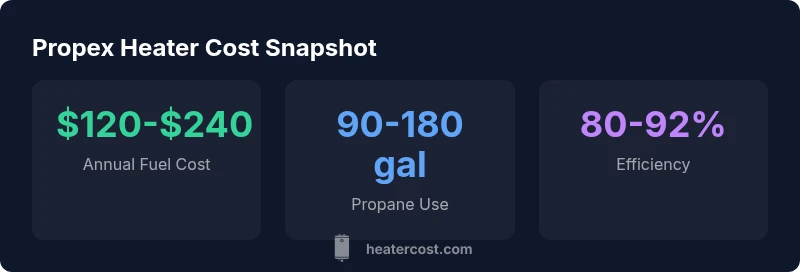
Propane heaters like propex units deliver warmth quickly due to direct combustion heat transfer, often outperforming electric options in response time. Efficiency ranges commonly fall between 80% and the mid 90s, depending on model, venting, and installation. In off-grid applications or during power outages, propane can be more economical than electric resistance heating, particularly in regions with affordable gas prices. However, fuel price volatility, delivery logistics, and maintenance needs can widen the gap between projected and actual savings. When evaluating performance, compare BTU ratings, heater runtime, and the presence of safety features such as oxygen depletion sensors and auto shutoff. For homes with electrical limits, a properly sized propex heater can cover peak loads while maintaining comfort, but do not assume it will replace a full HVAC system in large, well-insulated houses.
Installation, venting, and safety requirements
Proper installation is critical for safety and efficiency. Venting must remove combustion byproducts from the living space, and many jurisdictions require vent pipes, CO detectors, and adherence to clearance standards. A gas line should be sized correctly to avoid pressure drop, and a licensed technician may be needed to connect to a propane supply. Always install a carbon monoxide detector in the same zone as the heater and verify vent termination points are not obstructed by furnishings. If you rent or own in an apartment, check with building management about code compliance and potential permits. Regular inspections help ensure valves, seals, and gaskets remain intact, reducing the risk of leaks or system failure. Remember, venting is not optional; it is a fundamental safety requirement for any propane-fired appliance.
Choosing the right model: capacity, BTU, and features
Start by calculating the space you need to heat and selecting a BTU rating that matches that area. Over- or undersizing can waste fuel and lead to uneven comfort. Look for models with sealed combustion, automatic shutoff, oxygen depletion sensors, and easy access for routine cleaning. Features such as a thermostat, remote control, and flame stability add convenience but should not come at the expense of safety. If you’re heating a coach, cabin, or small home, a versatile unit with multiple venting options and robust safety certifications is preferable. Compare installation requirements, wall clearance, and vent routing paths to avoid costly retrofits. Finally, consider fuel availability and local propane pricing when estimating long-term costs and deciding whether a propex heater is the right solution for your space.
Maintenance, safety checks, and common issues
Maintenance is essential for performance and safety. Regularly inspect venting paths for blockages, clean burner components, and replace CO detectors per manufacturer guidance. Keep fuel lines free from damage and ensure that ignition systems operate consistently. Common issues include overheating, intermittent ignition, or carbon monoxide alarms triggered by poor venting. If you notice unusual smells, hissing sounds, or a yellow flame (instead of blue), stop using the unit and seek professional service. Establish a routine: seasonal checks before peak heating months, annual professional inspection, and prompt attention to any warning indicators. Keeping a maintenance log helps ensure timely service and can protect warranty coverage.
Real-world scenarios: homes, cabins, and RVs
In homes with limited electrical capacity, a propex heater can supplement the primary heat source, reducing electric usage during shoulder seasons. In cabins and rural retreats, these heaters support comfort during power outages or when the main furnace isn’t practical. RV applications demand portability, compact footprints, and safe venting that works within a vehicle’s enclosure. Each scenario requires careful assessment of space, ventilation, and safety equipment. For frequent users, install CO detectors and ensure that there is adequate airflow to avoid combustion byproducts accumulating in small, enclosed spaces. When used responsibly, a propex heater offers flexible, reliable warmth across diverse environments.
The value proposition: long-term costs and replacement
A propex heater’s value comes from its independence from a fixed electrical grid, fast heat delivery, and compact design. Over time, fuel costs and maintenance can contribute more to total expense than the initial purchase price, especially in areas with volatile propane pricing. Consider long-term considerations such as replacement cycles, availability of service, and potential warranty protections when budgeting. In regions with stable propane pricing and reliable supply, a propex heater can provide cost-effective warmth for specific spaces. It’s important to weigh annual fuel costs against the comfort level achieved and the auxiliary power needs of your home. Ultimately, the decision should balance upfront installation costs, ongoing fuel expenditures, and the reliability of your electrical infrastructure.
Comparison of common Propex heater setups
| Model Type | Heating Capacity (BTU) | Typical Space | Notes |
|---|---|---|---|
| Vented Propex | 16,000-20,000 | Large room | Requires venting and CO detector |
| Portable Propane Heater | 4,000-9,000 | Small to medium rooms | Check clearance and ventilation |
Got Questions?
What is a Propex heater?
A Propex heater is a propane-powered space heater designed for portable or stationary heating. It uses vented combustion and safety features to provide reliable warmth. Proper installation and venting are essential.
A propane-powered space heater that needs venting and safety features.
Do Propex heaters require venting?
Yes, venting is typically required to exhaust combustion gases. Always install CO detectors and follow local codes.
Yes, venting is needed and CO detectors should be used.
What are typical installation costs?
Costs vary by model and location, including venting and gas line work. Obtain quotes from a licensed installer to avoid safety or warranty issues.
Costs vary; get a licensed installer quote.
Are there safety concerns with using propex indoors?
Yes. Ensure adequate ventilation, proper venting, CO detectors, and routine maintenance to prevent risks.
Yes—venting and detectors are essential for indoor safety.
How do operating costs compare to electric heaters?
Propane can be cheaper in some areas, especially off-grid, but depends on propane prices, efficiency, and usage patterns.
Propane may be cheaper off-grid, but it varies by price and use.
How should I maintain a propex heater?
Keep vents clear, clean burner components, replace CO detectors regularly, and have yearly professional inspections.
Keep it clean, check vents, and service annually.
“Propane heaters can be a practical, cost-effective option for off-grid heating when installed and vented correctly. Safety considerations are critical to prevent CO buildup and fire risks.”
The Essentials
- Assess space and BTU needs before choosing a propex heater
- Factor propane costs and efficiency to estimate annual fuel expenses
- Install venting, detectors, and follow local codes for safety
- Compare models by BTU, footprint, and installation requirements