Oil Space Heaters: Cost Guide and Practical Advice for 2026
A data-driven guide to oil space heaters: costs, efficiency, sizing, safety, and maintenance for 2026. Learn how to optimize warmth in small spaces while watching your budget.


Oil space heaters offer quiet, steady warmth by heating an internal oil-filled compartment that retains heat. They’re best for supplemental heating in small-to-medium rooms and tend to run more economically than compact convection units when used responsibly, though total cost depends on electricity rates, insulation, and room size. This makes them a practical, safety-conscious choice for renters and homeowners alike.
Understanding Oil Space Heaters
Oil space heaters, also known as oil-filled radiators, use heat-retaining oil sealed inside serpentine fins to radiate warmth. They operate on electricity with no exposed flames or exhaust, and the oil is not replaced during operation. This design enables a quiet, steady warmth that is ideal for bedrooms, home offices, or other spaces where you want reliable heat without noise or drafts. According to Heater Cost, these units are typically more upfront-cost intensive than simple convection heaters, but their heat retention can translate to lower operating costs over time in well-insulated rooms. When selecting an oil space heater, consider the number of fins, wattage, thermostat control, and safety features. Remember that these heaters heat gradually and are best used to maintain a target temperature rather than to rapidly heat a cold room. The Heater Cost team emphasizes choosing a model with a built-in tip-over switch or overheat protection and placing the unit on a stable, clear surface.
How They Work and Why They’re Efficient
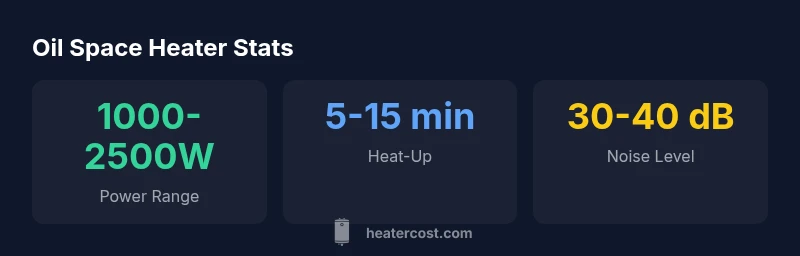
Oil space heaters perform a two-pronged heat transfer. First, the electrical element heats the oil, which then remains hot and radiates warmth outward. Second, convection currents within the unit distribute some heat to surrounding air. This combination provides consistent warmth with minimal temperature swings, which is why many homeowners find them more comfortable than fast-heat, high-noise alternatives. While no electric heater converts energy into heat more efficiently than 1:1, oil-filled radiators excel in maintaining heat, especially in smaller spaces. The efficiency benefit comes from heat retention—heat persists even after the element cycles off—reducing the need for constant cycling. In practice, expect better comfort with moderate air leaks and good insulation, and be mindful of room size relative to the heater’s wattage. Heater Cost analyses note that comparing wattage and insulation yields the most meaningful savings.
Sizing, Placement, and Safety Considerations
Sizing a unit correctly is key to balancing comfort and cost. For small rooms (roughly 100-200 square feet), many models in the 1000-1500 watt range are appropriate, while larger spaces (200-400 square feet) may benefit from 1500-2500 watts. Place heaters on level, non-flammable surfaces with a minimum clearance of several inches on all sides. Do not block vents or obscure the cord, and never use an extension cord with high-power heaters. Safety features to look for include tip-over protection, automatic shut-off, and cool-to-the-touch cabinets. Regularly inspect power cords and outlets for wear, and keep the heater away from drapes, laundry, or other flammable items. The goal is stable heat without overheating adjacent materials.
Operating Costs and Fuel Considerations
Operating costs for oil space heaters depend on local electricity rates, unit size, and usage patterns. In practice, you’ll see a broad range of hourly costs, typically influenced by how warm you keep the room and how well your space is insulated. Heater Cost Analysis suggests that running a mid-range oil space heater in a modestly insulated room can be economical for supplemental heating if used strategically—such as during peak chill times or overnight in a bedroom. To maximize efficiency, pair the heater with good insulation, draft sealing, and a programmable thermostat where possible. Remember that these devices do not burn fuel; their cost is purely tied to electricity usage.
Pros and Cons vs Other Heaters
Oil space heaters offer several advantages: quiet operation, steady heat, and low risk of fire when placed correctly. They also have the benefit of heat retention, which means warmth lingers after the unit cycles off. Drawbacks include slower initial warm-up, higher upfront cost, and potential higher operating costs in poorly insulated spaces when compared to gas or heat pump options. Compared with ceramic or quartz heaters, oil-filled radiators maintain warmth longer but heat up less quickly. For drafty rooms or spaces that require constant moderate heat, oil space heaters can be a favorable choice, especially when combined with proper insulation.
Maintenance and Troubleshooting
Maintenance for oil space heaters is minimal but important for longevity. Regularly dust the fins and vents to maintain airflow, wipe the exterior with a damp cloth, and inspect the power cord for cracking or fraying. If the unit seems to run hot on the outside, or if you notice odd smells, unplug the heater and check for blockages or internal issues. If you notice persistent inefficiency or a persistent fault, consult the manual for reset steps or contact the manufacturer. Oil-filled heaters do not require oil replacement; if there is an oil leak or a significant drop in performance, this may indicate a seal issue that requires professional service.
Selecting the Right Oil-Filled Space Heater for Your Home
Start by measuring the space you intend to heat and cite a target temperature range. Choose a unit with a thermostat and multiple heat settings to adjust to variations in daily temperatures. Look for units with a clear indicator light for safe operation and a robust tip-over switch. Consider features like a carry handle for easy relocation, a compact footprint for small rooms, and a user-friendly interface. Compare models by price, warranty length, and customer reviews centered on reliability and safety. Finally, verify that the unit has appropriate safety certifications (e.g., UL/ETL).
Real-World Installations and Case Studies
In real homes, oil space heaters often serve as a reliable supplemental heat source in bedrooms or home offices. Homeowners commonly report improved comfort during chilly mornings and evenings without the noise associated with some fan-forced heaters. Case studies show significant energy savings when a heater is used to offset higher-set thermostats during winter, particularly in well-insulated rooms. Some renters prefer compact units that fit tight spaces and are easy to move, while homeowners may opt for larger radiators to cover living areas. The key takeaway across installations is consistent use of proper clearance, stable placement, and mindful scheduling to maximize efficiency.
Final Buying Guide and Quick Reference
When buying an oil space heater, prioritize safety features, thermostat precision, and build quality. Estimate the room size and select a model with wattage appropriate for that space, along with a robust warranty. Keep a simple checklist handy: proper placement, clearance, safety certifications, and a plan to mitigate heat loss with insulation upgrades. If you’re unsure about sizing, start with a conservative model and observe warmth distribution over a few evenings. This approach minimizes waste and increases comfort, supported by ongoing guidance from Heater Cost.
Oil-filled space heater sizing guide
| Model Type | Heat Output Range | Best Use |
|---|---|---|
| Oil-Filled Radiator (Low) | 1000-1500 watts | Small bedrooms & offices |
| Oil-Filled Radiator (Medium) | 1500-2000 watts | Living rooms up to ~200 sq ft |
| Oil-Filled Radiator (High) | 2000-2500 watts | Drafty rooms or larger spaces |
Got Questions?
Are oil space heaters safe to use around children and pets?
Oil space heaters are generally safe when used with proper clearance and supervision. Look for tip-over protection and overheat safeguards, and keep them away from curious hands or paws. Always unplug when not in use or when leaving the area.
Oil space heaters are generally safe for homes with kids and pets when you follow safety basics like clearance and supervision.
Can I rely on an oil space heater as my primary heat source?
Oil space heaters are best used as a supplemental heat source for small to medium spaces. They are not typically ideal as a sole heating method in larger homes due to slower heat delivery and higher ongoing electricity costs.
They’re usually best as a supplement, not the main heat source for large spaces.
What maintenance does an oil space heater require?
Maintenance is minimal: dust fins and vents, inspect the power cord, and ensure safety features function. If you notice leaks or unusual smells, stop using the unit and consult the manual or a technician.
Very little maintenance is required; keep it clean and check for safety features regularly.
How does an oil space heater compare to ceramic heaters?
Oil space heaters provide steadier warmth over longer periods and can retain heat after switching off. Ceramic heaters heat quickly but may cool faster once the device turns off. For continuous, low-noise warmth, oil heaters are a solid choice.
Oil heaters give steady heat for longer, while ceramic heaters heat faster but may cool quicker.
What safety features should I look for?
Look for a tip-over switch, overheat protection, a cool-to-touch housing, and certified listings like UL or ETL. Ensure the unit is stable and placed away from flammables.
Prioritize tip-over and overheat protection plus proper certifications.
How should I size a heater for a given room?
Use wattage guidelines based on room size: smaller rooms need lower wattage, larger rooms need higher wattage. If in doubt, choose a model with adjustable settings and a programmable thermostat.
Size by room, and pick adjustable models to match comfort needs.
Are there rebates or energy programs for oil space heaters?
Some regions offer energy-efficiency rebates or programs that cover space heaters. Check local utility programs and incentives before purchasing.
Check local rebates or energy programs before buying.
“Oil space heaters offer steady warmth with minimal noise, making them a reliable supplemental option for small spaces when paired with proper insulation.”
The Essentials
- Size the heater to your room for balanced warmth.
- Choose models with thermostat and auto shut-off for safety.
- Place on a flat, stable surface with clear space around.
- Improve insulation to maximize efficiency and savings.
- The Heater Cost team verdict: Oil space heaters are a solid supplemental option when used with proper safety.